





Seven Sisters Falls viewpoints for a smarter Meghalaya trip
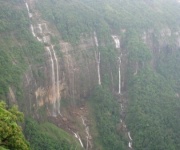
Most visitors picture Seven Sisters Falls as a single curtain of water, but the famous viewpoint above Sohra actually frames several separate channels dropping into the Meghalaya valley. The falls are often labelled as seven, while the main cliff face commonly shows four distinct tiers. Seeing them clearly takes careful timing, an understanding of the different viewpoints and realistic plans for rain.
Located about 25 kilometres from Shillong, the viewpoint is easy to reach without a strenuous trek, which makes it a strong first stop in a Cherrapunjee itinerary. Nearby Elephant Falls and Nohkalikai Falls provide very different waterfall experiences, while Wah Kaba, Rainbow Falls and Smoky Falls offer complementary panoramas. A day of hopping between them rewards travellers who keep their expectations weather-aware.
For Australians, the journey usually combines an international flight with a domestic connection to Shillong or Guwahati, followed by a road transfer into Sohra. This guide explains how to choose the right viewpoint, when the water looks most impressive and which practical details matter once you leave the comfort of an Australian airport or city.
See what makes Seven Sisters distinctive
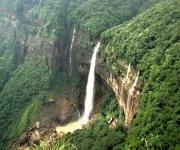
The main Seven Sisters Falls Viewpoint sits beside the Sohra–Cherrapunji road and is sometimes labelled simply Sohra Viewpoint on maps. From the parking area, a short path with roughly 150 steps leads to an exposed platform above the gorge. It is not a seven-stage cascade viewed from one spot: the traditional viewpoint looks across four visible tiers, each fed by separate channels that merge into the valley below.
Water levels change quickly during and after monsoon rain. In drier periods, the channels can look modest from a distance, while a downpour can turn them into a broad, foaming spectacle. Local guides at the approach often help visitors identify the individual drops and explain how runoff from the Shillong Plateau feeds the falls. Their commentary adds context without requiring the longer walks offered by other Sohra trails.
The landscape matters as much as the water. The gorge is surrounded by forested hills and layered escarpments, and low cloud can drift through the valley even when the plateau is clear. Sohra stands at roughly 1,500 metres, so exposed viewpoints can feel considerably cooler than the valley below. Allow time beyond the first stop to watch mist lift and sunlight reach the cliff rather than simply photographing the initial view.
Choose the viewpoint that suits your trip
The nearby viewpoints are separate attractions rather than numbered stops around one waterfall. Rainbow Falls, roughly five kilometres from the main Seven Sisters access, lies along the road towards Tyrna and offers a different relationship with the landscape. Smoky Falls near Tyrna is a more intimate roadside encounter. Wah Kaba is a broad, valley-facing lookout known for expansive views, not for a cascade directly beneath the platform.
Elephant Falls lies roughly two kilometres from Seven Sisters and has a short woodland descent to a plunge pool. Nohkalikai Falls, around four kilometres away, involves a longer stairway through forest, with around 1,500 steps descending towards a powerful seasonal flow. These walks should not be treated as interchangeable: one is an easy forest stroll, while the other demands sturdy footwear, patience and a realistic estimate of wet-weather walking time.
Choose according to your priorities rather than the number of stops. Families and travellers with limited mobility will usually get more from the main viewpoint, Elephant Falls and a café stop in Sohra, although the final steps can be uneven. Active visitors can combine Nohkalikai with Rainbow Falls and Smoky Falls, but should allow several hours for the walks, viewpoints and monsoon delays combined. Local trails can be slippery, narrow or temporarily restricted, so confirm conditions before setting out.
Match the best conditions to your itinerary
The clearest and most comfortable period generally runs from October to March, with February and March often bringing particularly settled conditions. November and January can be cool and clear at this altitude, while April and May offer warmer days but an increasing chance of thunderstorms. Rain can occur throughout the year, so an umbrella is useful, but a waterproof layer is more dependable.
Early morning often provides the softest light and the best chance of mist, shifting colour and occasional rainbows over the gorge. Midday views can be clearer when cloud lifts. Late afternoon is attractive when warm light reaches the valley, but exposed platforms become windy and cold quickly. Allow at least an hour at the main viewpoint if you want to experience changing conditions rather than simply photograph the first sight.
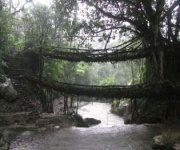
Distance matters when building a day around Cherrapunjee. A focused visit to Seven Sisters, Elephant Falls and a nearby café can occupy half a day; adding Nohkalikai or the Tyrna viewpoints usually turns it into a full day. A two-night stay suits the main falls and nearby attractions. Three nights or more gives more space for caves, markets, living root bridges and a weather reserve without rushing between every stop.
Travel from Australia and manage the practicalities
Australians based in Sydney, Melbourne or Brisbane commonly fly into Delhi, Kolkata or Bengaluru, then take a domestic flight to Guwahati and continue by road to Shillong. Guwahati to Shillong is about 100 kilometres, usually three to four hours in good conditions, although monsoon traffic can extend the journey considerably. Some itineraries continue directly to Sohra, saving time on later waterfall days. Traffic drives on the left, opposite to Australia, so a licensed local driver is the sensible choice.
Before booking, check the current entry rules for Australian passport holders through the Government of India’s official visa service. Many visitors use the e-visa system for eligible short tourism visits, while an approved Overseas Citizen of India card can suit certain longer stays. The right choice, permitted length and arrival airports must be confirmed for your passport and travel date. Keep the approval, onward bookings and emergency contacts accessible offline.
Cave visits require permits and registered local guides, with rules that can depend on the location and visitor’s age. Arrange these through the appropriate Shillong Tourist Range office rather than assuming a cave is open on arrival. The main waterfall viewpoints do not require this type of trekking permit, though access roads and paths can still be affected by landslides.
Connectivity is worth arranging before departure. An Australian SIM may roam in India, but charges can be high for data and calls; an eligible local SIM can be more economical. Cherrapunjee.net’s mobile network guide explains the practical choices and why coverage varies around Sohra. Download offline maps, save your hotel’s number and carry a charged power bank.
Cash remains useful around smaller attractions, guides, tea stalls and local transport, even though many hotels and established restaurants accept cards. Compare the Indian rupee with Australian dollar rates at a current exchange service, and use a bank or licensed exchange counter rather than an informal street exchange. UPI is a domestic payment system, so do not assume an Australian bank card will work through an Indian payment QR code.
Pack for rain, altitude and local customs
Dress for wet, cool conditions and slippery rock rather than for a day at the Australian coast. Lightweight long trousers, a warm fleece, a waterproof shell and shoes with good grip are more useful than heavy cotton clothing. The viewpoint steps can become slick quickly. Carry a small daypack, sealed drinking water, insect repellent and sun protection, and use purification tablets if you cannot rely on safe tap or bottled water. Never swim below the falls, as runoff currents can be dangerous even when a pool looks calm.
Indian mains run on 230 volts and commonly use Type D or Type M plugs, which differ from the Type I plugs used in Australia. A universal travel adaptor from an Australian supermarket such as Woolworths or Coles, or from a travel shop, is safer than assuming a domestic adaptor will fit. Pack a charged power bank as well, since sockets and electrical supply can vary between accommodations.
If your route includes a winter stopover in Dubai, the Dubai winter clothing guide offers a useful reminder to combine breathable clothing with light layers and footwear suitable for long walks. Cherrapunjee needs more warmth and rain protection, but the layering principle is the same. This matters when an Australian forecast for a summer break looks inviting: altitude, rain and exposed wind can make conditions on the plateau feel quite different.
Food customs generally make life straightforward for vegetarian travellers, and many restaurants identify vegetarian dishes as “veg”. Confirm ingredients if avoiding onion, garlic, dairy or other specific items, and make special requests politely. A tip for a local guide is appreciated but is not expected in the same way as in some other countries; check whether the service is already included or agree the amount beforehand. Bargaining is uncommon where prices are fixed.
Plan a smooth Cherrapunjee waterfall escape
Cherrapunjee.net offers packages from two to seven nights, with options that place you near Sohra’s waterfalls or in Shillong, plus information on resorts, hotels, caves, parks and living root bridges. A longer stay makes the weather less punishing: when one viewpoint is obscured or a trail closes, another remains available, and the pace does not depend on one perfect morning.
- Stay close when early views matter. Accommodation in Sohra gives you more time at Seven Sisters before the busiest part of the day and reduces unnecessary driving between nearby waterfalls.
- Keep a weather buffer. Leave space in your itinerary for a rain-affected morning, since a clear viewpoint does not guarantee a clear view across the gorge.
- Carry modest cash. Small rupee notes can be useful for local guides, viewpoint charges, tea stalls and short local journeys where card acceptance is inconsistent.
- Prepare for patchy reception. Download the map area, keep your accommodation details available offline and carry a charged power bank for longer walks and viewpoints.
- Arrange guides and permits early. Confirm current cave access, registered-guide availability and age requirements before booking, particularly during the busy travel season.
- Protect the trip with insurance. Cover cancellation, delays and medical evacuation, and save India’s emergency number, 112, in your phone alongside your accommodation contacts.
Review the two- to seven-night options on Cherrapunjee.net, then use the site’s booking details to contact India Beacons Sojourn. Ask for current package inclusions, transfers, guide arrangements and realistic alternatives for monsoon disruption, so your Cherrapunjee stay centres on the Seven Sisters Falls viewpoints without leaving you dependent on a single clear hour.