




A guide to the swimming holes along the Nongriat Trail
The Nongriat Trail leads into one of Meghalaya’s most rewarding pockets of rainforest, where living root bridges, clear streams and steep-sided valleys create a natural swimming adventure. The walk begins near Tyrna, descends through dense vegetation and stone steps, and ends at Nongriat village, close to the famous Double Decker Living Root Bridge.
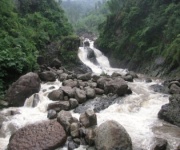
The swimming holes are not a formal attraction with signs, changing rooms or lifeguards. They are river pools shaped by monsoon flows, boulders and smooth rock shelves. Their appearance changes with rainfall, so a pool that looks calm in a photograph may be deep, fast or surprisingly cold when you arrive.
For travellers from Australia, this is best approached as a serious tropical bushwalk with swimming as a bonus. It is closer in character to a remote creek adventure than a maintained beach or public pool. A sensible pace, suitable footwear and respect for local conditions will make the day far more enjoyable.
What the trail reveals
The route from Tyrna to Nongriat is often described by its number of steps, but that figure can distract from the real experience. The path winds through forest, crosses narrow suspension bridges and follows streams that become louder and fuller after rain. Sections are uneven, damp and steep, with long climbs on the return journey.
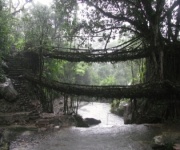
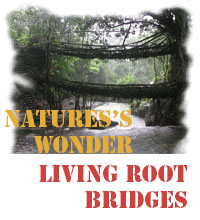
The Double Decker Living Root Bridge is the trail’s most recognisable landmark. These bridges are grown and guided from the aerial roots of rubber fig trees rather than assembled in a single construction project. Their living structure reflects generations of Khasi ecological knowledge and careful maintenance.
Beyond the bridge, the track continues towards Rainbow Falls for travellers who have enough time, energy and daylight. Along the way, smaller pools and streamside shelves provide places to pause. Some visitors swim near the bridge area, while others prefer quieter water farther along the valley. The safest choice depends on the day’s flow, visibility and local advice.
Where the water collects
The most inviting pools are generally found where the stream widens around rock shelves or settles below a small cascade. Clear water can make a pool appear shallower than it is, while submerged rocks may be difficult to see beneath reflections. Test the edge with your feet and look for a broad, stable entry point before considering a swim.
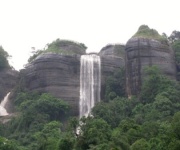
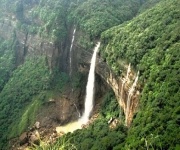
The water around Rainbow Falls is particularly scenic, but a waterfall basin is not automatically safe. Strong currents can develop beneath a falling stream, and polished rocks may be treacherous even when they look dry. Keep well away from the lip and avoid standing directly beneath the falling water.
For a useful comparison, travellers planning other waterfall stops can read this Wahthyllong waterfall guide, which explains why picnic scenery and swimming conditions should be assessed separately. A beautiful pool is still part of a live river system, not a controlled recreational facility.
Choosing the right season
Cherrapunjee, also known as Sohra or Cherrapunji, receives extraordinary rainfall. During the wet season, streams become dramatic and the forest looks intensely green, but the trail can also turn slick and muddy. Water levels may rise quickly, bridges can feel more exposed and visibility may deteriorate during heavy showers.
The drier months usually offer more predictable walking conditions and clearer access to the pools. Even then, rain is possible in the hills, and a dry morning does not guarantee a dry afternoon. Water can remain cold after a cloudy day, so swimming should be treated as optional rather than the central promise of the hike.
Australian visitors need to remember that Meghalaya’s wet and dry patterns do not align neatly with the Australian calendar. A July trip is not a winter escape in practical terms; it can mean persistent tropical rain. Check current local forecasts before setting out, and allow flexibility rather than booking every transfer tightly around one perfect-weather day.
Swimming safely in Khasi country
There are no lifeguards along the Nongriat Trail. Never dive into an unfamiliar pool, even if other swimmers have entered from the same bank. Walk in slowly, keep your hands free, and stay close to the edge until you understand the depth and current. Children and weaker swimmers should remain within arm’s reach of a capable adult.
Avoid swimming after intense rainfall or when the water is brown, turbulent or carrying branches. A stream can rise upstream while the sky above you appears calm. Do not cross a fast section simply to reach a more attractive pool, and never swim alone at a remote bend in the trail.
Slippery surfaces cause many accidents. Wear proper grippy trail shoes for the walk and carry lightweight water footwear if you have room. Australian “thongs” are useful around accommodation but are poor protection on wet stone steps. Keep valuables in a sealed dry bag, and bring a small towel or quick-dry layer for the journey back.
Sohra’s rain deserves careful planning, and this practical guide to monsoon safety advice is useful before choosing a wet-season departure. It is also wise to follow a local guide’s instructions when conditions change, even if the pool looked harmless in an earlier photograph.
Preparing for the descent and climb
Start early from Cherrapunjee so you can walk without rushing. The descent to Nongriat may feel manageable, but the return is physically demanding, especially after swimming and several hours in humid conditions. Build in time for rests, photographs, food and unexpected delays on bridges or narrow sections.
Pack two to three litres of drinking water per person, more if the forecast is hot or the group includes children. Carry food that travels well, such as wraps, fruit, nuts or energy bars. A small first-aid kit, insect repellent, sunscreen, a headlamp and a waterproof phone pouch are sensible additions.
A lightweight rain jacket is more practical than relying on an umbrella. Use a pack liner or dry bags because even a good day can become wet quickly. Bring modest swimwear and a cover-up for walking through villages. There may be no private changing facilities beside the pools, and respectful clothing is important in a lived-in rural area.
Fitness preparation helps Australian travellers who are used to coastal walks but not continuous stair descents. A few weeks of hill walking, stair sessions or bush tracks around the Blue Mountains, the Dandenong Ranges or Brisbane’s Mount Coot-tha can build useful strength. Train for uneven terrain rather than speed.
Respecting Nongriat and the surrounding forest
Nongriat is a village, not a theme-park outpost. Residents, guides and families use the paths and bridges as part of daily life. Keep voices low near homes, ask before photographing people and follow local directions around private areas. A friendly greeting and patient manner are appreciated more than hurried sightseeing.
Take every wrapper, bottle and food scrap back with you. Avoid soaps, shampoos and sunscreen products in the stream, even those marketed as natural. Do not break plants, move stones to create a new pool or climb on root bridges in ways that could damage their living structure.
Local guides provide more than navigation. They can explain which pools are suitable that day, identify changing water conditions and help visitors understand village customs. Booking through an established Meghalaya travel operator can also simplify transport, accommodation and timing, especially for travellers combining Nongriat with caves, waterfalls and viewpoints around Sohra.
For Australians, this style of travel is different from swimming at a national-park creek with marked tracks and emergency signage. In places such as the Daintree or Kakadu, visitors are already accustomed to checking crocodile and water-safety notices; in Meghalaya, the key risks are often flash flooding, slippery rock, isolation and difficult evacuation.
Building the trip around the walk
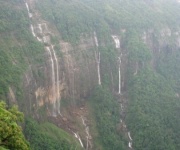
Most visitors stay in or near Cherrapunjee before travelling to Tyrna. A multi-day itinerary is more comfortable than trying to squeeze the trail between an airport arrival and a long road transfer. It also leaves room for other local experiences, including Mawsmai Cave, Seven Sisters Falls, Nohkalikai Falls and village viewpoints.
Accommodation ranges from hotels and resorts in the Sohra area to simpler stays closer to the trail. Ask about hot water, breakfast timing, transport to Tyrna and the availability of packed meals. Mobile coverage can be inconsistent, so download maps and keep important booking details available offline.
Travellers from Sydney, Melbourne, Brisbane or Perth will usually need a long international journey followed by onward travel in India. Allow a recovery day if possible, particularly after crossing time zones. Indian e-visa requirements, passport validity, travel insurance and any current regional permissions should be checked through official sources before departure.
The Australian market responds well to clear inclusions, transparent pricing and practical itineraries. When comparing a two-night escape with a longer Meghalaya package, check whether transport, guide services, meals, entry fees and accommodation are included. A cheap headline price may exclude the road transfers that make this trail possible.
Practical choices for a better day
The following decisions keep the swimming component enjoyable without making it the sole measure of a successful walk:
- Choose a dry or moderately wet day with a stable local forecast, rather than travelling during a period of severe rainfall.
- Hire a local guide or arrange reliable guidance through your accommodation or tour operator.
- Wear secure trail shoes, pack a dry bag and bring a separate lightweight layer for the walk back.
- Enter only calm, transparent water after checking depth, rocks and current from the bank.
- Leave enough daylight for the return to Tyrna and carry a headlamp for unexpected delays.
- Treat the village, root bridges and forest as living places by carrying out rubbish and asking before taking close-up photographs.
Swimming in Nongriat is most memorable when it fits naturally into the journey. You may find a warm patch of sunlight beside a small pool, hear water moving through the valley or share a quiet rest with your walking group. Those moments are valuable even if the current is too strong for a swim.
Use the trail as a chance to slow down rather than chase every landmark. Check conditions locally on the morning of departure, keep your plans flexible and arrange a Cherrapunjee stay that gives you enough time for the walk. Contact India Beacons Sojourn through Cherrapunjee.net to plan a Meghalaya itinerary with the right balance of trails, waterfalls, village experiences and safe time beside the water.