




A History Of The Khasi Hills Autonomous District Council
The Khasi Hills Autonomous District Council is central to understanding how Meghalaya governs land, customary life and local identity. Based in the hill country around Shillong and extending across much of the Khasi cultural region, it is one of India’s Sixth Schedule institutions, created to give indigenous communities a meaningful degree of self-government.
For travellers from Australia, the council may first appear as a constitutional or administrative body. Its story, however, is closely connected with the landscapes visitors come to experience: sacred groves, living root bridges, village paths, waterfalls and the plateau around Sohra, also known as Cherrapunjee or Cherrapunji. A stay arranged through a Cherrapunjee travel guide becomes richer when these places are understood as lived cultural landscapes rather than scenery alone.
The council’s history stretches from Khasi political traditions before British rule to debates about land, customary law and development in present-day Meghalaya. It also helps explain why village institutions remain important beside elected governments, and why respectful tourism matters in a region where community authority still shapes everyday life.
The Khasi Hills Before Colonial Rule
Before British administration, the Khasi Hills were not organised as a single modern state. Authority was distributed among numerous Khasi territories, commonly associated with particular syiems or traditional chiefs. These leaders governed with the advice and participation of councils, ministers and clan representatives. Political relationships differed from one territory to another, so Khasi society had a networked character rather than a centralised monarchy.
The dorbar, meaning an assembly or council, was a vital part of this arrangement. At village level, the dorbar shnong dealt with community matters, land use, disputes and social responsibilities. Traditional institutions also included the kur, or clan, which remains significant in a matrilineal society where descent is generally traced through the mother. These systems were flexible and locally grounded, although they should not be treated as identical to Australia’s municipal councils or Indigenous governance structures.
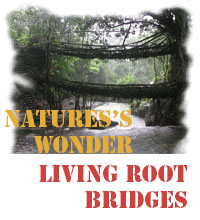
Khasi society developed around forests, upland cultivation, trade routes and strong relationships between settlements. Sacred groves were protected through customary rules, while springs, streams and communal lands carried practical and spiritual importance. The same principles can be seen today when visitors walk near a living root bridge or enter a protected forest: the site belongs to a continuing community history, not simply to a tourism itinerary.
British Expansion And The Anglo-Khasi War
British involvement increased after the East India Company consolidated its control over the plains of Assam and Sylhet. A road linking the Bengal plains with the Assam region was proposed through the Khasi Hills, and the British sought agreements with local rulers. Initial arrangements did not remove Khasi concerns about outside troops, labour demands, political interference and the loss of control over territory.
In 1829, resistance became open conflict. U Tirot Sing, the syiem of Nongkhlaw, became the best-known leader of the Khasi opposition. The Anglo-Khasi War lasted from 1829 to 1833, with fighting shaped by the terrain, local alliances and British military pressure. Tirot Sing eventually surrendered and was taken to Dhaka, where he died in 1835. He is remembered in Meghalaya as a symbol of resistance and political courage.
British control was gradually extended, but the hills were not governed in exactly the same manner as the plains. Colonial officials recognised that customary institutions could be useful for administration, while also limiting the independence of traditional rulers. This uneven relationship between local authority and outside government later influenced the special constitutional arrangements made for the hill districts.
Visitors from Sydney or Brisbane may recognise a broad lesson in this history: roads, infrastructure and commercial access can have political consequences well beyond transport. In the Khasi Hills, a route was never merely a route. It could affect land rights, military movement, markets and the authority of entire communities.
From Colonial Administration To Meghalaya
During the colonial period, the Khasi and Jaintia areas were administered within Assam, but they retained a distinct identity and different legal treatment from many neighbouring plains areas. The Government of India Act 1935 introduced a framework for “excluded” and “partially excluded” areas, reflecting the colonial practice of governing some hill regions through special rules. This arrangement offered a degree of separation but did not amount to democratic self-rule.
After Indian independence, the question became how to protect tribal communities while bringing the hill regions into the new constitutional order. The Constitution of India addressed this through the Sixth Schedule, which came into force in 1952. Article 244(2) provides the constitutional basis for autonomous administration in specified tribal areas of Assam, Meghalaya, Tripura and Mizoram.
The Sixth Schedule was a compromise shaped by competing needs. Hill communities wanted safeguards for customary law, land and political identity. The new Indian state wanted an integrated constitutional system. Autonomous district councils were created to provide elected institutions with authority over selected local matters, while the Governor and state government retained important supervisory powers.
The Khasi Hills and Jaintia Hills were initially administered through a combined district council structure. In 1964, the United Khasi-Jaintia Hills District Council was divided, creating separate Khasi Hills and Jaintia Hills autonomous district councils. This separation reflected distinct regional identities and administrative needs, although cultural, linguistic and family connections across the hills remain strong.
The Council Takes Shape In Meghalaya
Meghalaya became an autonomous state within Assam in 1970 and achieved full statehood in 1972. The formation of the state was a major political milestone for the hill communities, but the Khasi Hills Autonomous District Council continued as a separate Sixth Schedule institution. State government and district council therefore operate alongside one another, with responsibilities that can overlap or require coordination.
The council has a legislative, executive and judicial character within its assigned field. Its elected members make regulations and laws on matters such as land, forests that are not reserved forests, village administration, inheritance, marriage and social customs, subject to constitutional and gubernatorial oversight. It can also raise certain forms of local revenue and administer traditional areas through recognised institutions.
Its powers are substantial but not unlimited. State legislation, national law, court decisions and the Governor’s authority can affect how council rules operate. Urban areas such as Shillong may also involve municipal and state institutions, creating a more complex administrative picture than the simple phrase “autonomous district” suggests.
Key elements of the council’s historical role include:
- Protecting aspects of Khasi customary law and social practice
- Supporting village-level administration through recognised local institutions
- Regulating aspects of landholding, inheritance and community resources
- Representing hill communities within India’s constitutional structure
- Maintaining a degree of separation from ordinary district administration
For Australian travellers, the arrangement is best understood as layered governance. A tour operator, village authority, state department, forest office and autonomous council may each have different responsibilities. This is one reason local guidance is valuable when visiting caves, waterfalls, sacred groves and village-managed attractions.
Customary Institutions And Contemporary Authority
The Khasi Hills council cannot be separated from the traditional institutions that existed before it. The council is a modern constitutional body, but it works in a setting where dorbar shnong, clan relationships and traditional chiefs still influence public life. In many communities, local decisions are discussed through village assemblies and customary leadership before they reach a formal government office.
This relationship can be productive, but it also raises questions about representation and reform. Modern democratic expectations, women’s participation, urban growth and changing ideas about property do not always fit neatly with older structures. Khasi matriliny gives women an important role in descent and family identity, yet political leadership in traditional institutions has often been dominated by men. Debates about customary law therefore remain active rather than settled.
Land is especially sensitive. The hills include private, clan, community and government-controlled areas, and the legal position of a site may depend on its history and classification. Development proposals, roads, quarrying, conservation and tourism can all bring different authorities into discussion. The council’s role is therefore practical as well as symbolic: its decisions can affect how communities manage resources and respond to change.
The council also exists in a region experiencing rapid communication, education and visitor growth. A young person from Shillong may engage with global culture, study in Delhi or Melbourne, and still participate in village obligations at home. That mix of modern mobility and local belonging explains why the Khasi Hills’ political institutions continue to matter.
Heritage, Tourism And Responsible Travel
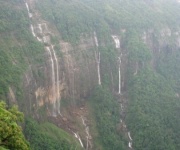
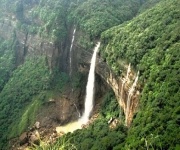
The history of the district council adds depth to a visit to Sohra. Waterfalls such as Nohkalikai and the Seven Sisters, limestone caves, forest reserves and living root bridges are connected to villages, land arrangements and community memory. Travellers should avoid assuming that every attraction is managed by the same department or that an entrance ticket grants unlimited access to surrounding land.
Responsible conduct is straightforward but important. Stay on marked paths where possible, follow instructions from local guides, do not climb fragile root structures, and avoid removing plants, stones or cultural objects. Sacred groves deserve particular care because they are protected through customary belief and community practice, not just through the signs visitors may see at the entrance.
Autumn can be an appealing period for Australian visitors planning around school holidays or annual leave, especially when comparing weather, visibility and road conditions. Seasonal context is covered in this autumn travel story, while broader planning should account for changing rainfall, winding roads and the time required between attractions.
Practical preparation also makes cultural respect easier. An Australian passport holder should check India’s current e-visa requirements before departure, allow time for international connections and carry identification securely. Flights commonly involve a connection through cities such as Delhi, Kolkata or Guwahati rather than a direct route from Melbourne, Perth or Sydney. Budgeting in Australian dollars is useful, but local purchases are made in Indian rupees, often with cash still helpful in smaller villages.
Travel habits familiar in Australia need adjustment in Meghalaya. A waterproof layer is more useful than relying only on an umbrella, even outside the heaviest monsoon periods. Good walking shoes matter on wet stone and uneven forest trails, while modest clothing is appropriate near villages and religious or culturally significant places.
Useful preparations for the Khasi Hills include:
- A valid passport, Indian visa and copies of essential documents
- Waterproof footwear, a light rain jacket and quick-drying clothing
- Small cash reserves in Indian rupees for rural purchases and local fees
- A refillable bottle and a plan to reduce single-use plastic
- Travel insurance covering walking, transport disruption and medical care
- Extra time for mountain roads, weather changes and community-led visits
Why The Council’s History Still Matters
The Khasi Hills Autonomous District Council represents an ongoing experiment in balancing indigenous self-government with a wider constitutional democracy. Its history is neither a simple story of preserved tradition nor a complete transfer of power to local communities. It is a continuing negotiation involving customary authorities, elected representatives, the Meghalaya government, courts, residents and visitors.
That negotiation can be seen in everyday details. A village may protect a forest through customary rules while also dealing with state conservation policy. A family may follow matrilineal inheritance practices while adapting to modern education and employment. A tourism business may depend on roads and online bookings while relying on local guides who know the meaning and boundaries of a place.
For people travelling from Australia, the comparison with home should be made carefully. Australia’s local councils manage services within a different legal system, and cultural protocols such as a Welcome to Country belong to their own traditions. In Meghalaya, the appropriate response is to listen to local explanations, respect community rules and avoid treating cultural difference as a performance arranged for tourists.
A journey through Cherrapunjee is therefore also a journey through layers of governance and memory. Understanding the council’s origins helps visitors see why land, language, village authority and heritage remain closely connected across the Khasi Hills. It turns a sightseeing trip into a more informed encounter with Meghalaya’s living political landscape.
Plan your Meghalaya journey with time for both famous sights and community-managed places. Review available tour packages, choose local guidance for walks and cultural visits, and contact India Beacons Sojourn through Cherrapunjee.net to arrange a stay that respects the history and people of the Khasi Hills.