





Inside the wild honey harvests of Sohra's Khasi villages
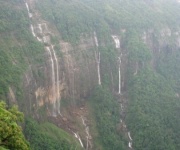
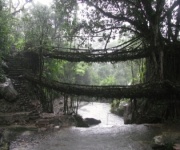
Tucked into the southern edge of Meghalaya, the cluster of villages that surrounds Sohra sits in one of the wettest places on the planet. When travellers talk about Cherrapunjee, they usually mention Nohkalikai Falls, the living root bridges, and the record-breaking rainfall, but there is another story unfolding in the forest canopy that gets far less attention. The Apis dorsata, the giant rock bee that builds single-comb nests on cliffs and tall trees, has been giving the Khasi people honey for as long as anyone can remember, and the harvests still shape village life in ways that surprise outsiders.
For visitors arriving from Sydney or Melbourne, the scale and the silence of the work come as a quiet revelation. There are no industrial extraction lines, no white protective suits marching in rows, and no stainless-steel drums stacked in a climate-controlled warehouse. Instead, the honey comes down from sheer rock faces in smoky ropes, ferried in bamboo containers, and traded by weight in markets where Khasi and English mix freely on the price tags. It is a craft that has absorbed modern pressures without losing its older rhythms, and the people who keep it alive are eager to share what they know with anyone patient enough to ask.
How the bees and the monsoon shape the season
The harvest calendar in Sohra is tied to the southwest monsoon, the same weather system that fills the plunge pool beneath Nohkalikai Falls between May and October. The flowers that feed the bees only open in the long dry windows of October, November, March, and April, so a good year depends almost entirely on whether the rain pauses long enough for nectar to accumulate. Villagers read the sky the way a barometer reading is taken, and they know that a heavy September often means a lean December.
There are two recognised flows in a typical year. The first, sometimes called the spring flow, runs from late February into April and produces a lighter, more floral honey that pours easily and smells faintly of clover. The second, the autumn flow, peaks after the monsoon retreats and gives a thicker, darker honey that holds a faint malt note. Most households keep enough of both for tea, cooking, and small gifts, and only the surplus reaches the road that winds toward Shillong and beyond. Elders in the village can usually tell, by the colour of the morning fog, whether a particular month will favour the bees or the tourist trade.
Traditional harvest methods still in use
The classic Khasi harvest is not for the faint of heart. A skilled climber, often a man or woman who has trained since childhood, scales the cliff face using nothing more than a length of rattan, a thin bamboo pole, and a smoker made from dried leaves and cow dung. The smoke calms the bees just enough for a slice of comb to be cut free and lowered to a helper waiting below. A single nest might yield anything from two to seven kilograms of honey on a good day, and a cliff with several nests can produce more than thirty kilograms in a single morning.
Modern apiarists have begun to introduce box hives made of pine and rubberised frames, and these now sit beside traditional hives on the steep slopes behind villages such as Mawsmai and Laitkynsew. The boxed bees are easier to manage, gentler to harvest, and far safer for newcomers to watch, but the honey they produce is often thinner and less complex than the wild rock bee variety. Many families still keep both, with the boxed honey destined for casual use and the wild honey reserved for ceremonies, guests, and the small but growing tourist market. Visitors who arrive during the wrong week are sometimes invited to help with bottling rather than the climb itself, which is a fair compromise for anyone who would rather keep both feet on the ground.
Wild honey versus apiary honey, side by side
The two styles that travellers are most likely to encounter on a tasting in Sohra have very different profiles, and most visitors arrive with assumptions shaped by the tidy jars they pick up at a Brisbane farmers market or a Perth health food shop. The comparison below gives a rough sense of what to expect from each.
| Feature | Wild rock bee honey | Boxed apiary honey |
|---|---|---|
| Source bee | Apis dorsata (giant rock bee) | Apis cerana or Apis mellifera |
| Comb style | Single large comb on cliff or tree | Multiple frames inside a wooden box |
| Typical colour | Dark amber to almost black | Pale gold to medium amber |
| Flavour profile | Smoky, malty, mineral-edged | Mild, floral, sometimes citrusy |
| Average moisture | Around 17–19 percent | Around 18–20 percent |
| Harvest frequency | Once or twice per year | Every six to eight weeks |
| Price in Sohra | Higher, often by the kilo | Lower, often sold in reused bottles |
The numbers above come from conversations with village cooperatives and should be taken as guidance rather than laboratory data. What matters for most visitors is that the wild honey tastes different in a way no jar on an Australian shelf has quite managed to replicate, and that the difference is felt most strongly when the honey is tasted slowly at room temperature, not stirred into a hot drink where the more delicate notes tend to disappear.
Why Australian travellers notice the difference
Back home, the Australian honey aisle has long been dominated by Manuka, the tea tree honey from New Zealand and Tasmania that has earned a reputation for medicinal strength and a price tag to match. Sohra's wild rock bee honey arrives as something familiar and unfamiliar at once. The colour and the viscosity recall a strong leatherwood from the Tarkine wilderness, yet the smoky undertone is its own thing entirely, and Australian palates trained on light eucalypts are quick to pick up the difference.
It also helps that the Australians who tend to wander toward Meghalaya are often the same crowd that lines up at the Bondi markets on a Saturday morning, looking for single-origin olive oil, raw honeycomb, and small-batch gin. They know what a real product tastes like, they ask sharp questions about provenance, and they are happy to pay for transparency. The Khasi beekeepers have taken note, and more than one village now prints batch numbers, harvest dates, and the name of the cliff on every jar that leaves the gate. The result is a small but steady trade that rewards the patient traveller who asks the right questions.
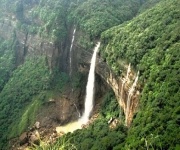
For those planning a trip around the waterfalls, it is worth thinking about the the best time to visit nohkalikai falls for maximum flow because the same monsoon cycle that swells the falls also determines whether the autumn honey will be plentiful that year. A guide who knows the village will often check the harvest calendar before suggesting dates, and the conversation usually ends with a recommendation about which cliff to visit during the same week.
Tasting, storing, and bringing some home
A short list of suggestions for anyone who wants to taste well, store properly, and avoid the awkward moment of a confiscated jar at the airport. These notes come from local hosts and from the small group of Australian visitors who have made the trip a regular habit.
- Always carry a small notebook and a clean glass of water between tastings; the smoky notes coat the palate quickly and a sip resets the tongue.
- Buy from the cooperative shop in Sohra town rather than from roadside stalls when provenance matters, and ask which cliff the honey came from.
- Keep the jar out of direct sunlight and away from the steam of a kettle, as both heat and light can dull the flavour within weeks.
- Pack jars in the centre of a checked bag wrapped in socks or a t-shirt, because checked luggage is generally more tolerant of glass than cabin baggage.
- Remember that Australian biosecurity rules treat all honey as a regulated animal product, so declare every jar on the incoming passenger card and be ready to surrender or bin anything not cleared.
- Try a spoonful with black tea and a slice of ginger, which is how the Khasi families themselves prefer it on a cool morning.
- If you are travelling on to Bangladesh or Myanmar, check the local rules before crossing the border, because the rules vary sharply from country to country.
A little care before the flight is the difference between a thoughtful gift on the kitchen bench at home and a frustrating conversation with a sniffer dog at Sydney or Tullamarine. Travellers who plan ahead usually find the rules are easy to satisfy with a little patience and the right paperwork.
Booking a village stay with a beekeeper
Several homestays in the villages around Sohra now offer a day with a beekeeping family, and the experience suits travellers who would rather learn a craft than tick off another viewpoint. Mornings start early, usually before the arvo mist lifts from the valley, and end with a long lunch of rice, smoked pork, and a few spoonfuls of the morning's harvest stirred into warm water. The hosts are generous with their time, patient with questions, and proud of a tradition they have every intention of passing on.
Packages that combine a village stay with guided walks to the living root bridges and a half-day at Nohkalikai can be arranged through Cherrapunjee.net, the travel site operated by India Beacons Sojourn. Booking enquiries are best sent a few weeks ahead during the dry months, when the roads are reliable and the bees are at their calmest. A short message is all it takes to start the conversation, and a reply usually arrives within a day or two from someone who has walked those same forest paths more times than they can count.