




A step-by-step guide to the Nongriat Village trek
Nongriat Village is one of Meghalaya’s most memorable walking destinations, reached by a steep trail descending through forested hills near Cherrapunjee, also known as Sohra or Cherrapunji. The route leads to the famous Double-Decker Living Root Bridge, a remarkable structure shaped over generations from the living roots of rubber fig trees. Reaching it requires effort, patience and careful preparation, yet the journey offers far more than a single landmark.
Travellers from Australia should approach this trek as a full-day outdoor experience rather than a quick sightseeing stop. The climate is humid, rain can arrive with little warning, and the climb back from Nongriat is demanding. A visitor accustomed to urban walking in Sydney, Melbourne or Brisbane may still find the continuous stairs and uneven village paths surprisingly strenuous.
This guide explains how to plan the route, what to expect at each stage, and how to make the day safer and more enjoyable. It also covers transport, footwear, food, local etiquette and the practical details that can turn a difficult walk into a rewarding Meghalaya holiday.
Plan the route before leaving Cherrapunjee
Most visitors begin the trek from Tyrna Village, approximately 20 kilometres from Cherrapunjee. The usual approach is by private vehicle or hired taxi, arranged through a hotel, resort or local tour operator. It is sensible to leave early, since the trail takes several hours and daylight is valuable for the return journey. A driver should be booked for the full day, with a clear agreement about the pickup time and location.
The walk starts with a descent of roughly 3,000 steps, although the exact number varies by route and how people count the stair sections. The trail passes through thick vegetation, small settlements and suspension bridges before reaching Nongriat. The return involves climbing every descent in reverse, so the outward journey should not be rushed.
Weather forecasts are useful but not definitive in Sohra, one of the wettest places on Earth. A dry morning may become wet by midday, while a forecast of rain does not always mean the trail will be unusable. Check conditions locally before setting off and follow any advice from guides, accommodation staff or village authorities.
For background on the region, accommodation services and booking support, travellers can review the Cherrapunjee travel team before arranging a package or custom itinerary.
Begin at Tyrna and manage the descent
At Tyrna, take time to organise your belongings before starting. Carry only what you need for the day in a compact, water-resistant daypack. The first portion is a long descent through steps cut into the hillside. Moving slowly helps protect the knees and reduces the chance of slipping, particularly when moss, rain or wet leaves cover the stone.
Use the handrails where available and keep both hands free whenever possible. Trekking poles can help on the downhill section, though they must be packed or folded when crossing narrow bridges. Avoid trying to match the pace of a fitter companion. A steady rhythm with short pauses is more efficient than repeated long stops caused by exhaustion.
The trail is used by local residents as well as visitors. People may be carrying supplies, walking to neighbouring villages or travelling with children. Keep to the side when the path is narrow, allow others to pass, and avoid blocking bridge entrances for photographs. A friendly greeting and respectful behaviour are appreciated.
Australian travellers are often used to carrying reusable water bottles and using marked bushwalking tracks, but this route has fewer formal facilities than a popular national park near Melbourne or Sydney. Fill your bottle before departure and treat the path as a rural community route rather than a maintained tourist boardwalk.
Cross the bridges with care
As the path continues, you will encounter several smaller bridges suspended over streams and ravines. These crossings may sway slightly, particularly when several people step onto them together. Cross one person or a small group at a time, keep your pace controlled and hold the side ropes without leaning heavily against them.
The environment changes as the trail drops lower. Ferns, bamboo, broad-leafed plants and flowing water create a cool, shaded atmosphere, while the sound of streams becomes more noticeable. During the monsoon period, water levels can rise quickly, and some surfaces become muddy or slippery. Waterproof footwear with reliable grip is more useful than fashionable trainers.
Photography is best done from stable ground. Do not climb onto railings, bridge ropes or wet rocks to obtain a better angle. Mobile coverage can be limited, so do not rely on a phone for emergency communication or navigation. Save essential details offline and tell your driver or accommodation provider when you expect to return.
Before departure, learn how to use offline trail maps, especially if you are walking without a guide. GPS can help confirm your general position, but it does not replace local knowledge when the trail divides, weather changes or a bridge is temporarily difficult to cross.
Reach the Double-Decker Living Root Bridge
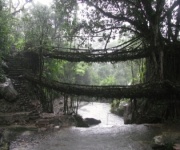
The Double-Decker Living Root Bridge is formed from the roots of rubber fig trees guided and strengthened over many years. Its two levels show how local Khasi communities have worked with the landscape rather than replacing it with a conventional bridge. The structure is a living example of traditional ecological knowledge and remains an important part of the surrounding village environment.
When you arrive, pause to recover before exploring the bridge. The area can be busy, especially in high season and during pleasant weather. Follow any local instructions about where to stand, whether swimming is permitted and which areas should be left undisturbed. The bridge is not an amusement structure; its preservation depends on visitors treating it carefully.
There may be small stalls or simple places to buy refreshments near the village, but availability changes. Carry some Indian rupees in small denominations, as card payments and mobile connectivity cannot be assumed. Purchasing a drink or snack locally supports residents, while carrying rubbish back to a bin or accommodation is part of responsible trekking.
Some itineraries continue beyond Nongriat towards Rainbow Falls, but this adds distance and time. Only attempt the extension if you have started early, conditions are suitable and your fitness allows for the return climb. A guide can give a realistic assessment based on the day’s weather and your group’s pace.
Prepare for the climb back
After visiting the bridge, begin the return before fatigue becomes overwhelming. The uphill section is slower than many visitors expect, particularly in humid conditions. Take regular short breaks in shaded spots, drink small amounts of water frequently and eat a snack before you feel depleted. Walking poles or a lightweight support can make the stairs more manageable.
The final climb to Tyrna is the most demanding part of the Nongriat Village trek. Focus on placing each foot securely rather than counting every step. If your knees feel unstable, slow down and use the handrails. A guide can remain behind the group and help set a safe pace, which is particularly useful when travellers have different levels of fitness.
Items that make the day easier
- Grippy walking shoes or trail sandals that cope with wet surfaces
- A rain jacket, dry bag and spare socks
- At least one litre of drinking water per person, plus snacks
- Small cash, a charged phone, power bank and offline map
- Insect repellent, sunscreen and basic blister treatment
Avoid carrying large suitcases, cotton clothing that stays wet, or brand-new footwear. Australian sun protection habits are still useful, but the forest canopy does not eliminate the risk of heat, glare or dehydration. Lightweight, quick-drying clothing is usually more comfortable than heavy layers.
At Tyrna, allow time to cool down before getting into the vehicle. Wet clothing, a towel and a change of shoes can make the drive back to Cherrapunjee considerably more pleasant. Confirm the return pickup point in advance, as tired walkers may finish at different times.
Choose the right season and support
The trail can be walked throughout much of the year, but conditions vary sharply. The rainy season brings fuller streams, intense greenery and a greater chance of slippery stairs. Drier months generally offer easier walking, although rain remains possible in Meghalaya. The best choice depends on whether your priority is lush scenery, more stable footing or a quieter trail.
A local guide adds practical value beyond navigation. Guides understand seasonal stream crossings, village customs, weather changes and the realistic time required for different groups. They can also explain the living root bridge tradition and help visitors interact respectfully with residents rather than passing through without context.
Responsible travel matters in a place where tourism and everyday village life share the same narrow paths. Ask before photographing people, do not leave food packaging behind, and keep voices low around homes and community spaces. Avoid collecting plants, stones or pieces of root from the forest.
Indian entry and travel requirements should be checked before booking domestic transport. Australian passport holders generally need the appropriate Indian visa before arrival, and requirements can change according to nationality, travel purpose and current regulations. Carry digital and printed copies of key documents, and confirm whether any local permissions or identification are required for your itinerary.
Build the trek into a wider Meghalaya journey
The walk is easier to enjoy when it is part of a carefully paced Cherrapunjee itinerary. Allow at least one night before the trek if you have arrived from Shillong or taken a long journey. This gives you time to adjust, organise transport and ask local staff about recent trail conditions. A recovery night afterwards is also worthwhile, especially if you plan to visit more waterfalls or caves.
Cherrapunjee has attractions suited to different energy levels. Waterfalls, viewpoints, caves, forest paths and other living root bridges can be combined across several days rather than crowded into one exhausting schedule. Travellers interested in India’s cultural heritage may also enjoy reading about Tamil Nadu temples while planning a broader journey through the country.
Useful checkpoints for a smooth trek
- Leave Cherrapunjee early enough to reach Tyrna with ample daylight
- Confirm the vehicle, driver contact and return pickup arrangement
- Check rain, stream and bridge conditions before descending
- Tell someone at your accommodation when you expect to return
- Keep the final climb within your group’s actual fitness level
A package of two to seven nights can make the experience more comfortable by combining accommodation, transport and sightseeing. This is particularly helpful for visitors arriving from Australia, where flights, time-zone changes and long internal transfers can make spontaneous planning tiring. A local operator can also adjust the itinerary when weather affects a trail or attraction.
The Nongriat route rewards a patient approach. Its memorable qualities come from the combination of physical effort, Khasi engineering, rainforest scenery and village life. With sensible planning, suitable equipment and respect for the people who maintain this landscape, the trek becomes a meaningful part of a Meghalaya holiday rather than simply a demanding photo stop.
Contact Cherrapunjee.net to arrange a guided Nongriat excursion, accommodation and transport suited to your travel dates. Booking local support in advance gives you a clearer schedule and allows more time to enjoy the living root bridges, waterfalls and forest paths of Sohra.