




Cherrapunjee's orchid trail: spotting rare blooms in the Khasi Hills
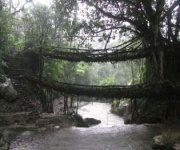
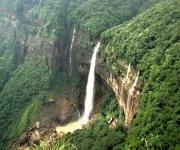
Cherrapunjee, perched on the southern edge of Meghalaya's Khasi Hills, holds the curious distinction of being one of the wettest inhabited places on Earth. While travellers from across the world flock here for the roar of Nohkalikai Falls and the engineering marvel of the living root bridges, a quieter marvel hides in plain sight. The same constant mist and rich laterite soil that feed the waterfalls also nurture a staggering diversity of orchids, with over 300 species documented across the district. Walking any of the forest trails in the cooler months, you are rarely more than a few metres from a wild bloom clinging to an oak branch or sprouting from a mossy boulder.
For travellers arriving from Australia, the orchid trail offers something familiar and something entirely new at once. The Southern Hemisphere timing means an Australian spring visit in September or October lines up with Meghalaya's post-monsoon awakening, when the air clears and the first flush of Dendrobium flowers emerges. Many Aussies already know the rhythm of identifying native orchids in the Dandenong Ranges or along the Cape York track, which makes the Khasi forests feel like a vivid companion volume. Add to that a strong local culture of bushwalking, a love of rugged national parks, and a deep interest in sustainable tourism, and the orchid trail becomes a natural fit for the Australian market.
The route itself is not a single marked path but a network of village tracks, ridge walks and forest descents that link bloom-rich patches across the Sohra plateau. Guided treks of two to seven days can be stitched together with stays in family-run homestays, where Khasi hosts know the flowering calendar better than any field guide. This article traces the highlights of that trail, the species worth watching for, and the practical steps for planning a trip from the southern coast of Australia.
The Khasi Hills as an orchid sanctuary
The Khasi Hills sit at the junction of Indo-Burmese biogeographical zones, a meeting point that has allowed orchid lineages from the Himalayas, China and Southeast Asia to mingle over millions of years. The elevation band between 1,000 and 1,800 metres, where Cherrapunjee's main trails lie, matches the sweet spot for epiphytic orchids that need cool nights, high humidity and bright filtered light. Mist, the region's defining feature, replaces the need for rain during the cooler months, keeping bark damp and roots hydrated.
Cherrapunjee's relative isolation from large-scale commercial agriculture has preserved old-growth forest stands that are simply not present in many other parts of the subcontinent. Within these stands, trees such as the Khasi oak and the Indian chestnut act as natural host plants, draped in mosses, ferns and orchids that have colonised them over decades. The result is a three-dimensional garden where blooms appear at eye level, overhead and below, depending on which path you take.
Blooming seasons and when to visit
Timing matters more in the Khasi Hills than in almost any other Indian trekking destination, because the heavy monsoon from June to September closes many of the forest trails and washes out the smaller blooms. The window that orchid hunters wait for opens in October, when the rain thins and the first cool nights trigger flowering in species such as Dendrobium nobile and Dendrobium chrysanthum. By November and into early December, the forests are at their most photogenic, with Vanda blooms holding their colour for weeks in the cool air.
For Australian travellers, this means planning a trip during the Australian spring or early summer, depending on the school calendar. Travellers in their fifties and sixties, a growing segment of the Australian outbound market, often prefer the cooler end of the window to avoid humidity. Independent backpackers tend to arrive in October to align with regional festivals, while couples on package tours usually settle into November for the most reliable weather.
Iconic species to look for
The trail rewards patient eyes with a remarkable cast of species, beginning with the Vanda coerulea, the rare blue vanda that draws serious enthusiasts from across Asia. Its blooms, the colour of washed denim, appear on bare branches in November and are protected under Indian wildlife law, so any sightings should be enjoyed in place and never picked. Equally striking is the Dendrobium devonianum, with trailing stems and pale, fringed flowers that seem almost too delicate for the rough bark they grow on.
For those willing to look lower, the forest floor holds terrestrial orchids such as Calanthe and the slipper orchids of the Paphiopedilum genus, which favour the shaded leaf litter near stream crossings. Cymbidium species, with their long arching sprays, often appear on rocky outcrops where the canopy is thinnest. Guides from the local Khasi villages can usually point out three or four species within the first hour of a morning walk, and the rest is up to your own curiosity and the tilt of your head.
Trekking the Mawryngkhang route and its bamboo bridges
The Mawryngkhang trek, often called the trek of the hanging bridges, is one of the most rewarding ways to access the orchid-rich forests east of Sohra. The route climbs through secondary forest before opening onto a dramatic ridge line, and the trail itself includes several bamboo footbridges that have to be crossed one at a time. For an in-depth look at the route and what to expect on the suspended sections, A Guide to the Mawryngkhang Trek and Its Bamboo Bridges covers the highlights in detail. Along the way, the ridge supports colonies of Dendrobium and Bulbophyllum orchids that bloom reliably each November.
Walking the trail with a Khasi guide adds a layer of interpretation that no field guide can match, especially around the medicinal and ritual uses of certain orchid species in local culture. The trek also connects to smaller side trails that lead to hidden waterfalls and quieter groves where Vanda blooms tend to hold their colour the longest. Most visitors spend three to four hours on the ridge itself, though orchid hunters often linger until late afternoon when the low light catches the translucent petals.
Planning a trip from Australia
Getting to Cherrapunjee from Australia usually means flying into Guwahati or Kolkata and then transferring by road into Meghalaya, often via Shillong. There are no direct flights, but Singapore Airlines, Malaysia Airlines and Air India all offer one-stop routings from Sydney and Melbourne with reasonable layovers. From Guwahati, the drive to Sohra takes around four to five hours and passes through the scenic Umiam Lake region, which many travellers use as a soft start before the orchid country.
Australian travellers should sort a few familiar practicalities before departure. A standard Australian passport with at least six months' validity, a tourist e-visa applied for online, and travel insurance that covers trekking above 2,000 metres are the usual essentials. Those looking to extend the trip with a few days of rest and recovery after the treks often follow the Khasi leg with a short hop south to the backwaters of Kerala, where Ayurvedic treatments offer a measured way to ease tired legs; a useful primer on planning an Ayurvedic holiday is worth reading before you book.
Packing and trail essentials for the orchid trail
A bit of preparation makes the difference between a frustrating day on the trail and a comfortable one. The forest floor is damp, the climbs are steep, and the air stays humid well into the dry season, so the right kit matters more than expensive gadgets.
- A pair of broken-in waterproof hiking boots with solid ankle support, the same kind you would wear on the Overland Track in Tasmania.
- A compact pair of binoculars for spotting canopy blooms without straining your neck.
- A light rain shell and quick-dry trousers, even in November, because mountain showers still pass through.
- A small field guide or app for orchids of Northeast India, or a notebook for sketching the species you find.
- A head torch, useful for early morning starts and for spotting nocturnal blooms near the bamboo bridges.
- Reusable water bottles and water purification tablets, since most forest streams should be treated before drinking.
Pack layers rather than heavy jumpers, and bring a soft dry bag for camera gear and phones. A modest tip fund for guides and homestay hosts is appreciated and goes a long way in supporting the local economy.
The best way to experience the orchid trail is through a multi-day package that pairs accommodation, guides and transfers into a single itinerary, and our team at India Beacons Sojourn can put together a two to seven night plan that matches your pace and interests. Whether you are a serious orchid hunter, a photographer after that one blue Vanda shot, or a curious walker looking to combine the trail with the living root bridges, we can tailor the route, the homestays and the local guides to suit. Get in touch through the contact details on cherrapunjee.net to start sketching a departure date and we will handle the rest, from the e-visa paperwork to the last campfire on the ridge.