





Cherrapunjee’s Quiet Tea Gardens and Highland Flavours
Cherrapunjee, also known as Sohra or Cherrapunji, is famous for rain-shaped landscapes: plunging waterfalls, limestone caves, misty cliffs, and living root bridges woven by generations of Khasi communities. Yet beyond these celebrated sights, the region also offers quieter encounters with Meghalaya’s tea-growing traditions.
The tea gardens around the wider Sohra and Khasi Hills landscape are not vast plantation belts like those associated with Assam or Darjeeling. They are often smaller, less commercial, and closely connected with local agriculture. Their appeal lies in the setting: cool highland air, deep green slopes, heavy monsoon clouds, and a slower way of experiencing the countryside.
For travellers who want to add an unhurried cultural stop to a waterfall or cave itinerary, a tea garden visit can reveal a different side of Cherrapunjee. It is less about checking off a major attraction and more about understanding how land, weather, food, and local livelihoods come together.
Why Tea Grows In The Khasi Hills
Tea needs a particular combination of moisture, soil, temperature, and elevation. Meghalaya is exceptionally wet, and the Khasi Hills provide a varied highland environment where tea can grow in selected locations. The region’s cloud cover and cool conditions help create a distinctive agricultural setting, although heavy rainfall can also make cultivation difficult.
Unlike large, highly organized tea estates with broad rows stretching across lowland valleys, many tea-growing areas in Meghalaya are modest in scale. Some may be family-managed plots, experimental gardens, local plantations, or smaller estates that are not set up as regular tourist attractions. This gives the experience a more intimate character.
The tea landscape also sits within a broader Khasi food culture. Rice, seasonal vegetables, citrus, spices, honey, and forest products remain important to local communities. Tea is therefore best understood as one part of the region’s agricultural story rather than the single defining feature of the countryside.
What A Garden Visit Feels Like
A visit to a tea garden near Cherrapunjee is usually a visual and sensory experience. Visitors may see neatly clipped bushes, narrow paths, nursery plants, workers tending young leaves, or slopes disappearing into fog. Depending on the season and the location, the garden may feel bright and open or atmospheric beneath low clouds.
The monsoon months bring the most dramatic scenery, with saturated greens and frequent rain. They also bring slippery paths, muddy access roads, and sudden changes in visibility. The drier months are generally easier for walking and photography, while the cooler season can offer crisp views when the skies are clear.
Tea gardens may not have formal tasting rooms, souvenir shops, or guided interpretation. A respectful traveller should therefore treat the visit as a rural stop rather than expecting a packaged plantation tour. Ask before entering private land, follow local directions, and avoid walking between rows or touching plants without permission.
Tea, Terrain, And The Sohra Experience
The appeal of these gardens comes from their contrast with Cherrapunjee’s better-known natural landmarks. A morning spent among tea bushes can balance a day of dramatic viewpoints and waterfalls. The landscape changes from sheer cliffs and rushing streams to cultivated slopes, village roads, and small pockets of greenery shaped by human care.
A tea garden stop can also fit naturally into a wider Meghalaya itinerary. Travellers staying in Sohra may combine it with nearby viewpoints, cave excursions, waterfall walks, or a village visit. Those planning a short trip can review this two-night Sohra package as a framework for arranging sightseeing, accommodation, and local transfers.
The journey itself is part of the attraction. Roads in the Khasi Hills pass through forested stretches, open ridges, settlements, and valleys softened by mist. Travel times can be longer than distances on a map suggest, especially during rain. Building space into the day makes it easier to pause at viewpoints or spend time in a garden without rushing to the next landmark.
| Experience | What visitors may find | Best suited to | Practical note |
|---|---|---|---|
| Small tea plot | Green bushes, rural paths, quiet scenery | Slow travellers and photographers | Request permission before entering |
| Local tea tasting | Freshly brewed tea or regional produce | Food and culture enthusiasts | Availability varies by location |
| Tea-and-waterfall day | Cultivated hills combined with natural sights | First-time visitors to Sohra | Allow extra time for wet roads |
| Village and garden visit | Agriculture, local homes, and landscape views | Responsible cultural travellers | Dress modestly and follow local guidance |
| Seasonal garden walk | Changing light, foliage, and weather | Repeat visitors and nature lovers | Conditions differ significantly by season |
The Best Time To Explore
There is no single perfect season for every traveller. June through September usually brings the intense rainfall for which Cherrapunjee is known. Tea gardens look especially lush then, and the mist can create memorable photographs. However, paths may be wet, rain can interrupt road travel, and some outdoor activities may become uncomfortable.
October to November often brings improving weather and fresh greenery after the monsoon. These months can be a good compromise for visitors who want dramatic landscapes without the most persistent rain. December to February is cooler and often more comfortable for walking, though mornings can be misty and some views may depend on local weather.
March to May brings warmer conditions and changing vegetation before the monsoon returns. Garden appearance, tea activity, and access can vary from one location to another. Travellers should confirm current road conditions and whether a particular property welcomes visitors before making the garden the central purpose of a day.
Planning A Responsible Visit
A tea-growing area is a working landscape, not simply a photo backdrop. Keep to paths, avoid trampling plants, and do not pick leaves unless a guide or resident specifically invites you to do so. If photography includes workers or villagers, ask for permission first. A small purchase of local tea or produce, when available, can also provide direct support to the community.
Carry footwear with good grip, especially during the wet season. Lightweight rain protection, a small towel, drinking water, sun protection, and insect repellent are useful even on cloudy days. A reusable bag helps keep the area clean, while a waterproof pouch protects phones and cameras from sudden showers.
Visitors should also be prepared for limited facilities. Toilets, cafés, interpretation boards, and reliable mobile coverage may not be available near a small garden. Arrange transport in advance, carry basic snacks, and avoid assuming that a map pin represents a formal tourist entrance. A local driver or guide can help identify accessible areas and explain which sites are private.
Combining Tea With Living Heritage
Tea cultivation makes more sense when viewed alongside the cultural landscapes of the Khasi Hills. Traditional villages, sacred groves, local markets, and living root bridges show how communities have adapted to steep terrain and extraordinary rainfall. These places reflect practical knowledge passed between generations rather than attractions created solely for tourism.
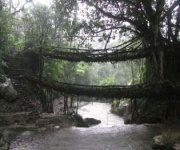
A garden excursion can pair particularly well with a visit to a living root bridge, where tree roots have been guided and strengthened over many years to form a functional crossing. Travellers interested in the people and patience behind this tradition can read the story of the bridge before visiting one of Meghalaya’s renowned root-bridge sites.
This combination creates a richer day than a sequence of viewpoints alone. Tea gardens represent cultivated land and seasonal work; root bridges represent ecological engineering and community stewardship. Together, they show why the Cherrapunjee region is best experienced through both its scenery and its living traditions.
Simple Ways To Make The Stop Meaningful
A little preparation helps turn a brief garden visit into a memorable part of a Meghalaya holiday:
- Ask your accommodation or local driver about gardens that are currently accessible to visitors.
- Confirm permission, opening arrangements, and road conditions before travelling.
- Carry rain protection and sturdy footwear, even when the morning begins clear.
- Learn how local tea is grown, processed, or served instead of treating the garden only as a viewpoint.
- Combine the visit with a nearby village, waterfall, cave, or cultural landmark to make the journey worthwhile.
Tea gardens in and around Cherrapunjee may not offer the scale or polished facilities of famous plantation destinations, and that is precisely what makes them appealing. They provide a quieter view of the region, where agriculture takes place among cloud-covered hills and communities continue to shape the landscape through everyday work.
For travellers arranging a stay in Sohra, this lesser-known stop can add texture to a multi-day holiday. Include time for a local tea experience alongside waterfalls, caves, viewpoints, and living root bridges, and contact India Beacons Sojourn through Cherrapunjee.net to plan a route suited to the season, available access, and length of your Meghalaya trip.