





Wildlife to watch around Cherrapunjee
Cherrapunjee, also known as Sohra or Cherrapunji, is celebrated for dramatic waterfalls, mist-covered valleys, limestone caves and living root bridges. Its wildlife is less conspicuous than its scenery, yet the forests, streams and shaded trails support a rewarding range of birds, mammals, reptiles, amphibians and insects.
The region lies on the Meghalaya Plateau, where heavy monsoon rainfall creates lush vegetation and seasonal pools. Some animals are heard rather than seen, while others appear briefly along a forest path, near a village edge or in the quieter corners of a protected park. A patient traveller with realistic expectations can discover much more than the area’s famous viewpoints.
Wildlife sightings are never guaranteed. Weather, season, trail conditions and the amount of human activity all influence what appears. A local guide can help visitors recognize calls, fresh tracks, feeding signs and habitats without disturbing the animals that make the Khasi Hills their home.
Habitats across the Sohra plateau
Cherrapunjee’s wildlife is shaped by a patchwork of habitats rather than one continuous wilderness. Evergreen and semi-evergreen forest survives in pockets around gorges, caves, village groves and steep slopes. Ferns, mosses, orchids and climbing plants flourish in the wet season, providing cover and food for insects, birds and small mammals.
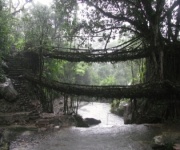
The forest around Nongriat is especially interesting for nature walks. The descent to the living root bridges passes through humid woodland, stream corridors and terraced greenery. Visitors who take time to look beyond the bridge itself may notice butterflies, tree frogs, birds in the canopy and small animals moving through the undergrowth. The living root bridges are cultural and botanical marvels first, but their surrounding vegetation also creates valuable habitat.
Open grassland and scrub support a different group of species. These areas may attract drongos, bulbuls, swallows, pipits and raptors searching for prey. Near forest boundaries, mammals are more likely to move at dawn or dusk, when temperatures are cooler and people are fewer.
Mammals you could encounter
The most memorable mammal sightings are often brief. Rhesus macaques and Assamese macaques may be seen near roads, settlements and forest edges, while capped langurs are associated with wooded habitats. Langurs can remain high in the canopy, so movement among leaves or a distant call may be the only evidence of their presence.
The hoolock gibbon, India’s only ape, occurs in forested parts of Northeast India, including Meghalaya. However, it is not an animal visitors should expect to see casually around the main Cherrapunjee attractions. Large, connected forest habitats are important to this species, and sightings are more likely on carefully planned wildlife excursions than on a short sightseeing stop.
Small and medium-sized mammals are more realistic possibilities. Barking deer may pass through dense vegetation, while wild boar, porcupines, civets and squirrels can leave tracks or feeding signs along quieter trails. The Malabar giant squirrel is associated with forest canopy and may be spotted if a guide hears its call or notices movement above the path. Bats are common around caves, but they should be observed from a respectful distance without flash photography or loud noise.
Birds, butterflies and forest life
Birdwatching in Cherrapunjee can be rewarding even when mammals remain hidden. Commonly noticed species may include red-vented bulbuls, black drongos, oriental magpie-robins, jungle mynas, sunbirds, crows and various babblers. In forested areas, visitors may also hear laughingthrushes, barbets, woodpeckers and minivets before locating them.
The changing elevation and vegetation create opportunities to see both open-country and woodland birds. Look for raptors riding air currents above cliffs, swallows around waterfalls and nectar-feeding birds near flowering plants. Early morning is generally the best period for bird activity, before rain, wind and midday movement make observation more difficult.
Butterflies add colour to the landscape, particularly beside streams and damp paths. Swallowtails, blues, whites, yellows and brush-footed butterflies may gather on wet ground to take in minerals. Dragonflies patrol pools and rivulets, while moths and beetles become more visible after rainfall. A small pair of binoculars and a phone camera with restrained use can help identify species without handling them.
Caves, streams and nocturnal species
The limestone caves near Cherrapunjee offer a different perspective on local biodiversity. Caves provide shelter for bats, insects and other organisms adapted to darkness and humidity. Their ecosystems are easily disturbed, so visitors should avoid shouting, touching formations or shining lights directly at animals for long periods.
Arwah Cave is known for its limestone formations, fossils and narrow passages. Reading a guide to Arwah Cave fossils before visiting can add geological context to the experience, while also encouraging careful behaviour inside this fragile environment. Fossils are not wildlife sightings, but they reveal how dramatically the landscape and its life have changed over geological time.
Streams and waterfall pools support frogs, tadpoles, crabs, aquatic insects and other small creatures. During and after the monsoon, amphibian calls may fill the forest at night. Tree frogs can be difficult to spot because they blend into leaves, while skinks and small snakes may bask briefly on rocks when the sun appears.
Some snakes in Meghalaya are harmless, while others are venomous. A snake seen on a path should be given plenty of space and never cornered or handled. Wearing proper footwear, using a torch after dark and staying on established routes reduces the chance of accidental encounters.
Where observation is most promising
Thangkharang Park and nearby forested viewpoints can provide opportunities for birdwatching, butterfly observation and views across the surrounding valleys. The park is better approached as a habitat to explore patiently than as a guaranteed wildlife-viewing site. Scan tree lines, listen for calls and watch flowering shrubs rather than focusing only on distant scenery.
The routes around Nongriat combine steep walking with streams and moist forest. This environment is particularly suitable for noticing amphibians, insects and smaller birds. The trail can be slippery, especially during the monsoon, so careful footing matters more than speed. A guide familiar with the path can point out animal signs that most visitors would overlook.
Mawsmai and Arwah caves are primarily geological attractions, but their surrounding vegetation and rock shelters may reveal bats, cave insects, birds and reptiles. Eco Park and other managed green spaces can be useful for casual birding when time is limited. Quieter village edges, sacred groves and forest margins may also be productive, provided visitors follow local access rules and do not enter private land without permission.
The table below offers a practical sense of what to look for and where each type of wildlife is most likely to occur.
| Wildlife or sign | Likely setting | Best viewing approach |
|---|---|---|
| Capped langur | Mature forest and canopy | Watch treetops quietly in the morning |
| Macaques | Forest edges, roads and settlements | Keep food packed away and maintain distance |
| Barking deer | Dense woodland and secluded slopes | Look for tracks at dawn or dusk |
| Giant squirrel | Tall forest trees | Scan branches and listen for movement |
| Bats | Limestone caves and rocky shelters | Use low light and avoid disturbing roosts |
| Tree frogs and dragonflies | Streams, pools and wet vegetation | Visit after rain with a torch or close-focus lens |
| Bulbuls, drongos and sunbirds | Gardens, scrub and forest margins | Carry binoculars and pause frequently |
| Butterflies | Sunny clearings and stream edges | Observe flowers and damp ground without chasing |
Responsible wildlife watching
Wild animals around Cherrapunjee live alongside villages, roads, farms and popular attractions. Responsible observation helps protect this balance. Feeding monkeys or other animals can make them dependent on people, increase aggressive behaviour and expose them to unsuitable food. Visitors should also avoid playing wildlife calls, using flash repeatedly or crowding an animal for a photograph.
Plastic waste is especially damaging in caves, streams and forest corridors. Carrying a reusable water bottle and taking all wrappers back to a disposal point keeps the habitat safer for birds, amphibians and small mammals. Do not collect feathers, shells, plants, fossils or unusual stones, since even small removals can damage fragile sites or violate local rules.
A considerate wildlife walk follows a few simple practices:
- Start early, move slowly and keep conversations quiet.
- Stay on marked paths and follow guidance from local communities or park staff.
- Carry binoculars, a small torch, rain protection and footwear with good grip.
- Keep food sealed, never feed animals and store rubbish securely.
- Give snakes, monkeys, bats and every other wild animal a clear escape route.
Weather awareness is equally important. Heavy rain can swell streams, obscure trails and reduce visibility, while mist may make cliff paths hazardous. Check local conditions before setting out, allow extra time for steep walks and avoid entering caves or crossing water during unsafe weather.
Planning a nature-focused stay
A multi-day visit gives wildlife enthusiasts better opportunities than a rushed stop between waterfalls. Two nights may allow time for a forest walk, a cave visit and a morning birding session. Longer packages create room for Nongriat, nearby viewpoints, village experiences and weather-related delays. The best itinerary balances famous attractions with unhurried time in suitable habitats.
The dry and early monsoon periods can offer clearer trails and easier movement, while the wetter months bring active streams, lush growth, frogs and abundant insect life. Conditions vary sharply from day to day, so there is no single season that guarantees every type of sighting. Comfortable walking clothes, a waterproof layer, sturdy shoes, insect repellent and a small first-aid kit are useful throughout the year.
Visitors from outside India should arrange the required travel documents and check current entry or permission requirements before planning a Meghalaya holiday. Local transport, walking distances and guide availability should also be considered, particularly for cave routes and the descent to Nongriat. Booking through an operator familiar with Sohra can simplify transfers, accommodation and the timing of nature excursions.
A wildlife experience in Cherrapunjee is measured by attention rather than by a long species list. The call of a hidden bird, a frog beside a stream, bat silhouettes in a cave or fresh deer tracks on a trail can be just as meaningful as a clear mammal sighting. Respect for the landscape ensures that these quiet encounters remain possible.
Plan a Cherrapunjee holiday with time for forests, caves, streams and village trails, and contact India Beacons Sojourn through Cherrapunjee.net to arrange a suitable tour or vacation package. A thoughtfully paced stay can bring together Sohra’s waterfalls, living root bridges, limestone landscapes and the wildlife that quietly inhabits them.