



Combining Cherrapunjee With Dawki and the Umngot River
There's a quiet shift happening in the way Australians plan their big overseas trips. Instead of heading back to Bali or Phuket for the fifth time, plenty of travellers from Sydney, Melbourne and Brisbane are starting to look further north, into the wet, green folds of Meghalaya. Cherrapunjee — also called Sohra — has long been known as one of the wettest places on Earth, and just a short drive south sits Dawki, the small border town whose Umngot River has become famous for water so clear that boats appear to float on glass. Pairing the two makes a clean, coherent route through the Khasi Hills.
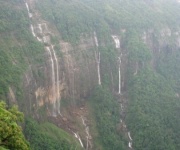
The two destinations complement each other almost too neatly. Cherrapunjee delivers the cliffs, waterfalls, caves and the fabled living root bridges, while Dawki offers a river experience you simply cannot get on the Sohra plateau. Most Australian tour operators and travellers treat them as a single circuit of three to five days, looping out from Shillong and returning the same way. Doing them together saves long backtracking, lets you acclimatise gradually to the elevation, and gives a balanced taste of highland culture and lowland river life.
Planning the Journey from Australia
Getting to this part of India from Australia requires a bit of patience, but the routing is straightforward. Most travellers fly out of Sydney or Melbourne on Qantas, Singapore Airlines, Malaysia Airlines or Air India, usually connecting through Changi, KLIA or Bangkok. From there, a domestic leg to Guwahati lands you in Assam, and a smaller Shillong flight operated by IndiGo or SpiceJet puts you in the Upper Khasi Hills within hours. Some travellers skip the second flight and take the famous NH6 road up from Guwahati instead, a five-hour drive that Aussies who love a long road trip tend to enjoy.
Australians need an Indian e-Tourist visa, which is processed online in a few days and is currently valid for 30 days, one year or five years depending on the option chosen. The cost is around AUD 30 to AUD 130, payable online. It's worth sorting this before locking in flights because the application occasionally asks for follow-up documents. Australians do not need any special permit for Meghalaya itself, though carrying passport copies and passport photos is sensible since the border zone near Dawki sits close to Bangladesh.
Getting from Cherrapunjee to Dawki
The road between Cherrapunjee and Dawki runs roughly 80 kilometres, but it doesn't feel short. It loops back through Shillong, the state capital, and then drops southwest towards the Bangladesh border. Most travellers break the drive with an overnight or a long lunch in Shillong, which has the better accommodation options for mid-range Aussie expectations — clean en-suite rooms, decent Wi-Fi and a café scene that feels closer to home than the rest of the state.
The road itself is winding, often misty, and during the heavy monsoon months the occasional landslip can delay traffic by an hour or two. Outside monsoon, the trip is reliable and scenic. Shared SUVs and private taxis are the standard ways to cover the route, and most packages booked through Indian tour operators include the transfer. If you prefer to travel independently, the local taxi unions at Cherrapunjee can arrange a return to Dawki with a few hours' stop at Shillong's Police Bazaar, which is what many Australian backpackers end up choosing for the flexibility.
Boating on the Umngot River
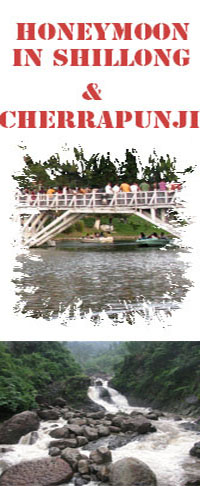
The Umngot River at Dawki has become one of the most photographed stretches of water in India, and the reason is simple: when the river is calm and the sun is high, you can see the boat hull and the passengers reflected against a sandy bottom several metres below. The boats are traditional wooden shallow-draft vessels, and most rides last between forty minutes and an hour and a half, depending on how far upstream or downstream you ask to go.
The clarity is seasonal. November through April delivers the clearest water, because the river is fed mostly by springs rather than surface runoff. During the wet monsoon months, the Umngot turns a cloudy jade green and loses that mirror quality, although it still looks spectacular in its own way. Australians visiting in the dry season will get the iconic shots. The boatmen operate from a small jetty just below the suspension bridge, and the standard fee is fixed, although a small tip for good service is appreciated.
Beyond the main stretch, the river widens into a quieter valley that nudges up against the Bangladesh border. Some local operators run half-day trips that include a stop at a riverside village for a simple lunch of rice, dal and fish. It's a slow, peaceful morning and one of the standout memories for most visitors.
Cultural Connections and Living Root Bridges
Both Cherrapunjee and Dawki sit in Khasi Hills country, a region with its own language, its own food traditions and a strikingly matrilineal social structure where children traditionally take the mother's surname. The deeper background of the hills — the way villages have managed forest commons for centuries, the role of the sacred groves, and the origins of the bio-engineered root bridges — is worth understanding before arriving. A useful primer on this landscape is the Khasi Hills forest story, which traces how these traditions survived through centuries of change.
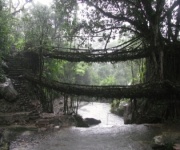
The living root bridges themselves are the headline attraction around Cherrapunjee, and they're built over generations by guiding the flexible roots of the Ficus elastica tree across streams. The double-decker root bridge at Nongriat is the most famous, but it's a steep 3,500-step descent from the nearest road, which puts off travellers with knee issues and small children. A more accessible option is the Wahthyllong Park near Cherrapunjee town, which offers a shorter walk and a root bridge that doesn't require an entire day.
Around Dawki, the cultural layer is thinner but still present. The town is mostly a trading post for limestone and oranges, but the riverside villages practise the same Khasi customs and most families still speak Khasi as their first language. Hiring a local guide for the morning boat ride will often include informal visits to a couple of homes and an explanation of how the river is shared between fishing, ferrying and tourism.
Where to Stay and a Sample Itinerary
Accommodation in Cherrapunjee has improved a lot in the last five years. The mid-range resorts around Sohra offer hot water, attached bathrooms and views across the Bangladeshi plains, and a handful of boutique properties have opened near Mawsmai and Nohkalikai Falls. Dawki has fewer options and is more basic — most travellers either stay at the camp-style resorts along the river or return to Shillong. The packages offered through India Beacons Sojourn typically include two to seven nights across Cherrapunjee, Dawki and Shillong, with private transfers and guided activities bundled in.
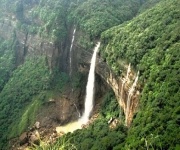
A workable Australian-friendly itinerary runs four nights. Day one is arrival in Shillong with an easy afternoon to adjust to the altitude. Day two moves to Cherrapunjee, with stops at Nohkalikai Falls, Mawsmai Cave and the root bridge covered in the Wahthyllong Park guide. Day three is a long day — drive to Dawki, morning boat ride on the Umngot, lunch by the river, return to Shillong for the night. Day four covers Shillong's Don Bosco Museum and the local markets before flying out, or extending into Kaziranga if there's appetite for a rhino safari on the way back to Guwahati. Travellers who want to ease the pace can add an extra night in Dawki or split Cherrapunjee across two properties.
Practical Tips for Travelling from Australia
A few small details make the trip smoother for Australians used to a certain way of moving. The Australian dollar goes a long way in Meghalaya, and most transactions can be paid in cash rupees, although ATMs in Shillong accept international cards. Mobile coverage is patchy outside the towns — Shillong has 4G but Cherrapunjee and Dawki drop to 2G or nothing, which is worth flagging if you're travelling as a family where teenagers expect constant signal.
Most Australians find the food approachable. Rice, dal, fish and chicken form the staples, and the Khasi version of pork dishes is the regional highlight for anyone who eats meat. Vegetarian travellers will find options easily, though the variety is narrower than in mainland tourist circuits. Pack a light rain jacket even in the dry months, because the elevation keeps the air cool and sudden showers pop up. Closed walking shoes are essential for the root bridges and the limestone caves.
Health-wise, no specific vaccinations are required for Meghalaya beyond the usual recommendations for India, but most GPs in Sydney or Perth will suggest updating typhoid and hepatitis A before a trip like this. Tap water should be avoided, and bottled or filtered water is widely available. Travel insurance that covers medical evacuation is worth the extra, given the remoteness of some of the drives.
The circuit between Cherrapunjee and the Umngot River is one of the few places in South Asia where Australians can combine two genuinely unusual experiences in a single short break, and it sits comfortably inside the longer India trip that many travellers build around a Delhi or Agra arrival. Booking a multi-day package through India Beacons Sojourn handles the transfers, the boats and the accommodation in one bundle, which suits travellers who would rather focus on the views than the logistics. Reach out through the contact details on cherrapunjee.net to start sketching dates and a route that fits the rest of your India plans.