





How to combine Cherrapunjee with a visit to Shillong
A journey through Meghalaya feels richer when Shillong and Cherrapunjee are treated as two connected but distinct destinations. Shillong brings together colonial-era character, cafés, markets, music, museums, and hill-town viewpoints. Cherrapunjee, also known as Sohra or Cherrapunji, offers a wilder landscape of waterfalls, limestone caves, rainforest trails, and living root bridges.
The two places are close enough to include in one holiday, yet each deserves enough time to experience properly. A rushed day trip from Shillong can cover a few famous viewpoints, but an overnight stay in Sohra allows the landscape to unfold at a slower pace, especially around sunrise, misty valleys, and quieter village routes.
A practical itinerary usually begins in Shillong and continues to Cherrapunjee before returning to Shillong or moving onward toward Dawki, Mawlynnong, or Guwahati. The ideal number of nights depends on the season, road conditions, and whether your priority is sightseeing, hiking, photography, or relaxation.
Choose the right order for your journey
For most visitors, Shillong works well as the first stop. It is the main urban base in Meghalaya, with a wider range of hotels, restaurants, transport connections, and practical services. Spending two nights there gives you time to recover from travel and explore the city before heading into the countryside.
From Shillong, the drive to Cherrapunjee generally takes around two to three hours, covering approximately fifty-five kilometres. The actual duration can vary with traffic, rain, roadwork, and stops at viewpoints. Rather than treating the transfer as lost time, plan it as a scenic route through rolling hills, forested slopes, and villages.
A common route is Guwahati to Shillong, followed by Shillong to Sohra, with the option of returning to Shillong or continuing through southern Meghalaya. If your flight or train arrives late in Guwahati, an overnight stay in Shillong is more comfortable than attempting to reach Cherrapunjee after dark.
Match the number of nights to your interests
A short four-night holiday can include two nights in Shillong and two nights in Cherrapunjee. This arrangement gives you a balanced first visit, with time for Shillong Peak, Elephant Falls, Ward’s Lake, local markets, and a selection of Sohra’s major waterfalls and viewpoints.
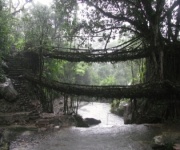
With five or six nights, the trip becomes less hurried. Add a third night in Cherrapunjee for caves, village walks, a living root bridge excursion, or a longer visit to Nohkalikai Falls, Dainthlen Falls, Wei Sawdong Falls, and nearby forest areas. Extra time is especially valuable during the monsoon, when showers may change driving schedules and trails can become slippery.
A seven-night plan can include Shillong, Cherrapunjee, and a further destination such as Mawlynnong or Dawki. This longer route works well for travellers who want to combine waterfalls and rainforest with the clear river views of the Jaintia Hills. Keep some flexibility in the plan because weather can make a scenic stop take longer than expected.
Build a route that leaves room for scenery
The road from Shillong to Sohra is part of the experience. Laitlum Canyon, Mawkdok Dympep Valley, and several roadside viewpoints can be considered along the way, although the best stops depend on your final hotel location and available daylight. Leaving Shillong early helps you enjoy these places without compressing the afternoon sightseeing schedule.
Once in Cherrapunjee, group attractions by area rather than trying to cross the region repeatedly. Nohkalikai Falls and the surrounding viewpoints can fit together, while Dainthlen Falls and Mawsmai Cave may suit another half-day. Ask your driver or local tour coordinator about current road access before committing to a detailed sequence.
The natural setting also carries stories that add depth to the visit. Before stopping at Dainthlen Falls, read this account of the Dainthlen Falls story to understand the local mythological significance associated with the place. Combining cultural context with landscape viewing makes the stop more memorable than a quick photograph from the roadside.
| Travel style | Shillong stay | Cherrapunjee stay | Best suited to |
|---|---|---|---|
| Quick Meghalaya escape | 2 nights | 2 nights | First-time visitors with limited leave |
| Balanced nature and city trip | 2–3 nights | 3 nights | Waterfalls, caves, viewpoints, and relaxed sightseeing |
| Active landscape holiday | 2 nights | 4 nights | Root bridges, hikes, caves, and photography |
| Wider Meghalaya circuit | 2 nights | 2–3 nights | Travellers adding Dawki, Mawlynnong, or Guwahati |
Give Shillong more than a transit stop
Shillong has enough character to support a full day or two. Start with Ward’s Lake and Lady Hydari Park for an easy introduction to the city, then explore the local food and shopping areas around Police Bazaar. Shillong Peak offers broad views when visibility is good, while the Don Bosco Museum provides useful context about the cultures and communities of Northeast India.
Elephant Falls is convenient to combine with Shillong Peak because both can be visited within the same general outing. The falls are reached by a short stairway, making them accessible for many travellers, although the steps can be wet during rainy weather. For a quieter city experience, spend time in cafés, browse handicrafts, or visit a local music venue if one is operating during your stay.
Shillong’s urban comforts also make it a useful base for planning the next stage. You can purchase snacks, arrange cash, check weather conditions, and confirm transport before travelling to Sohra. However, avoid filling every hour with city attractions. A relaxed Shillong day helps you begin the Cherrapunjee portion with enough energy for early starts and uneven trails.
Plan Cherrapunjee around landscapes and walking time
Sohra is known for dramatic waterfalls, but many attractions require more time than their distance suggests. Viewpoints can be visited quickly, while caves and root bridges involve steps, damp paths, or longer walks. Mawsmai Cave is relatively accessible, whereas a living root bridge excursion may require several hours and a substantial climb.
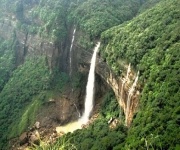
Nohkalikai Falls is among the most recognisable sights in the area, with a viewpoint overlooking a deep green valley. Visibility can change rapidly, so do not assume that a cloudy arrival means the view will remain hidden all day. A later return may reveal a different landscape as the mist lifts or the light changes.
Dainthlen Falls, Wei Sawdong Falls, and smaller roadside cascades can be arranged according to road conditions and personal stamina. During heavy rain, water levels and currents may be dangerous, and paths can become unstable. Follow local instructions, stay behind barriers, and avoid entering pools or streams simply because the water appears calm.
A good Cherrapunjee itinerary balances signature attractions with unstructured time. Leave an afternoon for a resort view, a village walk, or a slow meal rather than adding another distant stop. The region’s appeal comes from the combination of scale, weather, vegetation, and silence, which is easily missed when every visit becomes a timed checklist.
Consider season, weather, and road conditions
The monsoon, generally from June through September, creates the powerful waterfalls and saturated green scenery associated with Cherrapunjee. It can also bring heavy rain, poor visibility, slippery paths, and sudden transport delays. Waterproof footwear, quick-drying clothing, and flexible reservations become particularly important during this period.
October to April often brings clearer skies and more comfortable conditions for viewpoints, caves, and walking routes. Waterfalls may be less forceful than during the rainy season, but the views can be more dependable. Winter mornings can feel cool, especially in exposed areas, so carry a light warm layer even when afternoons are mild.
Road travel is usually the most practical way to connect Shillong and Cherrapunjee. A private car with a local driver offers flexibility for stops and weather-related changes, while shared vehicles may cost less but follow fixed routes and schedules. If you are travelling independently, verify departure points and return options in advance rather than assuming frequent transport late in the day.
Driving after dark is best avoided on unfamiliar hill roads. Start sightseeing early, allow extra time for rain, and keep phone batteries charged. Mobile coverage may be inconsistent in rural sections, and small shops or viewpoints may not accept digital payments reliably.
Choose accommodation for the experience you want
Shillong offers the broadest choice of accommodation, from city hotels near commercial areas to quieter properties on the outskirts. Staying centrally is convenient for restaurants, shopping, and transport, while a property away from the busiest roads may provide better sleep and easier parking.
In Cherrapunjee, accommodation ranges from resorts and hotels to smaller guesthouses with valley views. A scenic property can be a major part of the holiday, particularly when mist moves across the hills in the morning. Check the location carefully, since a resort advertised as being in the Cherrapunjee area may be some distance from the attractions you intend to visit.
When comparing properties, look beyond photographs. Confirm whether hot water, heating, parking, meals, Wi-Fi, and transport assistance are available. During rainy months, ask about backup power, access roads, and cancellation terms. A comfortable stay matters after a day of walking on wet paths.
Booking through a Meghalaya-focused travel provider can simplify the connection between accommodation, vehicles, sightseeing, and local timing. Cherrapunjee.net presents multi-day packages from two to seven nights, allowing travellers to choose a short Shillong–Sohra combination or a longer route that includes other Meghalaya highlights.
Pack for changing conditions
The right gear makes the transition from city sightseeing to wet hill trails much easier. Pack light enough for moving between hotels, but include protection for rain, cool mornings, and uneven ground.
- Waterproof walking shoes with reliable grip
- A lightweight rain jacket or poncho and a compact umbrella
- Quick-drying trousers, spare socks, and a small daypack
- A warm layer for early mornings and open viewpoints
- Reusable water bottle, personal medicines, power bank, and small cash
Respect for local communities and natural areas is equally important. Carry rubbish back with you, avoid loud behaviour near villages and sacred places, and ask before photographing residents. Root bridges, caves, forests, and waterfalls are living landscapes rather than disposable photo locations.
Turn the itinerary into a smooth holiday
The simplest structure is two nights in Shillong, followed by two or three nights in Cherrapunjee. On the Shillong days, focus on city sights and practical preparation. On the transfer day, stop at selected viewpoints rather than attempting every attraction between the two destinations. Reserve the first full day in Sohra for major waterfalls and viewpoints, then use the following day for caves, root bridges, or a slower local excursion.
If you have more time, add a buffer night rather than filling the schedule with distant attractions. This protects the trip from bad weather and gives you a chance to revisit a viewpoint when conditions improve. It also creates space for an unplanned village stop, a longer meal, or a quiet morning at your accommodation.
Families, older travellers, and anyone uncomfortable with steep trails should prioritise viewpoints, accessible waterfalls, and shorter walks. More active visitors can dedicate a full day to a root bridge route, but should confirm trail conditions and arrange a local guide where appropriate. Travel times and physical demands should be discussed before booking so that the itinerary matches the group.
The Shillong and Cherrapunjee combination works because the destinations complement one another. Shillong supplies culture, convenience, and a lively hill-city atmosphere; Sohra provides the dramatic natural scenery that defines southern Meghalaya. With sensible pacing, reliable transport, and accommodation chosen for both location and comfort, the two-stop journey becomes a coherent holiday rather than a collection of rushed day trips.
When you are ready to arrange the route, review the Cherrapunjee.net accommodation and vacation package options, select the number of nights that suits your travel style, and contact India Beacons Sojourn through the site’s booking details. A locally organised itinerary can help coordinate Shillong, Cherrapunjee, transport, sightseeing, and seasonal adjustments in one Meghalaya journey.