




How To Discover Traditional Khasi Architecture In Sohra
Sohra, widely known as Cherrapunji, is often introduced through misty escarpments, dramatic waterfalls and living root bridges. Yet the built environment tells an equally rich story. Khasi homes, churches, market buildings and village structures reveal how people have adapted to extraordinary rainfall, steep terrain and a strong community-based culture.
For Australian travellers, learning about Khasi architecture is best approached as a field experience rather than a quick sightseeing checklist. A walk through Sohra becomes more meaningful when you understand local materials, clan traditions, Christian influences, vernacular design and the practical decisions behind a roof built for one of the wettest places on Earth.
The most rewarding visits combine observation with respectful conversation. Take time to notice rooflines, raised floors, courtyards, timber details and the relationship between a house and its surrounding land. A local guide can explain what a building cannot, while a slower itinerary gives you the chance to connect architecture with Khasi history and everyday life.
Read The Landscape Before The Buildings
Traditional Khasi architecture makes sense when viewed against the Meghalaya plateau. Sohra sits among limestone formations, deep valleys and forested slopes, with heavy monsoon rain shaping almost every aspect of construction. Roofs need to shed water quickly, paths can become slippery, and homes must remain practical through long periods of damp weather.
Look for buildings that respond to their setting rather than trying to dominate it. Sloping roofs, covered verandas, wide eaves and carefully placed openings help manage rain. In older structures, locally available timber, stone, bamboo and thatch were used according to the resources and skills of each community. Contemporary homes may use concrete and corrugated metal, but many still preserve the same climate-conscious principles.
The surrounding landscape is part of the architectural experience. A village home may sit beside betel nut palms, kitchen gardens, steep fields or a stream, with paths connecting households and community spaces. This relationship differs from the detached suburban blocks familiar in Brisbane, Perth or outer Melbourne, where drainage, roads and utilities are usually planned at a much larger scale.
Explore Khasi Homes And Community Spaces
A good way to study Khasi building traditions is to compare private homes with shared places. Observe how entrances, porches and gathering areas create a transition between household life and the outdoors. In a high-rainfall region, a sheltered threshold is useful, yet it also provides a place for conversation, work and welcoming visitors.
Ask a guide about the role of the clan and village in shaping settlement patterns. Khasi society has distinctive matrilineal traditions, and family identity, inheritance and community relationships influence how people understand home and belonging. Architecture alone cannot explain these customs, but it can prompt better questions about who uses a space, who maintains it and how generations share a property.
Churches are also important landmarks across Sohra. Missionary activity introduced new architectural forms, including prominent church buildings and European-influenced details, while local builders adapted them to Meghalaya’s climate and materials. Visit with sensitivity during services or community events, dress modestly and ask before photographing people or interiors.
Travellers from Australia may recognise the value of a verandah from Queenslander houses, rural homesteads and older coastal buildings. The comparison is useful, though the Khasi setting is different: monsoon rain, hill roads, local social structures and traditional craft practices all produce their own architectural language.
Visit Places That Reveal Living Traditions
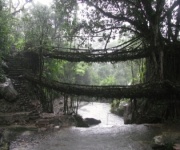
Sohra’s villages and surrounding attractions offer several ways to connect architecture with cultural history. Mawlynnong is known for its village environment and living root bridge traditions, while areas around Nongriat show how Khasi communities have worked with living trees to create durable crossings. These bridges are not conventional buildings, but they demonstrate patient, collective design using local ecological knowledge.
The famous double-decker living root bridge requires a demanding walk, so physical preparation matters. Before adding it to an architecture-focused itinerary, review this guide to Rainbow Falls trek preparation, particularly if your plans include steep steps, humid conditions and long periods on uneven ground.
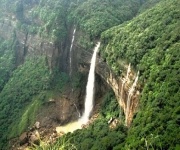
Caves and waterfalls also help explain the region’s settlement choices. Limestone caves, such as those found around Meghalaya, are part of the geological setting that supplies stone and influences drainage. Waterfalls and gorge systems show why homes, paths and cultivated plots need careful placement. A local guide can point out how villages avoid exposed edges, cope with runoff and maintain routes during the wet season.
Do not overlook ordinary streets. A roadside shop, timber balcony, corrugated roof or small community hall may reveal more about present-day adaptation than a formally preserved attraction. Ask permission before entering private compounds, and treat residential areas as lived spaces rather than open-air museums.
Learn Through Guides, Museums And Conversations
A knowledgeable Khasi guide can turn visual details into cultural understanding. When arranging a tour, request someone familiar with local history, architecture and village customs rather than relying only on a general sightseeing schedule. Ask whether the guide can explain building materials, household layouts, church history, traditional craftsmanship and changes brought by roads, tourism and modern construction.
Small museums, heritage displays and cultural centres can provide useful background before or after a village visit. Their collections may include tools, textiles, agricultural objects and household items that show how architecture supported work and storage. Even where formal interpretation is limited, these places can help you recognise the difference between an inherited tradition and a recent decorative choice.
For Australian visitors, direct and polite questions usually work well. Phrases such as “Could you explain how this roof handles the rain?” or “Is this a traditional design or a newer style?” invite explanation without assuming that every building is old. In local markets, a friendly “How much is this?” is normal, but bargaining should remain light and respectful, especially with small producers and craftspeople.
Photography requires judgement. Ask before photographing homes, worshippers, workers or children, and avoid treating people as part of a scenic composition. If a guide recommends a family-run craft workshop or homestay, listen to the host’s boundaries and pay fairly for time, food, guiding or demonstrations.
Build An Architecture-Focused Itinerary
Allow at least two nights in Sohra if architecture and cultural learning are central to your trip. A short stay can cover viewpoints, a village walk and a guided cultural visit, while a longer break allows time for living root bridges, caves, waterfalls and conversations without turning every day into a race between attractions.
Australians often plan around annual leave, school holidays and flight connections, so seasonality deserves attention. The wet season creates the lush scenery and powerful waterfalls associated with Sohra, but trails may be muddy and road travel slower. The drier months can make walking easier, although weather can still change quickly in the hills. Build in flexibility rather than scheduling every transfer tightly.
An open-jaw or stopover itinerary may also make sense for travellers flying from Sydney, Melbourne, Brisbane or Perth. Some visitors combine Northeast India with another Asian destination, and advice on planning a Singapore stay can help when working out how much time to allocate before continuing to Meghalaya. Check Indian visa requirements, passport validity, travel insurance and any current regional permissions well before departure.
Useful Planning Details
- Choose a local guide who can discuss culture and building traditions, not just viewpoints.
- Keep Australian dollars for the wider trip, but carry suitable Indian rupee cash for smaller purchases and rural services.
- Allow extra road time for hill routes, rain, traffic and stops at village viewpoints.
- Book accommodation early for Australian school-holiday periods and popular festival dates.
What To Observe On A Walk
- Roof pitch, guttering, eaves and the direction of rainwater flow.
- Timber, bamboo, stone, thatch, brick, concrete and corrugated metal in combination.
- The position of cooking, storage, sleeping and social areas within a home.
- How paths, gardens, fences and drainage connect a building to its surroundings.
Compare Architectural Experiences In Sohra
Not every place teaches the same aspect of Khasi architecture. A village walk is strongest for observing homes and settlement patterns, while a church visit reveals the meeting of local craftsmanship and missionary influence. A living root bridge shows ecological engineering, and a museum or cultural centre provides context that may be difficult to find in the field.
Use the comparison below to balance active exploration with reflection. Times and access can vary, especially during heavy rain, community events or local celebrations, so confirm arrangements with your operator before setting out.
| Experience | What It Can Teach You | Typical Effort | Best Approach |
|---|---|---|---|
| Village walk near Sohra | Home design, paths, gardens and everyday adaptation | Low to moderate | Go with a local guide and ask before photographing |
| Historic or prominent church | Missionary influence, local construction and community identity | Low | Dress modestly and avoid disrupting services |
| Living root bridge visit | Khasi ecological knowledge and collective maintenance | High | Wear proper footwear and allow a full day |
| Local museum or cultural centre | Tools, textiles, domestic life and historical context | Low | Visit before a village walk to improve observation |
| Homestay or family-run meal | Current household use, food preparation and hospitality | Low | Treat the home as private space and follow the host’s lead |
| Market or roadside settlement | Contemporary materials, commerce and changing styles | Low | Observe everyday life without blocking activity |
A responsible itinerary also recognises that “traditional” does not mean frozen in time. Families may choose concrete for durability, metal roofing for availability or larger windows for comfort. New materials can coexist with older layouts and cultural practices. The goal is to understand adaptation, not to rank modern buildings against historic ones.
For accommodation, choose a resort, hotel or homestay that supports local employment and provides clear information about transport and walking conditions. The Sohra travel website includes practical guidance on attractions, places to stay, packages and travel preparation, making it useful when turning architectural interests into a workable multi-day visit.
Travel With Respect And Curiosity
Learning about Khasi architecture in Sohra is most rewarding when the visit benefits the people who maintain the culture and landscape. Use local guides, eat at independent establishments, buy crafts directly where possible and avoid removing stones, plants or other materials from heritage sites. A small contribution to a community-led attraction can help with upkeep, especially for bridges and village facilities.
Keep your expectations realistic. You may not find formal plaques describing every house, and some of the most revealing details appear in ordinary places. Rain may close a trail, a guide may adjust the route, or a family may decline a photograph. These moments are part of responsible travel in a living cultural landscape.
Pack quick-drying clothing, a light rain jacket, sturdy walking shoes, a reusable water bottle, insect repellent and a waterproof cover for electronics. Australians used to bushwalking in the Blue Mountains, Dandenong Ranges or Tasmania will recognise the value of good grip and layered clothing, but Sohra’s humidity and monsoon conditions can feel much more intense.
Plan your journey around people as much as buildings. With two to seven nights available, you can include guided village visits, living root bridges, caves, waterfalls and quiet time at your accommodation. Browse the available Cherrapunjee packages, choose a pace that suits your fitness and interests, and contact the local team to arrange a culturally informed stay in Sohra.