





Planning a Photography Workshop Trip to Cherrapunjee That Actually Delivers
Cherrapunjee sits in the East Khasi Hills of Meghalaya with a reputation as one of the wettest inhabited places on Earth. Annual rainfall figures climb past 11,000 millimetres, and that single statistic explains why serious landscape photographers keep returning. The clouds do not just visit; they arrive in great rolling sheets, wrap themselves around limestone cliffs, and dissolve the valleys into silver halos. Every composition lives or dies by the way moisture moves through the frame.
For an Australian photographer, the appeal is partly geological and partly logistical. Meghalaya shares monsoon patterns that echo the tropical north of Queensland, yet offers a cultural and visual vocabulary that feels entirely its own. Living root bridges, waterfalls that pour straight off the plateau edge, and small Khasi villages where betel nut still trades by the basket make the region feel like another planet reached from Brisbane or Melbourne in a little over a day of flying.
This guide walks through the practical decisions that turn a casual trip into a functioning photography workshop. It assumes you are leading or joining a small group, working with serious gear, and want a plan that respects both the local environment and the realities of travelling out of Australia.
The starting point is always the same: stop chasing a single iconic shot and start designing a trip around how the light actually behaves in the southern reaches of the Khasi Hills. Everything else, from lenses to lodging, falls out of that decision.
Choosing the Right Window for Meghalaya's Light
Meghalaya has two distinct photographic seasons, and choosing between them is the most consequential decision you will make. The post-monsoon window from late October through November offers retreating rains, dramatic clearing skies, and waterfalls still running at full volume after months of saturation. The pre-monsoon stretch from February into early April trades some of that flow for cleaner air, stronger contrast, and longer golden-hour windows that suit early-morning group shoots around the root bridges.
Most workshop leaders favour October and November because the diffused light flatters mossy greens and the rivers run thick with white water. The trade-off is slippery trails, persistent drizzle, and the constant question of whether a viewpoint will even be visible by the time the group arrives. For photographers coming from Perth or Adelaide, where dry summer light is the norm, the wet conditions can feel disorienting at first.
Pack your schedule with redundancy. Build in two or three buffer days that can absorb weather without cancelling key shoots. A workshop that locks in sunrise at the Double Decker Root Bridge for one specific morning is fragile; a workshop that protects three candidate mornings is resilient.
Building an Itinerary Around Waterfalls and Living Root Bridges
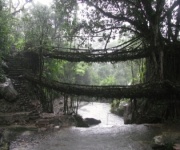
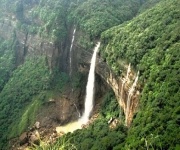
The signature subjects around Cherrapunjee are Nohkalikai Falls, Seven Sisters Falls, the Mawsmai and Mawmluh cave systems, and the living root bridges at Nongriat. Each one behaves differently through the day, and a workshop itinerary should treat them as separate genres rather than as a checklist of stops.
Nohkalikai responds to backlight in the late afternoon when the spray catches the sun and turns into a column of soft glow. Seven Sisters reads better from a wide angle in flat overcast light. The root bridges demand patient mid-morning timing, when mist is still lifting but the group is not yet soaked through. Treat the trip as a sequence of deliberate shoots rather than a marathon.
Pre-book your main logistics through a trusted itinerary source rather than improvising on arrival, particularly if you are running a workshop with paying participants. A reliable three-night package walkthrough can save you the awkward job of negotiating room blocks on the ground while juggling exposure settings and group safety.
Gear, Power, and Packing for Australian Travellers
Australian power points run at 230 volts and 50 hertz with Type I plugs, which is identical to Indian domestic supply. That means your chargers will work without a voltage converter, but you will still need a quality multi-plug power board because hotel sockets near Cherrapunjee are often limited to one or two per room and tend to live in inconvenient corners. Carry surge protection; lightning strikes during monsoon storms can fry unprotected battery chargers in a heartbeat.
Bring more glass than you think you need. Wide-angle work dominates the waterfalls, but the intimate detail of root bridge textures and the portraits you will want to take of Khasi villagers both reward a mid-range zoom. Two bodies are a sensible minimum for a workshop context, partly for redundancy and partly because swapping lenses in drizzle is a genuine risk.
Declare every piece of gear on your way out of India through the Tourist Refund Scheme counter if you have spent above the GST threshold on photography accessories. The paperwork is fiddly and you will need original tax invoices, so keep them in one folder from day one. On the return leg, the Australian Border Force biosecurity declaration asks specifically about used outdoor equipment. Wipe down tripods, clean boots, and shake out camera bags before you reach the arrivals hall in Sydney or Melbourne to avoid any conversation about contaminated soil.
Sorting Visas, Permits, and Border Area Access
Australian passport holders need an Indian tourist visa, and the e-Visa system is the cleanest route for short workshops. Apply well ahead of your trip, photograph every page of the approval, and carry printed backups because mobile signals at hill viewpoints are unreliable. Some stretches near the Bangladesh border require an Inner Line Permit, which is arranged locally and not something you can sort from Melbourne at midnight.
Your travel insurance should specifically cover adventure activities such as trekking on wet root bridge paths. Standard policies sold through ATAS-accredited agents in Australia usually meet that bar, but read the fine print for altitude and helicopter evacuation clauses. Indian hospitals in Shillong are competent for routine care, but serious evacuations typically route through Guwahati, and that transfer needs to be in writing before you fly.
Keep digital copies of passports, visas, insurance, and emergency contacts in a cloud folder that the whole group can access. Mobile data through an Indian SIM is cheap and reliable in towns, and a local number makes coordinating with drivers and guides far easier than chasing roaming reception on Australian networks.
Booking a Base That Works for a Workshop Group
Cherrapunjee town itself is small, and accommodation clusters around a handful of resorts and family-run hotels with views over the plains. For a workshop, the choice usually comes down to two trade-offs. Staying in town gives easier power, mobile signal, and road access for group arrivals. Staying further down toward Mawsmai or Mawkdok sacrifices some comfort for proximity to dawn shoots.
Ask prospective properties specific questions before booking. Is there a dry room for camera gear? Can the kitchen handle early breakfast for a group leaving at four in the morning? Is there a covered outdoor area suitable for classroom-style image reviews when the rain is horizontal? Many smaller properties are willing to help with all three once they understand the shape of a workshop.
Group size also matters. Six to ten participants is the sweet spot for most workshop leaders coming out of Sydney or Brisbane. Larger groups split awkwardly across vehicles on narrow Khasi roads, and smaller groups struggle to justify the guide fees that a serious itinerary demands.
Working with a Local Guide and Workshop Logistics
Indian domestic tourism law and simple common sense both push you toward hiring a local Khasi guide for any trek down to the root bridges. The steps are steep, the stone is slick, and the path forks often enough that first-time visitors regularly take wrong turns. A guide who grew up walking those routes is also a translator, a fixer, and a cultural bridge to village councils that control access.
Pay guides fairly and confirm rates in writing before the trek begins. Tipping for excellent service is appreciated, and group tipping pools smooth out awkward moments. Brief your participants on basic etiquette: ask before photographing people, remove shoes when entering village homes, and resist the urge to leave litter on the path back up. Australian photographers tend to be respectful visitors, and a good guide will notice and reciprocate.
Build review sessions into each evening. Even a thirty-minute group critique around a power board and a laptop, with chai ordered in, will lift the standard of everyone's work far more than an extra hour of chasing the perfect light.
Health, Safety, and the Wet-Season Reality Check
Cherrapunjee sits at roughly 1,484 metres above sea level, and the humidity can sit above ninety percent for days at a time during monsoon transition periods. Photographers who are used to dry continental light often underestimate how much the air itself affects both body and gear. Read up on practical humidity and altitude handling before you fly, and factor that learning into your pre-trip briefing for the group.
Carry a basic first-aid kit, including rehydration salts, anti-diarrhoeal medication, and blister treatment. Encourage everyone in the group to walk the Nongriat descent slowly on the way down rather than on the way up, which is the more common mistake. Knees and patience both suffer when the adrenaline of the first shoot carries people faster than the wet stone allows.
Set expectations honestly with every participant before they fly out of Australia. Cherrapunjee will not give every photographer the postcard shot they imagined; it will give something stranger, heavier, and more memorable. A valley that breathes, a bridge grown by hand over generations, and a light that changes by the minute become the real subjects once the workshop settles into the rhythm of the plateau.
Ready to turn this plan into a booked trip? Reach out to the Cherrapunjee team through the contact page to start shaping a workshop itinerary around your group's dates, gear list, and shooting priorities. Whether you are organising your first small group from Adelaide or scaling up an annual retreat that already sells out in Hobart, the right early groundwork makes every shutter click on the plateau count.