






Staying connected in Cherrapunjee: mobile networks and internet guide
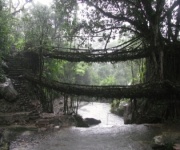
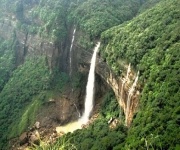
Cherrapunjee, once celebrated as the wettest place on Earth, sits high on the southern edge of the Khasi Hills, where limestone cliffs plunge toward the Bangladesh plains. The town draws travellers for its waterfalls, living root bridges and sprawling cave systems, but anyone flying in from Sydney or Melbourne quickly discovers that staying online here is nothing like staying online in an Australian capital. The cliffs that make the landscape so dramatic also block signals, the monsoon months bring towers down, and the power grid in many villages still relies on scheduled outages.
Australian travellers who are used to reliable 4G nearly everywhere from Bondi to Broome should plan ahead rather than assume roaming will simply work. Telstra, Optus and Vodafone Australia offer international roaming packs, yet Meghalaya sits in a coverage grey zone where Australian-issued SIMs often fall back to 2G or drop out entirely. The smartest approach for a two to seven night stay is to treat connectivity as part of the packing list, not a luxury to sort out after landing in Guwahati.
Local networks in Meghalaya are run by Airtel, Jio and Vodafone Idea, with BSNL filling the gaps in remote villages. Coverage maps that look reliable on a website in Adelaide or Perth can be wildly optimistic once you reach Sohra town centre, and signal strength changes every few kilometres along the road from Shillong. Many flights from Australia to northeast India route through Changi, and business travellers on long layovers often research rooftop bars in Singapore before continuing on to Guwahati, a small luxury that breaks up the long journey.
The good news is that the tourism industry has caught up with the realities of modern travel. Resorts, homestays and even some roadside cafés now advertise Wi-Fi, and the Meghalaya government has pushed fibre into the bigger towns. With a little preparation, you can post your photos from Nohkalikai Falls, video-call family in Brisbane, and still keep a working GPS signal through the wettest valley in the country.
| Network | 4G coverage in Cherrapunjee town | Coverage on major trek routes | Typical download speed | Best for |
|---|---|---|---|---|
| Airtel | Strong in Sohra market, weak in valleys | Patchy past Mawsmai village | 15-30 Mbps | Voice calls, social media |
| Jio | Comparable to Airtel in town, dropping fast on rural roads | Limited around Double Decker Bridge | 10-25 Mbps | Data-heavy apps, video calls |
| Vodafone Idea | Reasonable in town, gaps on cliff edges | Weak toward Seven Sisters viewpoint | 5-15 Mbps | Light browsing, messaging |
| BSNL | Reliable in villages, slow in town | Often the only option in deeper valleys | 2-8 Mbps | Emergency calls, basic texting |
Mobile network coverage in the Khasi Hills
The Khasi Hills are a maze of plateaus, gorges and sheer drops, and every ridge acts as a barrier for radio waves. In Cherrapunjee town itself you will usually see two or three bars on an Indian SIM, and small shops along the main road sell recharge packs for all major operators. Step a kilometre outside town, however, and the bars often vanish. Travellers driving from Shillong airport typically notice a strong signal until the final descent into Sohra, then a sudden patchy stretch until they reach their hotel.
Coverage along the road to Mawsmai Cave and the Seven Sisters viewpoint is reasonable on Airtel and Jio during the dry months, but the monsoon brings landslides that occasionally take down fibre and towers. Vodafone Idea tends to fade first in the valleys, while BSNL holds on longer in the more remote villages because its towers are placed in administrative centres rather than near tourist viewpoints. The detailed exploring-the-seven-sisters-falls-a-complete-guide on this site gives a clear breakdown of where to expect signal and where to plan for offline maps.
Choosing the right SIM or eSIM before departure
Buying a local Indian SIM in Australia is possible through a few travel resellers, but you will need a passport copy and a photograph, and activation can take up to forty-eight hours after you land. The easier route for most Australian travellers is an eSIM from Airalo, Holafly or Saily, which can be installed on a Telstra-locked or Optus-locked handset before you board the flight from Tullamarine. Make sure your device is eSIM compatible and unlocked, because some Australian postpaid plans sold through Woolworths Mobile or Aldi Mobile are still tied to a single network.
For a one-week Meghalaya trip, a 3 to 5 GB Indian eSIM is usually enough if you also rely on hotel Wi-Fi at night. If you plan to live-stream the views from a remote waterfall or upload drone footage, double that allowance. Jio and Airtel tourist packs bought at Guwahati airport counters are also reliable, though the queue at immigration can be slow during the October peak season. Keep a screenshot of your eSIM activation QR code in your phone wallet, because Australian airport Wi-Fi is not always strong enough to download large files at the gate.
Wi-Fi at resorts, homestays and cafés
Most mid-range resorts in Cherrapunjee advertise Wi-Fi, but the speeds are rarely what you would expect in a city hotel. A typical connection in a Sohra guesthouse delivers between 2 and 10 Mbps, which is fine for messaging and email, but sluggish for video calls. A handful of properties have invested in Starlink or fibre-to-the-home, and these stand out in the reviews. Always ask for the Wi-Fi password at check-in and test the connection before you settle into your room, because some routers are placed in a back office with poor signal coverage to the upper floors.
Cafés in the town centre have become small co-working hubs for digital nomads, and the café attached to the Cherrapunjee Tourist Lodge has the steadiest connection in the area. A few Australian travellers use these cafés as their morning office before driving out to waterfalls for the afternoon, a routine that mirrors the work-from-anywhere habits common in Byron Bay or Noosa. Keep in mind that bandwidth is shared across every guest, so peak hours between 7 pm and 10 pm can be painfully slow.
Portable hotspots, power banks and offline tools
Bringing a personal hotspot from Australia is not always practical, because Australian 4G bands do not match Indian frequencies, and you will end up draining your phone for nothing. A better investment is a power bank of at least 20,000 mAh, especially if your stay includes a trek to the how-to-book-a-guided-trek-to-the-double-decker-bridge where you may be off-grid for an entire day. Power cuts are common in Cherrapunjee, and even resorts with generators rarely run them through the night, so charging your devices during daylight hours is a wise habit.
Offline tools have improved dramatically in the last few years. Download the Maps.me and OsmAnd regions for Meghalaya before you leave, along with the AllTrails route for any trek you plan to attempt. Save your bookings, identity documents and medical details as offline copies in your phone wallet, and keep a paper backup for the rare days when both Wi-Fi and cellular data are unavailable. Travellers from Adelaide will recognise the same pattern of preparation that goes into a Flinders Ranges or Kangaroo Island trip, where mobile coverage is patchy and self-sufficiency is part of the adventure.
Weather, terrain and signal dropouts
The monsoon transforms Cherrapunjee into a different world between May and September, and connectivity suffers the most during this period. Heavy rain blocks the line of sight to towers, and the high humidity shortens the range of even the strongest 4G signal. Australian travellers who are used to checking the Bureau of Meteorology before a hike should also keep an eye on the local Meghalaya State Disaster Management Authority updates, which post real-time information about road closures and tower outages.
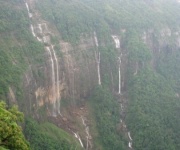
Cliffs and gorges are the other silent obstacle. The deeper you walk into the valleys below viewpoints like Seven Sisters Falls, the more your signal weakens. A common trick is to climb back to a saddle or a roadside café every couple of hours to send messages, refresh maps and check in with family. Treat connectivity as a resource you spend wisely, the same way you would ration water on a long hike, and you will find that even a remote holiday in Meghalaya can stay safely online.
Book your Cherrapunjee holiday with India Beacons Sojourn and let the team arrange a private vehicle, an eSIM voucher and a resort with reliable fibre Wi-Fi. The packages range from two to seven nights and cover every major waterfall, cave and living root bridge in the district. Reach out through the contact form on the website to lock in dates, request a custom itinerary, and start the countdown to your wettest, wildest trip yet.