





How to use local transport to visit multiple attractions in one day
Learning how to use local transport to visit multiple attractions in one day starts with geography, not a packed checklist. Cherrapunjee’s waterfalls, caves, viewpoints and living root bridges are scattered across Sohra and the wider valley, and a route that looks short on a screen can involve steep roads, slow bends and monsoon traffic. A sensible itinerary groups nearby stops, leaves time to park and walk, and accepts that one full day is best spent on two or three clusters rather than every attraction.
Most Australian visitors reach Meghalaya through Guwahati or Shillong. In Sydney or Melbourne, a 30-kilometre airport transfer is routine; the comparable distance from Shillong Airport to central Sohra, roughly 30–35 kilometres, can take longer because of mountain roads, bends and rain. Guwahati is about 100–120 kilometres away by road and may require three to five hours. A shared taxi cuts costs, while a private vehicle gives a sightseeing group much more control.
Plan the first cluster for the morning, confirm return times in writing and keep the final hour flexible. Shared taxis suit independent travellers, while a hired jeep or MPV suits families, older visitors and anyone carrying much luggage. Use Google Maps or an offline map as a guide, but local advice on road conditions is more valuable during heavy rain. Check attraction hours, entry charges and permit requirements before leaving Sohra, since transport cannot recover time lost to a closed gate.
Choose the right base and vehicle
Staying in Sohra, also called Cherrapunjee, removes a daily return from Shillong and places Nohkalikai Falls, Arwah Cave and Mawsmai Cave within a short drive. It suits a focused sightseeing programme, although accommodation choices are fewer than in Shillong. Staying near Shillong’s Lower Bazaar or Police Bazaar provides more hotels, restaurants and vehicle-hire options and makes bad-weather alternatives easier. For a first visit from Australia, Shillong often works well as a two-night base, followed by a day based around Sohra.
Shared taxis are the default local option for independent travellers. They generally leave busy stands when enough passengers arrive and cost less than a private vehicle, but travellers should confirm the destination and whether the quoted fare is per seat or for the whole vehicle. Local buses cover useful routes, although services may be infrequent outside busy periods. A hired jeep or MPV costs more but provides door-to-door travel, a known driver and a vehicle that can wait while a group eats or takes photographs. Agree on the route, total fare, waiting charge and return time before departure.
Use a waterfall access map to identify access roads and nearby clusters rather than relying on straight-line distance. Check whether a cave or viewpoint involves a narrow lane, stairs or a walking path, since these details affect mobility and timing. Share the selected stops with the driver and keep an offline copy of the route. A journey following public roads can still take much longer than the map estimate because of hairpin bends and roadside stops.
Build a connected day route
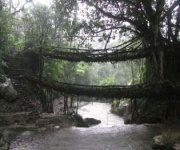
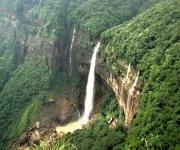
Divide the area into three practical clusters. The Sohra cluster includes Nohkalikai Falls, Arwah Cave, Mawsmai Cave and Cherrapunji Falls. A second cluster around Elephant Falls and Dympep Valley has a more rural setting and several viewpoints. Nongriat, known for its living root bridges and Double Decker Bridge, sits much farther along the road toward Tyrna. Shillong Peak is another excursion in the opposite direction. Trying to combine all of these creates excessive driving, so choose two clusters and treat a third as a bonus only if the day remains ahead of schedule.
A realistic attraction mix could be:
- Sohra heritage stops, combining Nohkalikai Falls, Arwah Cave and Mawsmai Cave with short transfers between them.
- Cherrapunji Falls and a tea stop for visitors who prefer an accessible waterfall rather than a long viewpoint walk.
- Elephant Falls and Dympep Valley as one rural loop, subject to current road and weather conditions.
- Nongriat’s living root bridges as a committed half-day stop rather than an extra item at the end of a full circuit.
- Shillong Peak as an optional early or late addition when its position suits the chosen route.
Before confirming the vehicle, check these operating details:
- Pickup and return: specify the hotel, expected arrival time, finish time and whether a late return is required.
- Vehicle type: choose a shared taxi for straightforward point-to-point travel or a jeep or MPV for a circular route with waiting time.
- Total cost: request the itinerary price in rupees and clarify whether tolls, parking, waiting time and attraction entries are included.
- Access and permissions: verify opening times, cave fees, road conditions and any current visitor registration requirements.
- Connectivity: download offline maps, carry cash, exchange live phone numbers and keep copies of travel insurance and emergency contacts.
Allow a buffer of at least 30 to 45 minutes between clusters, especially around lunch, photographs and short walks. Nongriat should not be left until the final stop unless the group is certain of returning before dark. Weather delays can also make a shared taxi unavailable for a fixed time, so a private vehicle offers greater flexibility for distant routes.
Match each stop to the best transport
A shared taxi works best when the day follows one clear corridor and passengers are comfortable with a fixed meeting point. Local buses are useful for straightforward journeys between Shillong and major Sohra attractions, but they are less convenient when each stop requires a separate vehicle or when the group wants to leave early. A hired jeep or MPV is the practical choice for Nongriat, several caves in one day, bad-weather plans or groups carrying equipment.
Walk only the short, signed sections that form part of an attraction, such as the approach to a cave entrance or a nearby viewpoint. The path down from Nohkalikai Falls can be steep and slippery, and visitors with limited mobility may prefer to view the upper section from the roadside. Nongriat requires a genuine road journey of roughly 35–40 kilometres before the final walk, so it deserves a larger time allowance. Confirm that the driver knows the correct stopping point and is prepared to wait.
The single-day waterfall route provides a useful starting point for comparing falls and their settings. Use it to identify a compact group of stops, then check current access conditions with the driver. A celebrated waterfall may be separated from the road by a steep, uneven path, and some views can be affected by heavy rain, landslides or maintenance.
Manage fares, roads and changing weather
Road time in Meghalaya can change quickly. Rain is possible throughout the year and is especially intense during the monsoon period, when landslides, potholes and waterlogged shoulders may delay journeys. Leave Sohra after the early morning traffic, avoid mountain travel in darkness and ask the driver about conditions farther along the Nongriat road. If official weather or local reports indicate a problem, use a shorter Sohra circuit instead of pressing on toward a distant attraction.
Australia and India both drive on the left, but familiar traffic rules do not make the roads identical. Wear a seat belt, keep phones away from drivers and do not encourage speeding to recover a delayed schedule. An Australian driver’s licence does not automatically make a visitor authorised to drive a hired vehicle; if self-driving is being considered, confirm the local requirements and carry the original licence with an appropriate international permit. A licensed local driver is usually the simpler choice for visitors.
At home in Melbourne or Sydney, tapping a card for transport, coffee or groceries is routine. Around Sohra’s small market and roadside stalls, carry modest amounts of Indian currency in smaller notes because cards or mobile payments may not always work, and connectivity can be unreliable. Treat every unscheduled ride as a gamble with a poor long-run house edge: repeated small losses can outweigh an occasional bargain. Confirm the fare, waiting time and return journey before setting off, and request the total in writing where possible.
Book with a clear transport plan
Before departure, check the current visa or visa-on-arrival rules for Australian passport holders and carry the same passport used for the application. Foreign visitors may also need to register or obtain permits for Meghalaya, and requirements can differ for particular routes or official categories of attraction. Use current advice from Indian and Meghalaya government sources rather than relying on an old travel post. Keep digital copies of the passport, visa, insurance and permits accessible offline.
Pack a light rain layer, waterproof footwear, drinking water, basic first-aid supplies and a dry bag for phones and cameras. The caves can be cool and damp, while viewpoints may be exposed and windy. Anyone susceptible to travel sickness should prepare for winding roads and ask the driver to slow down on poor bends. Cherrapunjee.net provides information about resorts, attractions and two- to seven-night packages, making it useful for combining a sightseeing day with a longer stay.
Book the stay and sightseeing transfer through Cherrapunjee.net, operated by India Beacons Sojourn, and provide your dates, group size, luggage and preferred pace. A prearranged jeep or MPV with a local driver gives the day a clear route, useful waiting time and a dependable return schedule. Reserve the essential sightseeing day before arrival, request the current route and fare in writing, and let the confirmed plan set the pace.