



How to Visit Nohsngithiang Falls Without a Guide
Nohsngithiang Falls, widely known as the Seven Sisters Falls, is one of the easiest major sights around Sohra (Cherrapunji) to visit independently. The main viewpoint sits beside the road near Mawsmai village, so you do not need to join a guided trek or arrange special access to enjoy the panorama.
For Australian travellers, the practical challenge is getting to Sohra, timing the weather and arranging reliable transport for the day. Once you are in town, a private taxi or a hired car with a driver gives you enough freedom to visit the falls at your own pace, while still keeping the journey straightforward and safe.
| Travel option | Best for | Advantages | Things to consider |
|---|---|---|---|
| Private taxi from Shillong | First-time visitors | Direct, flexible and comfortable | Costs more than shared transport |
| Hired car for a full day in Sohra | Seeing several attractions | Easy to combine waterfalls, caves and bridges | Agree on the route and price beforehand |
| Shared sumo or local bus | Travellers on a tight budget | Low fare and a local experience | Fixed departures and limited flexibility |
| Self-drive hire car | Confident mountain-road drivers | Complete control over stops | Narrow, wet roads and limited rental availability |
| Tour package without a personal guide | Travellers who want logistics handled | Accommodation and transfers can be organised | Less freedom than arranging each stop yourself |
Know what you are visiting
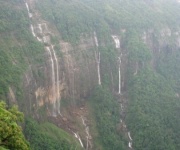
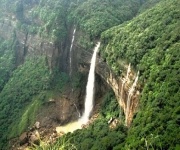
Nohsngithiang Falls is a seasonal cascade that drops in several parallel streams over a dramatic limestone escarpment. During Meghalaya’s monsoon, the water can spread across the cliff face in a broad white curtain. In drier months, the falls may be thinner, though the valley views can be clearer.
The viewpoint is generally reached by road rather than by a long walking trail. You can arrive, pay any applicable local entry or parking charge, walk to the viewing area and spend time photographing the valley. Conditions, opening arrangements and small fees can change, so confirm locally at your hotel or with the entrance staff before setting out.
A self-guided visit works well because the site is clearly recognised by drivers and residents. You do not need a local historian to find the lookout, although a guide becomes useful if you want detailed interpretation of Khasi culture, geology or the surrounding villages. The falls are often paired with Mawsmai Cave, Arwah Cave, Eco Park and other nearby attractions.
Get to Sohra from Shillong
Shillong is the most practical base for reaching the Seven Sisters Falls. The drive to Sohra commonly takes around two to three hours, depending on traffic, rain and stops. A private taxi can collect you from your hotel, wait while you visit the attractions and return you to Shillong the same day, though an overnight stay in Sohra gives you more time and a better chance of seeing the landscape in changing weather.
Shared sumos and local buses are cheaper, but they are less convenient for sightseeing. Services may leave from particular stands, fill quickly and follow schedules that are not designed around waterfall visits. If you choose public transport, expect to use local taxis for the final connections between Sohra’s attractions.
Travellers arriving from Australia often fly into Guwahati before continuing into Meghalaya. The route involves a long road transfer, so avoid planning the falls immediately after a late international arrival. This budget route guide can help you understand the Guwahati-to-Cherrapunjee journey and decide whether public transport suits your itinerary.
Plan the day around weather and light
The monsoon, usually from June to September, gives Nohsngithiang Falls its greatest volume. Rain can also bring thick mist, slippery surfaces and sudden visibility changes. A wet morning may hide the cliff completely, then clear for ten minutes in the afternoon. Build in spare time rather than treating the viewpoint as a quick stop between tightly timed transfers.
October to April is often more comfortable for road travel and walking, with lower rainfall and clearer conditions. The falls may lose some of their monsoon power, but the surrounding hills, cloud layers and deep valleys remain impressive. If photography matters, early morning or late afternoon can produce softer light, while midday is usually harsher and more exposed.
An Australian summer holiday does not match Meghalaya’s dry season in a simple way. December and January are popular times for Australians escaping Sydney, Melbourne or Brisbane heat, yet you may see a more subdued waterfall. Australian winter travel can coincide with heavier rain in India, so check current forecasts before booking a non-refundable day trip.
Pack for a wet mountain outing
Conditions around Sohra can change quickly, and the same day may include bright sun, cool mist and heavy rain. Wear shoes with firm grip rather than smooth-soled trainers. The main lookout is accessible, but wet steps, muddy edges and crowded viewing areas still require care.
Useful items for an independent visit include:
- A lightweight waterproof jacket or poncho
- Shoes with reliable traction and comfortable socks
- A dry bag or sealed pouch for your phone and camera
- Water, snacks and any personal medication
- Small notes in Indian rupees for local charges and refreshments
Carry less camera equipment than you might take on a Great Ocean Road stop. Heavy bags become awkward on wet paths, and mist can settle on lenses quickly. A microfibre cloth, lens cover and waterproof phone case are more useful than a large tripod.
Australian visitors should also remember that tap water is not automatically suitable for drinking everywhere. Use sealed bottled water or a reputable refill station, and take rubbish back to a bin. Modest clothing is respectful around villages and religious or community places; a light layer that covers shoulders and knees is practical as well as courteous.
Travel independently and safely
Hire a reputable local taxi through your hotel, resort or a recognised operator rather than accepting the first unsolicited offer at a transport hub. Before leaving, agree whether the fare covers waiting time, parking, tolls and every stop on your route. Ask the driver to include the Seven Sisters Falls viewpoint, then set a realistic return time.
Roads around Meghalaya can be narrow, winding and busy with buses, trucks and motorbikes. Driving on the left may feel familiar to Australians, but mountain traffic, fog and uneven surfaces create a different level of concentration from a weekend drive through the Blue Mountains. Self-driving is best reserved for experienced drivers who are comfortable with poor visibility and limited roadside assistance.
Keep your phone charged, save your accommodation address offline and carry a little cash because mobile coverage and card acceptance can be inconsistent. Do not climb barriers or approach unstable cliff edges for photographs. During heavy rain, ask locally whether a path, cave or viewpoint has been closed before continuing.
These habits make an unguided visit comfortable:
- Tell your hotel when you expect to return
- Check the forecast and road conditions that morning
- Use marked paths and obey local staff
- Keep away from stream channels and cliff edges
- Leave enough daylight for the return journey
A guide is not required for the main viewpoint, but local advice is still valuable. Hotel staff, taxi drivers and entrance attendants can tell you whether clouds are blocking the falls, which nearby road is congested and whether a particular attraction is temporarily closed.
Combine the falls with nearby sights
The Seven Sisters Falls is rarely worth travelling to as a single isolated stop. A private car can combine it with Mawsmai Cave, which is close and easy to add, followed by Eco Park or another viewpoint. Arwah Cave requires a longer walk and can be slippery, so allow more time and wear suitable footwear.
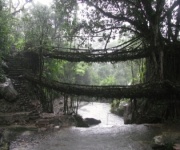
The living root bridges need a different kind of planning. The famous double-decker bridge at Nongriat involves a demanding descent and ascent, with hundreds of steps. It is not a casual add-on to a Nohsngithiang Falls visit. If you want to see one, reserve a separate day and start early.
Sohra has accommodation ranging from simple guesthouses to comfortable resorts. Staying for two nights lets you visit the falls when visibility improves instead of rushing back to Shillong. It also spreads out the road travel, which is useful after the long journey from Guwahati.
Australian travellers should allow for differences in pace and service. A café may stop taking orders earlier than expected, a driver may recommend an unplanned local stop, and a “five-minute” delay can become half an hour. A relaxed attitude and a small buffer in the itinerary will make the day feel much easier than trying to run it like a tightly timed city excursion.
Make the visit part of a wider Meghalaya stay
Visiting without a guide does not mean travelling without support. Accommodation providers can arrange a car, explain local conditions and help you adjust the plan if rain closes a road. Booking a multi-day Cherrapunjee holiday can also simplify transfers, especially if you want to include Shillong, Mawlynnong, Dawki, caves and living root bridges.
Before travelling, Australian passport holders should check the latest Indian visa requirements and any current registration or entry rules that may apply to foreign visitors in Meghalaya. Keep digital and printed copies of your passport, visa, insurance details and accommodation bookings. Travel insurance should cover medical care, delays and activities you genuinely plan to undertake.
For a smooth independent day, start early, use a local driver, check the falls’ visibility before committing to the route and keep the itinerary flexible. The viewpoint itself is accessible, but the wider experience depends on weather, road conditions and how much time you give the landscape.
Arrange your Shillong or Sohra accommodation and transport through Cherrapunjee.net, then set out for Nohsngithiang Falls with a practical plan and room for Meghalaya’s changing skies. A well-organised trip lets you enjoy the Seven Sisters at your own pace while leaving the difficult logistics to local specialists.