




Living root bridges: growth, trails and places to see them
In Meghalaya, some bridges are built from stone, steel or concrete, while others are cultivated from the roots of living trees. These remarkable footbridges cross forest streams in the Khasi Hills, creating a passage that becomes stronger as the tree continues to grow. Their woven forms are among the most distinctive sights around Cherrapunjee, also known as Sohra or Cherrapunji.
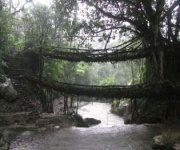
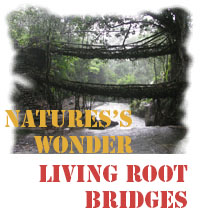
A living root bridge is the result of patient cooperation between people and nature. Khasi communities guide the flexible aerial roots of the Indian rubber fig tree across a stream, gradually shaping them into a stable crossing. The process can take many years, but the finished structure may remain useful for generations with regular care.
Visitors can combine bridge walks with waterfalls, caves, viewpoints and village experiences across the Cherrapunjee region. Some sites require long descents and steep climbs, so knowing where the bridges are located and what each trail involves makes it easier to choose a suitable excursion.
How living roots become bridges
Most living root bridges use Ficus elastica, commonly called the Indian rubber fig. This tree thrives in Meghalaya’s wet, warm valleys and sends strong secondary roots from its trunk and branches. These aerial roots can be directed toward a far bank, where they take hold in the soil and continue growing.
Traditionally, villagers use hollowed-out betel nut trunks, bamboo supports or other temporary guides to create a route over a stream. Young roots are placed inside or along these natural frames and encouraged to cross the gap. Once they reach the opposite side, they are anchored and allowed to thicken.
The bridge develops slowly rather than being assembled in a single construction project. Additional roots may be trained into weak areas, while stones, soil and plant growth fill spaces between the main strands. With time, the intertwined roots become a resilient living walkway capable of supporting people and, in some cases, livestock.
This growth explains why every root bridge looks different. Width, height, railings and surface texture depend on the tree, the stream, the terrain and the work carried out by the local community. The bridge is a continuing piece of village infrastructure rather than an abandoned relic.
A tradition shaped by forest and water
The Khasi Hills receive some of the heaviest rainfall on earth, especially around Sohra. Seasonal torrents can wash away ordinary footpaths and damage fixed structures, while steep valleys make road construction difficult. A living root bridge adapts to this landscape because its foundation remains connected to the soil and surrounding trees.
Root bridges are also examples of traditional ecological knowledge. Communities select suitable trees, understand water movement and guide plant growth over long periods. Maintenance may involve clearing vegetation, strengthening the approach, replacing temporary supports and watching for erosion after intense rain.
Their value is practical as well as cultural. A bridge can connect homes, farms, sacred groves and schools across a ravine, allowing people to move between settlements without waiting for a modern road. The surrounding forest often protects the stream and creates a shaded, biodiverse setting for the crossing.
Travelers should view these structures as active community assets. They are not simply monuments designed for sightseeing. Following local instructions, staying on the path and avoiding pressure on delicate roots helps preserve the bridge for residents and future visitors.
Where to find them around Sohra
The best-known living root bridge walk begins at Tyrna village and descends toward Nongriat. The route includes a long series of steps through forested slopes, with stream crossings and rest points along the way. The Nongriat Double-Decker Living Root Bridge is the highlight, formed from two levels of intertwined roots and reached by a demanding hike.
The lower bridge is often combined with a walk toward natural pools and waterfalls, depending on the season and trail conditions. Reaching Nongriat usually requires several hours of walking in each direction, so travelers should allow enough daylight and carry water. The return climb is particularly strenuous because the route rises sharply from the valley.
Another accessible setting is Riwai, near Mawlynnong in the eastern Khasi Hills. The Riwai Living Root Bridge is reached by a shorter forest path and is often included with visits to Mawlynnong village and nearby viewpoints. It can suit visitors who want to see a traditional root bridge without committing to the full Nongriat descent.
Other bridges and root-grown crossings can be found in villages around the Khasi and Jaintia Hills, including areas near Pynursla and the southern border valleys. Some are less developed, locally maintained and harder to locate without a guide. A Cherrapunjee travel guide can help place bridge walks within a wider itinerary that includes caves, waterfalls and scenic roads.
Choosing a season for the walk
The landscape changes significantly through the year. During the monsoon, the forest is intensely green, streams are full and waterfalls are at their most powerful. The atmosphere can be dramatic, but slippery steps, swollen watercourses and low visibility make bridge trails more difficult and sometimes unsafe.
The post-monsoon months generally offer a good balance between lush scenery and more manageable conditions. October through April is often preferred for walking, although weather can still shift quickly in the hills. December and January may feel cooler, particularly in the early morning, while spring brings fresh foliage and pleasant trail conditions.
Before setting out, check recent rain, stream levels and local advice rather than relying only on a seasonal calendar. A route that was comfortable a few days earlier can become hazardous after heavy showers. The seasonal bridge guide provides useful context for planning around weather and trail character.
Start early for the Nongriat route, especially if you plan to continue beyond the double-decker bridge. Early departures provide more daylight, cooler temperatures and a better chance of enjoying the forest before the return ascent. A local guide can also help with directions, river crossings and respectful access to village areas.
Comparing the main bridge experiences
The right bridge walk depends on available time, fitness, weather and interest in combining the crossing with other attractions. Nongriat offers the most memorable full-day adventure, but the physical effort is substantial. Riwai is a gentler option that fits more easily into a day of sightseeing around Mawlynnong.
| Location | Typical experience | Effort level | Best suited to |
|---|---|---|---|
| Nongriat Double-Decker Bridge | Long forest descent, two-level root bridge and valley streams | High | Hikers seeking an immersive trek |
| Riwai near Mawlynnong | Shorter woodland walk to a single root bridge | Low to moderate | Families and relaxed day trips |
| Smaller village bridges | Quieter crossings with fewer facilities and visitors | Varies | Travelers with local guidance |
| Bridge-and-waterfall routes | Root bridges combined with pools, cascades and forest trails | Moderate to high | Active itineraries and nature lovers |
Distance estimates can vary because paths, rest stops and side trails differ. The number of steps is also only part of the challenge: humidity, uneven ground and the return climb often determine how tiring the walk feels. Comfortable pacing is more important than trying to complete the route quickly.
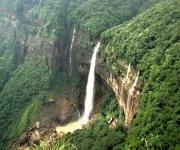
Many visitors base themselves in Sohra for several nights and arrange bridge walks alongside Nohkalikai Falls, Mawsmai Cave, Arwah Cave and nearby viewpoints. Staying locally reduces the pressure to complete every attraction in one rushed day and leaves room for weather-related changes.
Preparing for a safe and respectful visit
Good preparation makes a major difference on Meghalaya’s forest trails. Wear shoes with firm grip, especially during wet months, and choose clothing that dries quickly. A light rain layer is useful throughout the year because showers can develop suddenly in the hills.
Pack a refillable water bottle, snacks, basic first-aid supplies, sun protection and a small waterproof bag for electronics. A walking stick can help on muddy descents and uneven steps. Keep luggage light; large bags become uncomfortable on narrow paths and steep stairways.
Before leaving for the trail, confirm the route, transport arrangements and expected return time. Mobile coverage may be unreliable in valleys, and some bridge areas have limited shops or facilities. Carry enough cash for local services, food or guide fees, while treating all payments and arrangements with clarity and courtesy.
- Begin long hikes early and allow extra time for the return journey.
- Follow marked paths and local instructions near streams and village land.
- Avoid climbing on railings, pulling roots or overcrowding narrow bridge sections.
- Carry reusable supplies and take every item of rubbish back with you.
- Use a local guide when the route is unfamiliar or weather conditions are uncertain.
Photography is welcome when it does not interfere with residents or other walkers. Ask before photographing people, homes or ceremonies, and avoid turning quiet village paths into a staged photo set. The most meaningful visit recognizes the bridge as part of a living landscape rather than a backdrop.
Planning a Cherrapunjee bridge itinerary
A two-night stay can include one major root bridge walk and a selection of nearby waterfalls and caves. With three to four nights, travelers can separate the strenuous Nongriat trek from shorter sightseeing drives, allowing time to recover and respond to changing weather. Longer stays make it easier to explore less-visited villages and viewpoints.
Transport planning matters because the bridges are reached from different starting points. Tyrna, Nongriat, Mawlynnong and other rural areas are connected by winding hill roads, and travel times can be longer than map distances suggest. Arrange a suitable vehicle and confirm meeting points in advance, particularly for early starts.
Accommodation ranges from resorts and hotels in and around Sohra to guesthouses and village stays near selected attractions. Staying closer to the trailhead may save travel time, while a central base can make it easier to combine several day trips. Ask hosts about current road conditions and local walking advice.
A well-paced Meghalaya vacation balances iconic locations with unhurried time in the forest. The living root bridges are most impressive when visitors have enough time to notice their details: fresh root growth, moss-covered stones, stream sounds and the way the structure merges with the surrounding trees.
Plan your Cherrapunjee holiday with a bridge walk that matches your fitness, schedule and preferred travel pace. Booking assistance, accommodation information and multi-day vacation options are available through the Cherrapunjee travel team, helping you turn these remarkable living crossings into part of a thoughtful Meghalaya journey.