





Photographing living root bridges in the rain
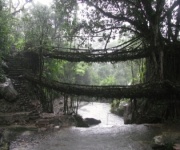
In Meghalaya, a living root bridge is more than a remarkable subject placed in a forest. It is a functioning piece of local heritage, shaped over generations from the aerial roots of rubber fig trees and strengthened by weather, footsteps, and time. During the monsoon, the bridge becomes part of a larger scene: moss-darkened stones, silver streams, dripping leaves, misty slopes, and villagers moving through the rain.
Sohra, also known as Cherrapunjee or Cherrapunji, is especially rewarding for photographers who enjoy atmosphere over predictable conditions. Rain can soften distant ridges, turn rock surfaces glossy, and reveal the rich green layers of the Khasi Hills. It can also fog a lens, flood a trail, and make a careful composition difficult to hold.
The best images come from patience and preparation. Instead of treating showers as an obstacle, use changing weather to show how these bridges belong to their environment. A useful photograph should communicate scale, texture, craftsmanship, and the quiet relationship between people and the forest.
Read the bridge as a living subject
Begin by observing the structure before taking out the camera. Look at how the roots twist around stones, how handrails curve upward, and where new growth appears beside older, darker roots. These details tell the story of a bridge that has been guided and maintained rather than constructed in a single season.
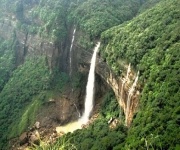
A wide view can establish the bridge within the rainforest, but it should not be your only frame. Walk slowly around permitted viewpoints and search for layers: a root railing in the foreground, a person crossing in the middle distance, and a waterfall or wooded ravine behind them. This arrangement creates depth while preserving the scale of the landscape.
Rain adds movement to an otherwise solid subject. Droplets hanging from roots, streams running beneath the bridge, and blurred figures under umbrellas can all make the image feel connected to the weather. Watch for moments when the rain briefly eases; wet surfaces remain reflective, while the scene becomes easier to expose.
Plan around rain, light and access
Monsoon weather in Cherrapunjee changes quickly. A bright opening may last only a few minutes before a dense shower returns, so keep your camera accessible rather than buried at the bottom of a backpack. At the same time, avoid walking with the camera permanently exposed on narrow, slippery paths.
Before setting out, check the route, estimated walking time, and seasonal trail conditions with a local guide or accommodation provider. Some living root bridges require a substantial descent and climb, and wet steps can make the return journey more demanding than the approach. Begin early enough to photograph without rushing in fading light.
A careful packing routine makes the day more comfortable. The monsoon packing guide is useful when choosing rain protection, footwear, dry bags, and clothing for a long forest walk. Pack light, but give priority to items that protect your equipment and help you remain steady on wet ground.
Respect access rules and local customs around the bridge. Do not climb onto fragile root sections, rearrange stones, block the crossing for a photograph, or ask residents to repeat an action unnecessarily. A guide can explain which areas are stable and help you find a respectful position for portraits or scale references.
Build a weatherproof camera kit
A compact, weather-sealed camera and a versatile zoom lens are practical for this kind of landscape photography. A lens in the range of approximately 24–105mm on a full-frame camera can cover broad environmental scenes, medium compositions, and detail studies without requiring frequent lens changes in damp air.
A phone can perform very well too, especially when used with a waterproof pouch and a microfiber cloth. Computational processing often handles the green contrast and soft light of a forest effectively. Keep the lens clean; a single water droplet can turn a carefully composed image into a hazy blur.
Use two layers of protection rather than relying on one cover. A simple rain sleeve can shield the camera during active showers, while a dry bag or sealed pouch protects spare batteries and cards inside the backpack. Store a small towel, several lens cloths, and a few resealable bags where they can be reached quickly.
Avoid changing lenses in exposed areas during heavy rain. If a change is essential, find shelter, turn your back to the weather, and keep the camera mount pointed downward. Carry batteries close to your body because cool, wet conditions can reduce their usable capacity.
Set the camera for wet forest light
The rainforest often contains bright water, deep shadows, and pale grey skies in the same frame. Shoot in RAW if possible, giving yourself greater control over highlights, shadow detail, and the subtle green tones of moss and foliage. Enable highlight warnings or use the histogram to prevent white waterfalls and bright clouds from losing all texture.
A moderate aperture such as f/5.6 to f/8 can keep a bridge and nearby vegetation sharp while allowing enough light for a reasonable shutter speed. For close details, focus carefully on the root texture rather than allowing the camera to choose a high-contrast leaf in the background. Single-point autofocus or a small flexible focus area is often more reliable.
Choose a shutter speed according to the story you want to tell. Around 1/125 second can freeze a person crossing or preserve individual raindrops, while slower exposures can give a stream a smoother appearance when the camera is stable. A tripod may be inconvenient on a narrow trail, so use a sturdy rock or railing only where it is safe and permitted.
Manual exposure is helpful when the scene changes slowly, but aperture priority can be faster when clouds move across the forest. Use exposure compensation to protect pale water and mist. If the bridge looks too dark against a bright background, adjust your position before simply increasing exposure; a small change in viewpoint may place the subject against darker foliage.
Match composition to the changing weather
Mist can simplify a busy background and give a root bridge a quiet, almost dreamlike setting. Use it to isolate the main structure, but leave enough surrounding detail to show that the bridge belongs to a forest valley. Negative space above the bridge can suggest the scale of the canopy and the depth of the fog.
Rain streaks are most visible when they pass in front of a darker background. Position yourself so that deep green leaves, shadowed rock, or a dark ravine sits behind the falling water. A slight side angle can reveal the bridge’s three-dimensional form better than a straight-on view.
Human presence provides scale and narrative. A crossing person should remain a participant in the scene rather than an arranged prop. If someone is visible, allow room in the frame for the direction of movement. An umbrella can add a small area of colour, but neutral or natural tones may suit the surroundings better when you want the roots and forest to dominate.
Compare several visual approaches before committing to one style:
| Visual approach | Useful conditions | Camera priority | Story it communicates |
|---|---|---|---|
| Wide environmental frame | Mist, soft overcast light, open viewpoint | Balanced exposure and strong foreground | The bridge as part of the Khasi landscape |
| Layered mid-range composition | Moderate rain and visible trail depth | Focus placement and leading lines | The relationship between people, bridge, and forest |
| Root and moss detail | Light showers or sheltered shade | Close focus and controlled depth of field | Age, texture, and living construction |
| Water-motion image | Active stream and stable camera position | Slow shutter with careful highlights | Monsoon energy beneath the bridge |
| Human-scale portrait | A consenting local subject or travel companion | Natural expression and respectful distance | The bridge as a lived route rather than a monument |
Protect the forest and the photograph
Good field technique begins with stable footing. Wear shoes with strong grip, keep both hands free when negotiating steep sections, and use a walking pole if the route requires one. Do not step on delicate plants or move stones to create a cleaner foreground. A photograph is not worth damaging the setting that gives it meaning.
Keep equipment off the ground whenever possible. A wet rock may look stable but can shift under pressure, and a camera bag placed beside a stream can collect water from runoff. When you stop, choose a sheltered location that does not obstruct other visitors or local traffic across the bridge.
If you photograph people, ask permission before making a close portrait. A smile, gesture, or a few simple words can make the interaction respectful and natural. For distant figures who are incidental to a landscape composition, avoid intrusive framing and do not publish sensitive personal details without consent.
After the walk, wipe the exterior of the camera and allow equipment to acclimatise gradually when moving from cool, humid air into an air-conditioned room. Sudden temperature changes can create condensation inside or on the lens. Remove wet covers, open the bag in a dry room, and let everything air out before storing it.
Use the journey to strengthen the story
A strong set of photographs should include more than the bridge itself. Record the approach through betel nut groves, forest paths, rock steps, streams, and viewpoints. These transitional images help viewers understand the effort involved in reaching the bridge and the character of the surrounding region.
Look for small visual details that connect the structure to daily life: worn sections where feet pass, handrails polished by use, water flowing beneath the roots, or fresh shoots being guided into position. Such images can complement a dramatic landscape frame and create a fuller record of Khasi ecological knowledge.
Give yourself time to return to the same viewpoint in different weather. Sun breaking through clouds may produce vivid greens, while steady rain can create softer, more atmospheric photographs. The bridge changes less than the conditions around it, so repeated observation often reveals the most distinctive images.
When editing, preserve the natural mood of the rainforest. Moderate contrast, restrained saturation, and careful shadow recovery usually work better than aggressive clarity or excessive green enhancement. Remove distracting spots caused by droplets, but avoid altering the structure or surroundings in ways that misrepresent the place.
A simple field routine
Before leaving your resort or hotel, charge batteries, format a spare memory card, and check that rain protection is packed. Set the camera to a familiar mode before reaching the trail so that the first shower does not become a scramble through menus. A short equipment check can protect an entire day of photography.
At the bridge, spend the first few minutes without shooting. Notice where visitors cross, where water enters the frame, and which direction the light comes from. Then work from broad compositions to details, keeping the camera protected between exposures and checking the lens regularly.
- Carry a weatherproof camera cover, dry bag, lens cloths, and spare batteries.
- Use grippy footwear and keep one hand free on steep or slippery sections.
- Photograph from established viewpoints without moving roots, stones, or plants.
- Include people only with appropriate distance and permission for close portraits.
- Leave enough time and energy for the return walk before the weather worsens.
The most memorable rainy-season images from Sohra combine technical care with a sense of place. Let the water remain visible, allow mist to soften the distance, and look for the evidence of many years of living growth in every curve of the bridge. With responsible planning, even a short visit can produce photographs that show both the beauty of Meghalaya and the enduring relationship between its communities and forests.
Plan a Cherrapunjee journey with time for unhurried walks, local guidance, and changing monsoon light. Explore the living root bridges, waterfalls, caves, and green valleys through a thoughtfully arranged Meghalaya holiday, then return with photographs that reflect the landscape as it truly felt.