




The architecture of traditional Khasi stone monoliths
Across the hills of Meghalaya, stone is part of the cultural landscape rather than a material reserved for buildings. Upright slabs, broad memorial stones, and carefully arranged megalithic groups appear beside village paths, in sacred groves, near traditional gathering places, and within historic settlements. Their simple forms can look austere, yet each arrangement may preserve memories of ancestry, leadership, social duty, or a community event.
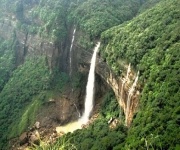
For visitors travelling through Sohra, also known as Cherrapunji or Cherrapunjee, these monuments offer a different way to understand the region. Waterfalls, caves, forests, and living root bridges reveal the power of the natural environment, while Khasi stonework shows how communities gave lasting shape to their social history.
The architecture of traditional Khasi stone monoliths is best understood through place, proportion, material, and oral tradition. A stone does not stand alone: its position, relationship to other stones, and connection with a clan or village often provide the key to its meaning.
Stones shaped by land and memory
Khasi megalithic monuments are commonly associated with memorial practices. Families and clans could raise stones to honour respected ancestors, commemorate important people, or mark a collective achievement. The monument therefore worked as a public statement of identity. It connected living generations with those who had come before them and made memory visible within the village landscape.
The surrounding terrain influenced where these stones were placed. A level clearing, a ridge, a ceremonial space, or an area near a traditional route could give the monument greater visibility. In the steep Khasi Hills, even a modest platform beside a path may command a wide view over forests and valleys. The location helped transform an ordinary piece of stone into a landmark with social importance.
Many examples belong to a living cultural tradition rather than an unknown prehistoric age. Oral histories, customary practices, and local knowledge may explain who commissioned a stone and why it was erected. Written dates are not always available, so visitors should avoid assuming that every monolith has the same age, function, or historical background.
Vertical slabs and horizontal stones
The most recognisable form is an upright slab, often described through Khasi terms such as maw shynrang, meaning a male stone. These stones tend to rise vertically from the ground and may symbolise strength, presence, or a commemorated person. Their shape is usually restrained rather than highly carved. The monument gains force from its height, silhouette, and position within a group.
A broad horizontal slab may accompany the upright stone. Traditionally associated with maw kynthei, or female stone, it can be placed at the base or beside the vertical element. The pairing creates a visual balance between standing and resting forms. It also demonstrates that Khasi stone architecture is based on relationships: one element may complete the meaning of another.
The stones are frequently rough-hewn, with surfaces that retain natural irregularities. Edges may be lightly dressed to make a slab stable, but extensive ornament is uncommon. This does not mean the work was architecturally simple. Selecting a suitable stone, moving it across difficult ground, preparing its foundation, and positioning it upright required planning and communal labour.
A visual language of proportion and arrangement
The design of a monolith is often legible through proportion. A tall, narrow slab creates an upward emphasis, while a low, wide stone anchors the composition. Several upright stones arranged together may produce a rhythm that resembles a row of figures. A horizontal block can act as a visual base, a seat-like surface, or a marker that establishes the front of the monument.
Grouping is equally important. A single stone may serve as a memorial, while a cluster can express family continuity, the status of a clan, or the history of a wider settlement. The spacing between stones allows each piece to remain distinct, yet the group reads as one architectural statement. This open arrangement differs from a built shrine or enclosed tomb; the sky, ground, and surrounding landscape remain part of the design.
| Architectural feature | What it may express | What visitors can observe |
|---|---|---|
| Upright stone slab | Memorial presence, strength, or an honoured individual | Height, silhouette, foundation, and orientation |
| Broad horizontal stone | Complementary social or symbolic role | Width, position beside the upright slab, and surface finish |
| Cluster or row | Clan memory, collective identity, or a ceremonial group | Spacing, repeated forms, and the relationship between stones |
| Natural stone surface | Local geology and practical construction | Colour, grain, weathering, and tool marks |
| Open setting | Connection between memory, village, and landscape | Views, pathways, clearings, and nearby cultural features |
The open-air setting also protects the monument from being reduced to an object in a museum. Rain, moss, lichen, changing light, and seasonal vegetation become part of its appearance. Weathering may soften corners and darken the stone, while roots and soil gradually alter the ground around it. These changes are evidence of a monument continuing to exist within nature rather than being separated from it.
Materials, movement, and craftsmanship
Local geology shaped the appearance of Khasi memorial stones. Meghalaya contains sandstone, limestone, granite, and other rock formations, with the exact material varying between locations. A community would generally work with stone available within a practical distance. Its colour, hardness, grain, and weight influenced the final form and the effort needed to transport it.
Moving a large slab across the hills would have required coordinated labour. Ropes, timber supports, prepared paths, and collective pulling may have been used, although the precise method could differ from one place to another. The act of transporting and raising the stone was itself a community undertaking. The finished monument preserves the result, but the social cooperation behind it is part of its architectural history.
Foundations were essential in a wet, high-rainfall environment. A stone had to be set firmly enough to withstand saturated soil, seasonal runoff, and gradual erosion. Slight variations in tilt or settlement may reflect age and ground movement rather than poor workmanship. Conservation therefore requires attention to drainage and soil stability, not simply cleaning the visible surface.
Monoliths within Khasi cultural landscapes
A monolith should be read alongside the village, forest, path, and ceremonial spaces around it. Khasi society has long attached importance to clan relationships, customary law, and community institutions. Stone memorials can form part of this broader cultural geography, where a place carries meaning through repeated use and shared remembrance.
The surrounding landscape may include sacred groves, old routes, agricultural areas, or settlements with their own traditions. Visitors travelling around Sohra may encounter cultural sites that are not presented like formal monuments. A local guide can explain whether a group of stones remains connected to community practice, whether photography is appropriate, and which details belong to oral history rather than documented archaeology.
Access conditions can also vary. Some areas near Cherrapunjee may have local rules, forest requirements, or restrictions connected with security and conservation. Before adding a remote cultural site to an itinerary, review guidance about restricted-area permits and confirm current requirements with a reliable local operator. Planning ahead avoids treating a culturally important place as an improvised stop.
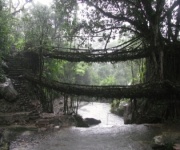
The wider journey can place these monuments in context. A visit to a living root bridge demonstrates how Khasi communities work with growing wood and water, while a monolith demonstrates how they use durable stone to preserve collective memory. Both reveal a practical relationship with the environment shaped by patience, skill, and community knowledge.
Seeing stone architecture responsibly
Photography can make the upright forms appear abstract, but a respectful visit should begin with observation rather than composition. Notice the direction of the stones, the slope of the land, the distance between individual elements, and the way people move around them. These details may reveal more than a close-up image of a weathered surface.
Do not climb on the stones, sit on memorial slabs, scratch surfaces, or move loose rocks nearby. Moss and lichen may be part of the monument’s character, so cleaning or touching them can cause damage. Avoid loud behaviour in places still associated with remembrance, ritual, or community gatherings.
Local interpretation is especially valuable because terminology and meaning may vary. A guide from the area can distinguish between a memorial group, a boundary marker, a ceremonial arrangement, and a stone whose story has been simplified for tourism. Listening to community explanations also helps visitors understand why some monuments should be photographed from a distance or approached only with permission.
Practical choices for a culturally aware visit
A thoughtful itinerary gives stone monuments enough time for context. Rushing from a waterfall to a memorial site can reduce both places to quick photographs. Allowing a little quiet time makes it easier to see the relationship between architecture and landscape, especially when mist, rain, and changing light alter the character of the Khasi Hills.
Weather should influence footwear and timing. Sohra is famous for intense rainfall, and paths around cultural sites can become slippery or muddy. Lightweight waterproof clothing, shoes with firm grip, drinking water, and protection for cameras are useful. Visitors should also carry modest clothing for village and sacred settings, where local expectations may be more conservative than at major viewpoints.
Useful habits include:
- Hire a knowledgeable local guide when visiting lesser-known monolith groups or village sites.
- Ask before photographing people, ceremonies, shrines, or stones connected with active customary practices.
- Stay on established paths and keep vehicles away from foundations, fields, and sensitive ground.
- Avoid collecting fragments, plants, or stones as souvenirs from cultural landscapes.
- Check access, weather, and permission requirements before travelling to remote locations.
The most rewarding experience comes from treating the monuments as part of a living heritage rather than as abandoned curiosities. Their power lies in the combination of material endurance and human memory: the rock may last for generations, while its meaning continues through families, oral accounts, and community care.
A Cherrapunjee journey can bring this heritage together with waterfalls, caves, forests, local villages, and living root bridges. Explore the cultural attractions and multi-day travel packages on Cherrapunjee.net, then contact India Beacons Sojourn to arrange a route that gives Khasi stone monuments the time, context, and respect they deserve.