





The best morning walk routes in and around Sohra Town
Sohra’s limestone plateau is at its most theatrical just after sunrise, when cloud gathers below the escarpment and waterfalls such as Nohkalikai and Seven Sisters appear through moving mist. The best routes are not necessarily the longest; they are the walks that match the weather, your preferred pace and the amount of daylight you want to spend on exposed viewpoints. October to March generally offers the most dependable walking conditions, while the wet season can transform a simple viewpoint walk into a slippery, fog-bound adventure. Even in the drier months, a layered outfit, grippy shoes and a rain shell are essential.
The scale of Sohra suits walkers accustomed to Australian bushwalking, although its stone steps, steep drops and sudden cloud can feel more dramatic than the signed tracks around Sydney or Melbourne. Visitors from Brisbane will recognise the monsoon rhythm of heavy rain followed by bright, washed-clean mornings. Australian travellers generally carry 1.5 to 2 litres of water, but Sohra’s cool temperatures can make people underestimate how much they drink while climbing, so a refillable bottle remains a sensible habit.
Start before the buses and the morning crowds
Begin 45 to 60 minutes before local sunrise from the central bus and taxi area, which puts the first views ahead of most day-trippers. Sunrise varies considerably by season, so use an offline sunrise tool rather than fixing the start time at a single hour. The town’s first light is also useful for judging conditions: a clear ridge often promises a broad view, while mist sitting in the valleys may mean that waterfalls will remain partly concealed.
Navigation is easier with a phone map downloaded before departure. The offline map guide explains how to prepare maps for patchy mobile coverage and steep tracks around Sohra. Carry a charged power bank, a small torch, water, a snack and some cash. Many Australian hikers already follow the BYO-bottle custom; at Sohra, it saves both money and plastic while keeping water close during the stepped sections.
Nohkalikai Falls for a spectacular cliffside start
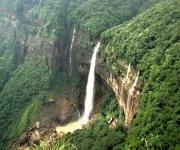
The easiest memorable dawn route heads toward Nohkalikai Falls, about 2 km from the centre depending on the starting point and road access. Walk towards the falls car park and follow signs to the upper viewpoint; allow roughly 25 to 35 minutes for the paved approach and any steps. The upper platform gives the cleaner, more protected view of the waterfall dropping into the deep gorge, especially when early light catches spray drifting across the cliff.
For a stronger experience, continue down to the lower viewing area when the steps are dry and open. From there, the sense of height is remarkable, but surfaces can be uneven and slick. Give other walkers time on narrow steps, use the handrails and keep well back from exposed edges. Do not swim or enter the gorge, as upstream rain can raise the water quickly even when the viewpoint above looks calm.
On the return, stop for tea, bananas or a local snack near Sohra’s market area. Choosing seasonal produce from the morning stalls has a familiar rhythm to browsing an Australian farmers’ market, though prices may be negotiable in the local market. A light, respectful conversation works better than aggressive bargaining, and ask before taking close photographs of vendors.
Seven Sisters and Wah Kaba for waterfall variety
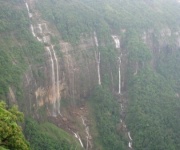
Seven Sisters Falls, locally known as Nohsngithiang, lies around 2 km from central Sohra and usually takes 25 to 30 minutes on foot along a paved path. The series of parallel cascades becomes especially atmospheric in low cloud, when only the upper streams are visible. Reach the viewpoint before the larger daytime groups, then continue to nearby railings for the widest perspective without leaving the managed viewing area.
Wah Kaba Falls is closer to Arwah Cave and makes a useful companion stop. From its small car park, a short paved approach leads to the base of the approximately 55-metre cascade. Walkers with steady legs can combine the falls with the cave circuit, while those wanting a gentler morning may visit Wah Kaba alone and return before the heat builds. Local access arrangements can change, so confirm which paths are open on the morning of the walk.
Brisbane walkers may be used to rain arriving in bursts, but Sohra’s rock can stay wet long after the clouds clear. Many Australian bushwalkers give priority to people moving uphill and leave no rubbish behind; adopting that courtesy helps on Sohra’s narrow paths. Stay on marked trails, never approach a waterfall from unguarded rock, and postpone the walk if recent heavy rain has flooded the channels.
Arwah Cave through cool forest paths
Arwah Cave offers a different kind of early start. From central Sohra, the paved approach to the cave entrance takes about 30 to 45 minutes, passing through a quieter stretch of forest. The cave itself descends through narrow limestone passages toward large chambers, wet formations and a dark freshwater pool. Natural openings admit some light, yet the route still feels cool and enclosed after the bright plateau morning.
The descent includes many steps, so closed or slippery footwear should be left behind. A local guide is usually required for the main cave section and can explain the formations, local beliefs and safety points; follow their instructions and do not touch stalactites or stalagmites. A torch, modest clothing and a waterproof bag for phones are useful, and visitors should expect to bend or squeeze through confined parts of the passage.
This route rewards an early start because the forest approach is peaceful and the cave is less busy, although it is not a sunrise lookout in the usual sense. Religious visitors may use the site at different hours, so keep voices low and avoid blocking entrances. Check current opening times locally, and never enter if guides report rising water or unsafe conditions.
Dympep Valley and the longer Nongriat option
For expansive scenery, walk towards the Dympep Valley viewpoint, roughly 3 km from central Cherrapunji and about 45 to 60 minutes from the main falls area. The route passes through village lanes and wooded slopes before reaching a platform above a dramatically deep valley. Early visibility is unpredictable, but the exposed platform offers the feeling of standing on the edge of the plateau when the clouds lift.
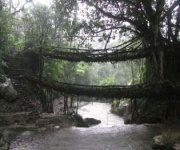
Nongriat’s living root bridges deserve attention, but they belong to a full-day outing rather than a dawn walk. The trail descends through dense forest and includes roughly 3,500 steps before reaching the single-deck bridge near the village. Allow most of the day, use a guide, and save this route for when you have time for a relaxed return rather than hurrying back after sunrise.
Flexible travellers can use a Sohra morning for the viewpoints and keep Nongriat as a weather-dependent alternative. Broader ideas for combining Sohra with other Meghalaya experiences are available in KOS4Life travel notes, which are useful when rain alters the order of walks. Remember that even a short route can take longer when villagers, livestock or a slower group share the path.
Plan a safe Sohra walking escape
Taxis, shared jeeps and prearranged transfers connect Sohra’s centre with the major trailheads, though walking from the falls car park can be easier than finding transport after dark. India drives on the left, as Australia does, but mountain roads are narrow and busy near viewpoints. Book local drivers or guides for cave and village routes, and check current entry requirements before travel: Indian visitors normally carry photo identification, while Australian passport holders generally need an Inner Line Permit before entering Meghalaya. Permits, cave fees and access rules can change, so verify them before departure.
A stay of two or three nights gives enough room to spread the walks across different mornings. One day can cover Nohkalikai and Wah Kaba, another can pair Seven Sisters with Arwah Cave, and a clear-weather morning can be reserved for Dympep. Choose accommodation in or near central Sohra to avoid a long roadside start before dawn. Pack cash in rupees for small stalls and guides, download maps, and ask your resort or tour desk which trail conditions were reported that morning.
Contact India Beacons Sojourn using the booking and contact details published on Cherrapunjee.net, state your preferred walks and dates, and request a guide where the route requires one. The site’s Sohra packages can combine transfers, stays and sightseeing around Cherrapunji, leaving you free to focus on the early trails. Reserve the first daylight period for the waterfalls, begin with the route that matches the weather, and let the rest of the day unfold at village pace.