




Discovering the Living Root Bridge Culture of Meghalaya
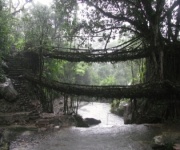
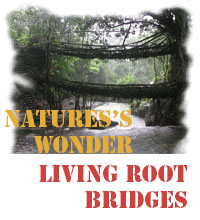
Deep in the mist-wrapped hills of northeastern India, a centuries-old tradition of bio-engineering captures the imagination of travellers from Sydney to Perth. The living root bridges of Meghalaya are not built with steel or stone; they are patiently guided over decades by the Khasi people, who shape the aerial roots of the Ficus elastica tree into functional footpaths across rain-fed rivers.
Travellers flying from Brisbane or Adelaide often arrive expecting a simple scenic detour, only to discover an entire cultural landscape woven into the forests around Cherrapunjee and Sohra. What makes these structures remarkable is their origin in practical necessity combined with deep ecological wisdom, coaxing roots downward over fifteen to thirty years until they knit into sturdy aerial spans.
The appeal for Australian visitors is layered. Beyond the visual drama of roots arching over emerald pools, there is a chance to engage with a living cultural system that predates modern engineering by centuries. A few days in the villages around Cherrapunjee allow travellers to witness this tradition in its living context, supported by local guides who explain the rituals, taboos, and seasonal rhythms that surround each bridge.
Planning such a journey requires a different mindset from a typical Bali getaway. The terrain is steep, the weather is unpredictable, and the distances between attractions feel long on winding mountain roads. Curated packages that handle transport, accommodation, and local expertise are particularly valuable for those flying in from Australia, where direct international connections to Guwahati or Shillong are limited.
Origins and Heritage of Bio-Engineered Bridges
The story of the living root bridges begins with the Khasi people, one of the major indigenous communities of Meghalaya. Long before colonial administrators arrived, communities needed reliable crossings over rivers that swell dramatically during the monsoon. They found their answer in the Ficus elastica, whose aggressive secondary root system could be redirected and trained using simple scaffolding made from betel nut or bamboo.
The cultural weight of these bridges cannot be overstated. Each structure is a communal asset, built and maintained by an entire village under the guidance of elders and forest knowledge holders. Australians who grew up with stories of the Sydney Harbour Bridge may find a fresh perspective here, where the most enduring structures are those that grow rather than those that are constructed. The bridges are also embedded in Khasi cosmology, with certain groves protected by taboos that restrict harvesting and others associated with ancestral ceremonies.
Nongriat and the Double Decker Wonder
If there is a single destination that embodies the living root bridge culture, it is the village of Nongriat, accessible from Cherrapunjee by a descent of more than 3,500 concrete steps through subtropical forest. The village is home to the famous double-decker root bridge, a structure that took several decades to form and continues to thicken as new roots are integrated.
The trek is physically comparable, with Australian visitors who have hiked in Tasmania's Overland Track or the Blue Mountains finding the challenge familiar. Local guides recommend starting at first light to avoid afternoon storms, carrying sufficient water, and pacing the return climb, which is harder on the knees than the descent. Beyond the double-decker bridge, Nongriat offers smaller, less crowded crossings where visitors can observe how guide roots merge into single living spans.
Mawlynnong and the Eastern Gateway
Mawlynnong, frequently cited as Asia's cleanest village, sits closer to the Bangladesh border and offers a gentler introduction to the living root bridge tradition. Here, a short, well-marked walk through tidy forest paths leads to a single-decker root bridge that has become a favourite for visitors who prefer a less strenuous experience.
For Australian families travelling with older relatives or younger children, Mawlynnong is often a better starting point than the trek to Nongriat. The walk is manageable for most fitness levels, and the village stay offers a chance to engage with Khasi homestays, sample local meals, and learn about the cooperative structures that keep the area clean. A short distance away, the smaller settlement of Riwai also hosts a fine living root bridge that sees far fewer visitors, and a combined Mawlynnong-Riwai day walk is a popular choice.
The Role of Khasi Communities in Preservation
Preservation of the living root bridges is fundamentally a community-led effort. Each bridge is tended by the village that built it, and decisions about its care are taken collectively. Travellers who arrive with a respectful attitude and engage with local guides contribute directly to the economic foundations that keep this knowledge alive.
This community-centric approach offers a useful contrast for visitors from Australia, where much conservation work is mediated through state parks or large NGOs. In Meghalaya, the bridges survive because the people who live beside them have a direct stake in their continuation. Choosing a local operator makes a measurable difference in how revenue is distributed; visitors can read more about why local tour operators matter and how their choices affect the communities they visit.
Seasonal Rhythms and When to Visit
The living root bridges behave differently across the year. The monsoon, which runs roughly from June to September, is when Cherrapunjee earns its reputation as one of the wettest places on Earth. While the forests are at their most lush, the same rains make the trails slippery and occasionally dangerous, and certain treks become risky for inexperienced hikers.
The post-monsoon months of October and November are widely regarded as the best window for a comfortable trek, with the rains eased and the river flows strong enough to make the bridges look dramatic. Winter brings cooler temperatures and clearer skies, while spring can be hazy yet workable for flexible schedules. Australian travellers should also consider the monsoon road conditions in the region, as landslides and waterlogged roads are common between June and September.
Practical Tips for Travellers from Australia
A journey from Australia to Meghalaya typically involves a flight to Delhi, Kolkata, or Guwahati, followed by a connecting flight or overnight train to Guwahati, and then a drive of roughly four hours up into Cherrapunjee. Australian passport holders require an Indian visa, applied for online, and certain restricted area permits may be needed for border zones near Bangladesh.
For those looking for a fully supported journey, Dexter Travels offers curated itineraries that bundle accommodation, transport, local guides, and meals. Travellers should pack light, quick-drying clothing suited to humid conditions, and carry modest cash in Indian currency, as card facilities in the villages are limited.
Recommendations for Experiencing the Living Root Bridge Culture
- Plan at least two full days in the Cherrapunjee region to allow time for both an easier bridge visit and the more demanding Nongriat trek.
- Travel in the post-monsoon window of October and November for the best balance of lush scenery and manageable trail conditions.
- Engage a local Khasi guide for both safety on steep terrain and the cultural context that turns a walk into a meaningful exchange.
- Carry quick-drying clothing, sturdy non-slip footwear, a rain jacket, and a dry bag for phones and cameras, especially during the wet months.
- Spend at least one evening in a village homestay to experience Khasi hospitality and the daily rhythms that sustain the bridges.
- Bring modest cash in Indian currency for entry fees, guide tips, and village purchases, as card facilities in remote areas are limited.
- Allow time in your itinerary for rest days and weather-related adjustments, particularly if walking during or just after the monsoon.
Step into a living tradition where bridges grow rather than being constructed, shaped by generations of Khasi hands. Visit Cherrapunjee.net to browse multi-night packages, compare resorts and homestays, and reach the India Beacons Sojourn team for tailored advice. Whether flying out of Melbourne for a two-night getaway or planning a full seven-night immersion, the right itinerary turns a simple holiday into a living cultural encounter. Reach out today and start shaping your Meghalaya journey.