





Living Root Bridges in Cherrapunjee You Can Reach Without a Long Trek
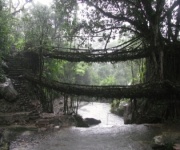
Cherrapunjee sits on the southern edge of the Khasi Hills in Meghalaya, a state that records some of the highest rainfall on Earth. The region is celebrated for its living root bridges, which are not built from cut stone or poured concrete but grown from the aerial roots of rubber fig trees. Over decades, the Khasis have trained these roots across streams until they thicken into natural, load-bearing walkways that can hold a dozen people at a time.
Not every root bridge demands an all-day climb. A few sit close to roads, small villages, or short forest paths, and these are the ones that suit travellers with limited time, young families, or anyone who simply prefers a relaxed walk to a strenuous hike. The wet season transforms these walks into lush corridors of moss, fern, and rushing water that feel worlds away from the cities visitors fly in from.
For visitors departing from Sydney or Melbourne, the idea of a gentle morning stroll through a rainforest to a hand-grown bridge feels like the right balance of adventure and comfort. A short walk can still bring you face to face with one of the great living pieces of human-engineered nature, leaving plenty of the day for waterfalls, viewpoints, and a long lunch back in town.
Why Some Root Bridges Are Easier to Reach Than Others
The Khasis have been guiding fig-tree roots across rivers and ravines for at least five centuries, and the bridges vary enormously in difficulty. The famous double-decker near Nongriat requires roughly 3,000 steps each way and a trained guide, while single-deck bridges closer to Cherrapunjee can be reached with little more than a pair of sneakers and a bottle of water.
Bridges that grew up near trade routes, village edges, or frequently used footpaths tend to be the most accessible today. Because the host trees were originally planted close to water sources that residents passed daily, these living structures have survived and thickened exactly where modern travellers also tend to wander. The flat terrain around the southern Cherrapunjee plateau also means that several good examples are found on gentle gradients rather than steep gorges.
Australian visitors often compare the easy walks to bushwalking in the Blue Mountains or the gentler tracks in the Dandenong Ranges near Melbourne, condensed into a single morning rather than spread across a long weekend. The easier bridges are typically under an hour each way, often with a clear village landmark or a small shop at the trailhead, which makes them ideal for half-day excursions from any local hotel or homestay.
Mawlynnong and Its Single Root Bridge
Mawlynnong regularly tops Indian travel lists as the cleanest village in Asia, and just a short walk from the village square sits one of the most photographed single-deck living root bridges in the region. The bridge crosses a small stream fed by springs that bubble up through the forest floor, and the surrounding bamboo dustbins, painted stone steps, and flower-edged lanes give the whole walk an almost manicured feel.
From the parking area, the path descends gently for around 15 minutes before reaching the bridge itself. There is a small viewpoint platform nearby, and a handful of local stalls serving tea, jaggery, and bamboo shoot pickles. Most travellers spend under two hours here, including time for photographs and a slow wander back up through the village lanes.
The Mawlynnong bridge is an excellent first stop for visitors arriving from Guwahati airport, particularly those who would rather ease into Meghalaya's altitude than tackle a steep climb on day one. It also pairs well with a quick visit to the Bangladesh border viewpoint a short drive further east, which is something Australian tour operators increasingly fold into the same morning.
Riwai Village and the Bridge on the Outskirts
Riwai sits roughly 20 minutes by road from Mawlynnong and offers a second, often quieter, single root bridge just outside the settlement. The path from the village drops through areca nut palms and across a small wooden footbridge before reaching the living root structure, which spans a narrow gorge carved by a year-round stream.
What makes Riwai appealing is the lack of steps. The trail undulates more than it climbs, and visitors used to strolling the coastal paths near Brisbane or the bayside tracks of Adelaide will find the gradient familiar. The bridge itself is robust and wide enough for small groups to cross together, with handholds formed by the older, woody roots of the host tree.
Travellers should plan for the path to be slick in the monsoon months, which run from roughly May to October, and reasonably dry from November through February. The cool, misty mornings between December and January are especially comfortable for anyone not used to tropical humidity. A light poncho and grippy footwear are enough, and full hiking boots are overkill for these easier walks.
Bridges Around Sohra Town Itself
Sohra, the older name for Cherrapunjee, has a handful of lesser-known single root bridges within a short drive of the main market. Several grew up near old trade paths connecting the town with neighbouring hamlets, and because they were never the focus of dramatic marketing, they remain pleasantly uncrowded even during the high season.
One cluster lies off the road toward Mawsmai Cave, where a brief forest trail leads to a small but beautifully formed bridge over a stream that disappears into limestone rocks. Another is found near Thangkharang Park, where the walk is mostly along a gently sloping ridge before dropping to a quiet pool framed by tangled roots. These are good options for travellers with limited time, especially those who want to combine a root bridge visit with a waterfall stop on the same afternoon.
For visitors arranging a multi-day itinerary, these easy bridges slot neatly between longer excursions to Nongriat or the Mawsmai-Nohkalikai circuit. They also work well for the second or third day of a tour, when the legs are tired but the appetite for short walks remains strong, and the reward of a hand-grown bridge feels just as great as the deeper jungle sites.
The Wahthaw Khar and Pynursla Bridges
The Pynursla plateau, east of Cherrapunjee, hosts several living root bridges that are reachable with short walks from the main road. Wahthaw Khar is the best known, with a stout, ancient single-deck bridge that hosts a small shrine at one end and a bathing pool at the other. The approach is a flat 10-minute walk through pine and broadleaf forest, with rhododendrons in bloom during early spring.
Another short option in the area crosses a stream near a cluster of Khasi tea stalls, where locals are happy to point visitors toward a less-publicised bridge used by villagers on a daily basis. These walks rarely take more than 30 minutes and rarely feel remote, yet they offer the same root-bridge experience as the famous sites further south. Australian travellers who enjoy the easy weekend hikes around Perth's Hills or the coastal paths of Sydney's northern beaches often comment that these gentle Meghalayan trails feel similar in effort.
Because these bridges sit at slightly higher elevation than the Cherrapunjee valley, mornings can be surprisingly cool, and a light fleece layered over a t-shirt is common among locals and visitors alike. Packable layers earn their place in any daypack here.
Practicalities for Travellers Coming from Australia
Getting to Meghalaya from Australia typically means flying into Guwahati via Singapore, Kuala Lumpur, or Bangkok, with carriers like Qantas, Singapore Airlines, and Air Asia offering connections from Sydney, Melbourne, Brisbane, and Perth. From Guwahati airport, Cherrapunjee is around five to six hours by road, often broken with a stop for chai and a samosa at one of the roadside dhabas.
Most tours run on Indian rupees, and Australian travellers can exchange AUD at major city bureaux or withdraw cash from ATMs in Guwahati and Shillong. Mobile reception is patchy on the smaller forest trails, so downloading offline maps before leaving Shillong is essential. eSIM options from Airtel and Jio work well across most of the plateau, and Indian roaming packs are cheap once you arrive.
For those planning a short holiday, the Cherrapunjee in two days itinerary packs several of these easy bridges into a single weekend, leaving room for the larger attractions as well. Booking a multi-day package through a local operator also takes the guesswork out of vehicle arrangements, local guides, and the permits occasionally required for certain border or defence areas.
Packing light and bringing quick-dry layers, a small torch, and a waterproof cover for cameras and phones will make every short walk more enjoyable, no matter which easy root bridge you choose to visit first.
When planning your trip, remember that the easier root bridges can be slotted into any Cherrapunjee itinerary without disrupting the rhythm of a longer holiday. The tour packages offered through India Beacons Sojourn take care of permits, vehicles, and local guides, allowing you to focus on the walking, the views, and the quiet thrill of crossing a bridge grown rather than built.
Reach out via the contact details on the website to begin tailoring a trip that matches your dates, your preferred pace, and your appetite for adventure.