





Rain Gear That Stands Up to Cherrapunjee’s Downpours
Choosing the best rain gear for trekking in heavy downpours takes more than adding a waterproof jacket to your daypack. Cherrapunjee, also known as Sohra or Cherrapunji in Meghalaya, can deliver sustained rain, mist and runoff that make steep steps slick in minutes. The right equipment keeps your core warm, your vision clear and your footing controlled without trapping so much sweat that you become cold before the trail is finished.
Australian hikers already know how quickly a forecast can change in places such as Sydney, Melbourne and Brisbane, but Meghalaya’s monsoon intensity is on another scale. A compact umbrella that handles a city commute in Sydney can be useless on a gusty hillside, while Melbourne’s changeable skies and Brisbane’s summer storms are useful reminders to carry layers. Rain gear bought for a coastal walk may feel bulky until it is used on a wet ridge above Sohra. Choosing each piece for the climate, the route and the length of the walk will make the difference between a comfortable trek and a miserable, risky one.
Cherrapunjee’s rain changes the route
Cherrapunjee sits on a high plateau in northeast India and is among the wettest inhabited places on Earth. Its southwest monsoon is often most severe from June through September, while trails remain exposed to showers outside that window. Water does not merely fall on walkers; it streams over rock, gathers at trail edges and turns roots, stone and metal steps slippery. Even a marked path can become difficult to read as runoff crosses it or moss fills gaps between paving.
Forecast confidence matters, but the bigger concern is what follows the rain. Cloudbursts can produce runoff in gullies and make low sections vulnerable to flash flooding, while saturated ground increases the chance of slips and landslides. Experienced local guides can distinguish a damp trail from one becoming unsafe, so their advice should take priority over a fixed sightseeing timetable. Flexible timing is essential: delay is safer than rushing toward a waterfall as conditions deteriorate.
Build protection from the outer shell inward
A hardshell is the first line of defence. For Cherrapunjee, choose a three-layer waterproof-breathable jacket with fully taped seams, a helmet-compatible adjustable hood, high pockets and enough mobility for climbing. A shell around 10,000 mm hydrostatic head is a useful benchmark for sustained rain, while some trekkers prefer 20,000 mm or more for prolonged downpours. The number measures fabric resistance rather than the performance of the entire garment, so hood and zipper design still matter.
Waterproof trousers matter just as much because water reaching the upper legs will spread through the rest of the clothing. Look for full-length side zips so they can be pulled on over boots, secure waist adjusters and reinforced knees. Under the shell, wear a quick-drying base layer and a light insulating mid-layer that can be removed before overheating. Cotton is a poor choice when it stays wet against the skin. A pack cover handles rain falling from above, but it does not seal the opening, so an internal liner remains essential.
Keep feet, knees and lower legs dry
Start with footwear that already has some familiarity; do not test waterproof hiking boots for the first time on the trip. The best option is a supportive, water-resistant trail shoe or boot with deep, multidirectional lugs, a protective toe and a stable platform. Lace them firmly, keep the tongue outside the laces where possible and remove debris from the tread after muddy sections. Smooth, algae-covered rock can remain slippery regardless of the sole compound.
Long gaiters create a useful barrier between footwear and rain-filled vegetation. Choose ones that stay up without pinching the calf, and wear them over the trouser cuffs or under the trousers according to the design. Synthetic or merino socks manage moisture better than heavy cotton. A dry spare pair in a sealed bag is inexpensive insurance, especially on multi-day walks when one pair cannot finish drying overnight.
Pack for moisture without creating more of it
Use the main backpack’s internal waterproof liner as well as a dry bag for clothing, electronics and first-aid supplies. A roll-top closure gives a better seal than an open tote, and separate food from damp gear so a leak does not ruin a meal. Small silica-gel sachets can reduce condensation inside a pack, but they cannot rescue clothing that has already been packed wet. Keep critical items accessible rather than buried beneath wet layers.
A compact emergency poncho has value as a last-resort layer, but it should not replace a fitted jacket. Ponchos can balloon in wind, restrict arm movement and send water toward the wearer’s legs during a descent. Conversely, breathable waterproof trousers can be unzipped around the knees when the temperature rises. Cross-checking practical outdoor gear advice with the manufacturer’s care instructions is sensible before relying on spray water-repellent treatments or attempting field repairs.
Match the kit to the trails
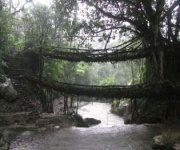
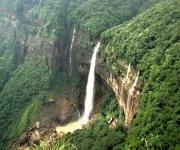
Cherrapunjee’s sightseeing routes range from forested walks around waterfalls and viewpoints to cave paths, living root bridges and steep descents. Anyone planning the descent can consult the Nohkalikai descent guide for route-specific context, but the conditions described can change with the weather. Wet stairs require slower movement, and footwear that feels secure on flat ground may slip when every step angles downhill.
Keep a light insulating layer and a dry layer in the pack even if the forecast looks settled. If cloud thickens, wind rises or water starts crossing the trail, turn back before conditions become urgent. Do not enter fast-moving water, climb exposed ground during thunderstorms or shelter in a low cave or gully where runoff can collect. A local guide and an agreed turnaround plan are more valuable than pressing on to complete a checklist of attractions.
Make a wet-weather buying checklist
Australian outdoor retailers and online marketplaces offer plenty of shells, but shoppers should not assume every product has passed the same performance test. Compare hydrostatic-head ratings, fabric weight, seam sealing and real-world coverage, and check whether prices and warranty terms are clear in Australian dollars. Under the Australian Consumer Law, a “waterproof” claim must not be misleading, and sellers need reasonable grounds for the performance they advertise.
Use this practical checklist for a Cherrapunjee trek:
- Select a three-layer waterproof-breathable shell with fully taped seams and a reliable hood.
- Add full-length waterproof trousers with side zips for wet descents and exposed viewpoints.
- Choose supportive, water-resistant footwear with aggressive traction and practise with it before departure.
- Protect the pack with a liner and carry clothing in roll-top or zip-sealed dry bags.
- Pack lightweight gloves, a warm beanie and one sealed pair of quick-drying socks.
- Carry a compact emergency poncho for temporary cover, without treating it as the main jacket.
- Wash technical garments as directed, renew repellent finishes and inspect zippers before the trip.
Care is easy to neglect. New synthetic fabrics may leave oily residue during manufacturing that can make a water-repellent finish seem ineffective, so follow the product label rather than relying on trial and error. Australian sun protection also matters after a shower, with AS/NZS 4399 providing the UPF classification system for protective apparel; sunscreen, a brimmed hat and UPF 50 clothing remain useful. On long Australian bushwalks, the “walk-in, walk-out” habit matters too: carry rubbish out and keep soap, food waste and used packaging out of the forest.
Time the trek and keep a safe retreat
Build a weather buffer into a multi-day itinerary. Keep one flexible day for sightseeing, ask the operator about current monsoon conditions and avoid committing to exposed routes when official warnings are active. Start early to leave time for slower movement and an early return; Cherrapunjee’s daylight, fog and wet surfaces can make a familiar route unfamiliar. A small first-aid kit, headlamp, whistle and charged phone in a waterproof pouch complete the practical safety kit.
Choose a package, check current trail advice and request a wet-weather briefing before departure. Australian visitors should also confirm visa and entry permission requirements for their passport. Open the Cherrapunjee travel site for stays, routes and booking contact details through India Beacons Sojourn, and leave enough time to dry equipment between walks. With the right shell, dry-foot strategy and flexible safety plan, you can experience Cherrapunjee’s waterfalls and forests with far greater comfort and confidence.