





Golden Hour Photography In Cherrapunjee
Cherrapunjee, also known as Sohra or Cherrapunji, offers a dramatic landscape for photographers who enjoy changing light, layered hills, waterfalls, mist, and vivid green valleys. The destination’s heavy rainfall creates a constantly shifting atmosphere, while the low sun adds warmth and depth to scenes that can appear soft and monochromatic during cloudy periods.
Golden hour is especially rewarding here because the landscape rarely feels static. Clouds may open for only a few minutes, turning a waterfall into a silver ribbon or lighting up the Khasi Hills with amber highlights. The best photographs often come from waiting patiently rather than moving quickly between viewpoints.
Planning around sunrise and sunset also helps you make better use of a sightseeing day. Popular attractions such as Nohkalikai Falls, Seven Sisters Falls, Mawsmai Cave, Arwah Cave, and the living root bridges each respond differently to low-angle light. Understanding those differences will help you choose the right location, camera settings, and timing.
Why Golden Hour Works So Well In Sohra
Golden hour is the period shortly after sunrise and before sunset when the sun sits low on the horizon. Light travels through more of the atmosphere at this angle, producing warmer tones, longer shadows, and gentler contrast. In Cherrapunjee, these qualities soften exposed rock, bring texture to wet foliage, and give distant ridges a layered appearance.
Morning light is usually cooler and cleaner, particularly after overnight rain. Mist may rest in the valleys, and the first sunlight can illuminate only the upper edges of clouds or ridgelines. This makes sunrise valuable for atmospheric landscape photography, even when the foreground remains shaded.
Evening light often brings warmer colors and stronger definition across the hills. However, cloud cover can obscure the setting sun, so sunset photography requires flexibility. A cloudy evening is not necessarily a lost opportunity: diffused light can produce rich greens, balanced exposures, and a moody monsoon composition.
The Best Months For Landscape Photography
October to May is generally more comfortable for exploring viewpoints, trails, and caves. From October through November, the landscape remains lush after the monsoon, while clearer conditions can create excellent visibility across the plateau. December through February tends to bring crisp mornings, lower humidity, and more predictable walking conditions.
March to May offers bright foliage and a growing chance of dramatic cloud formations before the southwest monsoon becomes dominant. Early summer light can be intense after mid-morning, making sunrise and late afternoon especially important for photographers who want to avoid harsh highlights.
June to September is the wettest period and can produce powerful waterfall scenes, saturated vegetation, and heavy mist. Rain may conceal distant views, but it also creates unusual images with atmosphere and movement. Photographers visiting during this season should build extra time into every outing because weather can delay travel and close exposed viewpoints temporarily.
Choosing The Right Time And Viewpoint
For sunrise, reach a viewpoint before the first visible light rather than arriving at the stated sunrise time. The sky may begin changing color 20 to 30 minutes earlier, and this blue-hour period can add cool tones to the scene. Sunrise viewpoints around the plateau are particularly effective when low clouds gather below the ridge line.
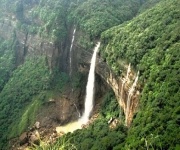
Nohkalikai Falls is a strong morning subject when the surrounding cliffs are beginning to catch warm light. The waterfall itself may remain partly shaded, creating a useful contrast between luminous rock faces and the darker basin. For planning conditions around its seasonal flow, consult this guide to the best Nohkalikai timing before setting out.
At sunset, allow time to compose from more than one angle. A broad viewpoint can establish the scale of the Khasi landscape, while a tighter frame may isolate a tree, cliff, stream, or cloud bank. If the sun disappears behind clouds, keep shooting for several minutes because the brightest color can appear just after the direct light fades.
| Location or subject | Most useful light | What to emphasize | Practical note |
|---|---|---|---|
| Nohkalikai Falls | Morning or late afternoon | Vertical drop, cliff layers, water movement | Use a wide lens carefully to retain scale |
| Seven Sisters Falls | Late afternoon in clear weather | Multiple streams and receding ridges | Rain and mist may hide the full formation |
| Mawsmai Cave | Midday or overcast conditions | Rock texture, openings, patterns | Carry a small tripod only where permitted |
| Living root bridges | Soft morning light | Roots, forest depth, human scale | Avoid direct overhead sun in dense foliage |
| Distant Khasi Hills | Sunrise or sunset | Atmospheric layers and warm ridges | Use a telephoto lens for compressed perspective |
| Monsoon streams | Cloudy light or brief sunbreaks | Flow, moss, reflections, movement | Protect equipment from spray and sudden rain |
Camera Settings For Changing Light
Start with aperture priority or manual exposure, depending on how quickly conditions change. For broad landscapes, an aperture around f/8 to f/11 can keep foreground and distant ridges acceptably sharp. When light is weak, raising the ISO slightly is often preferable to losing detail through camera shake.
Waterfalls require different shutter speeds depending on the mood you want. A shutter speed around 1/15 to 1/4 second can show flowing water while retaining some texture. Longer exposures create a smoother appearance, but they may erase the character of turbulent water. A tripod, low ISO, and neutral density filter can help when the scene is bright.
Use exposure compensation when the camera is fooled by bright mist or a pale sky. Check the histogram and highlights rather than trusting the rear screen, which can appear darker or brighter depending on the ambient light. Bracketing several exposures is useful when the sky is much brighter than a shaded valley.
Focus about one-third of the way into the scene for a broad landscape, or use focus stacking when the foreground is extremely close. For misty views, autofocus may hunt against a featureless background, so switching to a single focus point or manual focus can provide more reliable results.
Photographing Waterfalls, Caves, And Forests
Waterfalls are at their most expressive when the frame includes context. Instead of filling the entire composition with falling water, include surrounding cliffs, vegetation, or a person at a safe distance to communicate scale. Look for foreground rocks and wet leaves that can lead the eye toward the main cascade.
Rain and spray can add atmosphere, but they also flatten contrast. A polarizing filter may reduce reflections on wet foliage and reveal color in rocks, although it can also darken the scene unevenly when used with a wide-angle lens. Wipe the filter regularly and keep a microfiber cloth in an accessible pocket.
Caves such as Mawsmai and Arwah offer a different photographic rhythm. Their interiors are naturally dark, and artificial lighting may be limited or absent. Look for shafts of light, sculpted limestone, and silhouettes rather than trying to brighten every corner. Follow local instructions and avoid touching formations, as oils from hands can damage delicate surfaces.
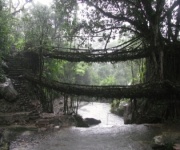
Living root bridges are best photographed with restraint. Their organic structures are detailed and complex, so a close frame can highlight roots and moss, while a wider composition can show how the bridge fits into the forest. Soft morning light usually preserves the green tones better than direct midday sunlight.
Weather, Safety, And Responsible Practice
Weather forecasts are useful but cannot predict every local change on the plateau. Carry a waterproof cover for your camera bag, seal spare batteries and memory cards in small dry pouches, and keep a cloth available for mist-covered lenses. A simple plastic rain sleeve can protect the camera during short showers without adding much weight.
Viewpoints and trails may become slippery after rain. Wear shoes with dependable grip, avoid standing close to unfenced edges, and never move onto wet rocks beside a waterfall for a better angle. A photograph is not worth compromising personal safety, especially when visibility changes quickly.
Respect local communities and sacred or culturally important places. Ask before photographing residents, guides, or private property, and avoid climbing on living root bridges or removing plants and stones. Keeping groups small and staying on established paths helps protect the landscapes that make Sohra distinctive.
Traveling with a local driver or guide can improve both safety and timing. They may know which roads are affected by rain, how long a trail usually takes, and whether a viewpoint is likely to be clear. This local knowledge can make the difference between rushing through a location and arriving during a brief opening in the clouds.
A Practical Golden Hour Packing List
Good photography in Cherrapunjee depends as much on preparation as on equipment. The combination of moisture, uneven paths, and changing light rewards a lightweight setup that can be reached quickly. Carry only the lenses and accessories you are likely to use, especially when walking to waterfalls or bridges.
A wide-angle lens is useful for cliffs, valleys, and waterfalls, while a short telephoto lens can isolate distant ridges, streams, and details in the forest. If you bring a tripod, choose a compact model with secure leg locks and use it carefully on public paths so it does not obstruct other visitors.
- Waterproof camera cover and a rain-resistant daypack
- Microfiber cloths, lens wipes, and a sealed pouch for spare batteries
- Wide-angle lens plus a short telephoto or standard zoom
- Polarizing filter and, when needed, a neutral density filter
- Headlamp for pre-sunrise walks and dark cave entrances
Before leaving your hotel or resort, check battery levels, clear enough memory space, and place your camera in an easy-to-reach compartment. Pack a small dry bag for wet clothing or accessories, and keep a phone with offline maps or important contact details available when mobile coverage is inconsistent.
Building A Flexible Photography Day
A strong itinerary should leave room for weather and travel time. Sunrise may suit a distant viewpoint, followed by breakfast and a cave visit during brighter hours. Waterfalls and forest trails can then fill the afternoon, with a return to an elevated viewpoint for sunset if the sky begins to clear.
Avoid scheduling too many attractions around exact golden-hour minutes. Roads, rain, photography stops, and walking trails can all take longer than expected. Choosing two priority locations for the day gives you time to wait for the right light instead of treating each viewpoint as a brief stop.
Review your images each evening and note which conditions produced the best results. You may discover that soft rain gave better forest color than direct sun, or that the most successful waterfall image came during a short break in the clouds. These observations can guide the next day’s route and help you respond creatively to changing weather.
A multi-day stay in Cherrapunjee makes this approach much easier. With additional mornings and evenings, you can revisit a viewpoint, try a different focal length, or return after rainfall has changed the character of a stream or cascade. Patience, preparation, and respect for the landscape will produce photographs that convey the atmosphere of Sohra rather than simply documenting its attractions.
Plan your Cherrapunjee photography holiday around the light, allow time for weather delays, and choose a package that gives you enough nights to explore at an unhurried pace. Contact Cherrapunjee.net to arrange a stay, local sightseeing, and a route designed around the waterfalls, caves, valleys, and living root bridges you want to photograph.