





How Cherrapunjee Became Known as Sohra
Cherrapunjee, widely recognised today as Sohra, carries two names shaped by different languages, communities and periods of history. The older Khasi name belongs to the living culture of the plateau, while “Cherrapunjee” developed through outside attempts to record and pronounce the local place name. Both forms remain important when planning a visit to Meghalaya.
For travellers from Australia, the story is a useful reminder that place names are rarely fixed labels. A familiar name may come from colonial maps, tourism campaigns or weather reports, while local residents continue to use an older name in everyday speech. The difference is a little like the way some Australian places retain Indigenous names beside names established during British settlement.
Sohra lies in the East Khasi Hills of Meghalaya, south of Shillong and close to the Bangladesh border. Its dramatic escarpments, monsoon clouds, waterfalls, caves and living root bridges have made it one of northeast India’s best-known destinations. Understanding the name helps visitors approach the landscape with greater respect and recognise why both “Sohra” and “Cherrapunjee” appear in hotels, road signs and travel information.
The Khasi Roots Of Sohra
Sohra is the Khasi name associated with the settlement and surrounding highlands. Khasi is an important language of Meghalaya, and the word reflects the area’s place within Khasi cultural geography rather than a label created for visitors. Local usage may also appear in spellings such as “Sohra” or “Sohra-Shella”, depending on whether the reference is to the town, a broader region or a local administrative context.
The exact linguistic path from Sohra to Cherrapunjee is not perfectly documented in a single agreed account. Historical records were written by outsiders who heard Khasi words through their own languages and spelling systems. British officials, missionaries and mapmakers often adapted unfamiliar sounds to English conventions, producing forms such as “Churra”, “Cherra” and eventually “Cherrapunji” or “Cherrapunjee”.
This makes the older and newer names less like rivals and more like layers of the same history. Sohra expresses local continuity, while Cherrapunjee preserves the form that became established in colonial records and later international travel writing. A visitor may hear both during one journey, especially when speaking with residents, guides and accommodation providers.
From Oral Name To Colonial Map
British administrators began recording the Khasi Hills in the nineteenth century, when the region became strategically and commercially significant. Surveying, missionary activity, military movement and administrative expansion brought more written documentation. Transliteration was necessary because Khasi sounds did not always fit neatly into English spelling, and different writers could record the same place in different ways.
The suffix “-jee” in Cherrapunjee is generally understood as part of this historical spelling process rather than evidence of a separate town. Older English publications use several versions, including Cherrapunji, Cherra and Churra. The variety reflects the practical limits of nineteenth-century communication: names were often heard from local speakers, written down by officials and then repeated in maps, gazetteers and newspapers.
Rainfall reports helped make the English name famous. Sohra became associated with extraordinary monsoon precipitation, and global weather records frequently used “Cherrapunji” when discussing one of the wettest inhabited places on Earth. This reputation spread far beyond Meghalaya, so the colonial-era form became familiar to readers who had never encountered the Khasi name.
Travellers from Sydney or Melbourne may notice a comparable pattern in Australian geography, where Indigenous names, anglicised spellings and official renamings can coexist. In both countries, a map may preserve an older administrative habit even while communities promote a local name that better reflects language, identity and cultural ownership.
Why Both Names Still Appear
The return to Sohra is connected with broader efforts to recognise Meghalaya’s Khasi heritage and use local terminology in public life. Government offices, local organisations, tour operators and residents increasingly use Sohra, particularly when discussing culture, heritage and the town’s identity. “Cherrapunjee” remains deeply familiar, however, and continues to appear in tourism branding, accommodation names and online searches.
The two forms serve different practical purposes. A traveller searching for waterfalls, caves or a holiday package may find more results under Cherrapunjee or Cherrapunji. A person looking for local events, regional history or community-led experiences may encounter Sohra more often. Using both spellings when researching transport and accommodation can prevent confusion and produce a broader set of useful results.
Name Forms Travellers May Encounter
- Sohra — the Khasi name and a strong marker of local identity.
- Cherrapunjee — a widely used tourism and English-language spelling.
- Cherrapunji — an alternative spelling found in older records and modern search results.
- Cherra or Churra — historical forms associated with colonial documentation.
- Sohra-Shella — a regional expression that may refer to the wider area and route towards the southern escarpment.
Pronunciation also varies according to a speaker’s language background. Visitors do not need perfect Khasi to be courteous; making a genuine effort to say “Sohra” and recognising the historical name is generally appreciated. Hotel staff and guides can clarify which spelling belongs to a particular village, attraction or road sign.
A Name Shaped By Landscape And Memory
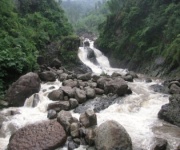
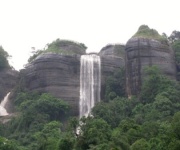
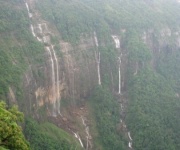
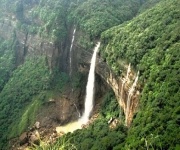
The fame of Cherrapunjee is inseparable from its environment. Heavy monsoon rain cuts through limestone, feeds waterfalls and creates mist across the plateau. Caves such as Mawsmai, dramatic viewpoints near the escarpment and the living root bridges of the Khasi Hills all contribute to the area’s modern identity. The name is therefore attached to both a settlement and a powerful image of rain, rock and forest.
The wettest months can be intense for visitors accustomed to Australian weather. A Brisbane resident may be familiar with humid summer conditions, but the combination of steep paths, sudden downpours and persistent moisture around Sohra can feel very different. Visitors should allow extra time for slippery walks, traffic delays and clothes that take longer to dry. Practical advice on managing humidity comfortably is useful when preparing for the climate.
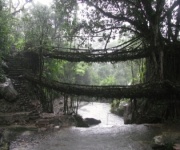
The landscape also preserves living history. Khasi communities developed living root bridges by guiding the roots of rubber fig trees across streams and ravines over many years. These structures are not simply attractions placed on a sightseeing route; they reflect local knowledge, patience and adaptation to a wet, rugged environment. Their presence adds cultural depth to the story behind Sohra.
Respect for local customs matters at viewpoints, villages, sacred groves and bridge trails. Visitors should follow guide instructions, avoid littering and ask before photographing people or private property. Australian travellers should also remember that Indian law and local regulations can apply differently from familiar rules at home, including restrictions around protected forests, wildlife areas and heritage sites.
Planning A Visit Around The Name
When arranging transport, use both names in searches and when speaking with drivers. Shillong is the main arrival point for many visitors, with road travel continuing through the East Khasi Hills. Some booking systems list Cherrapunjee, while local directions may use Sohra or the name of a nearby village. Confirm the exact accommodation location, especially if a property is outside the main town.
A multi-day stay makes it easier to connect the historical name with the wider region. Waterfalls, caves, viewpoints and root bridges are spread across different roads, and travel times can increase during heavy rain. A package that includes several nights can also reduce the need to organise every transfer independently; the five-night Meghalaya itinerary provides one example of a longer Cherrapunjee holiday.
Australians should check passport validity, Indian visa requirements and travel insurance before departure. India generally requires eligible foreign visitors to obtain the appropriate visa or electronic travel authorisation before arrival, and requirements can change, so official Indian government sources should be checked close to the travel date. Carry digital and printed copies of bookings, passport details and insurance information, particularly where mobile reception may be unreliable.
Practical Details For A Comfortable Stay
- Pack quick-drying clothing, a light waterproof jacket, waterproof footwear and spare socks.
- Carry Indian rupees for small purchases, local transport, guides and places where card payments may not work.
- Use reef-safe-style caution with toiletries and avoid leaving plastic or food waste on trails and near streams.
- Bring prescribed medicines and basic travel supplies, as shops in smaller settlements may have limited stock.
- Plan modestly around the weather: a short walk may take longer when rain, mud or steep steps alter the route.
Everyday habits may require adjustment. Australians are used to contactless payments in supermarkets, cafés and public transport, but cash remains useful in parts of Meghalaya. Meal times, driving conditions and service speeds may differ from routines in Perth, Adelaide or Canberra. Allowing flexibility makes the journey calmer and leaves room for conversations with local guides.
The local market is part of the travel experience rather than just a place to buy souvenirs. Visitors may find seasonal fruit, spices, bamboo goods, woven products and snacks, with availability changing by day and weather. Bargaining is not appropriate everywhere, so ask politely, accept quoted prices when reasonable and choose locally made goods instead of mass-produced items falsely presented as regional crafts.
What The Name Means For Modern Travellers
Calling the destination Sohra acknowledges Khasi language and identity. Calling it Cherrapunjee connects the place with the historical spelling through which much of the outside world first learned about its rainfall and scenery. Neither term gives a complete picture on its own. Together, they show how local speech, colonial documentation, weather science and tourism have shaped the town’s public image.
The change is also a reminder to look beyond the famous rainfall statistic. Sohra is a lived-in region with schools, markets, farms, churches, villages, roads and working communities. A responsible holiday supports local businesses, respects community spaces and treats natural sites as more than backdrops for photographs.
For a visitor, the simplest approach is practical and respectful: use Sohra when referring to the local name, recognise Cherrapunjee in travel searches, and listen to the terminology used by residents. This small effort can make navigation easier while showing awareness of Meghalaya’s layered history.
Book a considered journey through Sohra and the surrounding Khasi Hills, allowing enough time for its rainforests, caves, waterfalls, markets and living root bridges. Use the local name, prepare for the monsoon climate and travel with the curiosity that turns a famous destination into a meaningful cultural experience.