





The Legend of the Seven Sisters Waterfall
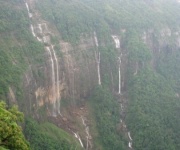
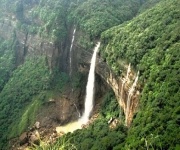
On the southern edge of Meghalaya’s Khasi Hills, a long cliff gives way to seven silver streams. During the rainy season, the water appears to pour directly from the clouds, separating into graceful ribbons before disappearing into the forested gorge below. This is the famous Seven Sisters Waterfall, also known by its local name, Nohsngithiang Falls.
The cascade is one of the defining sights around Sohra, formerly known as Cherrapunji. Its beauty is closely tied to the region’s dramatic weather: months of monsoon rain fill the channels, awaken smaller cascades and transform the escarpment into a living curtain of water. In drier months, the same cliff can look quiet and almost sculptural.
The name carries a story as well as a landscape. Travelers often hear that the seven streams represent the seven northeastern states of India, standing together along the edge of the Khasi plateau. Whether treated as folklore, symbolism or a poetic modern interpretation, the idea gives the waterfall a memorable place in Meghalaya’s cultural geography. Visitors planning a stay can find routes, accommodation and sightseeing details through Cherrapunjee travel packages.
Where the waterfall rises above Sohra
Seven Sisters Falls lies near Mawsmai village, a short drive from the central sightseeing areas of Sohra. The water drops from the limestone plateau toward the plains of Bangladesh, creating a vast natural viewpoint rather than a close-up waterfall experience. From the usual lookout, visitors see the full escarpment and the streams descending in separate channels.
The falls are often described as one of India’s tallest plunge-and-segmented waterfalls, with a total height commonly given as approximately 315 metres. The exact visual character changes according to rainfall, cloud cover and the amount of mist over the valley. On a clear afternoon, the distant plains may be visible beneath the cliff; on a wet day, clouds can swallow the lower landscape and leave only the upper streams in sight.
The setting explains why the waterfall feels larger than a single cascade. It is part of a broad geological edge where water has cut through layers of rock over long periods. Green slopes, exposed cliff faces and deep ravines frame the falling streams, while the plateau above supports villages, woodland and cultivated land.
The story behind the seven streams
The most familiar legend says that each stream represents one of the seven sister states of northeastern India: Assam, Arunachal Pradesh, Manipur, Meghalaya, Mizoram, Nagaland and Tripura. In this reading, the waterfall expresses unity through separate identities. Every ribbon follows its own path, yet all emerge from the same highland and descend toward the same valley.
This story is best understood as a symbolic interpretation rather than a single, universally recorded ancient legend. Local names, oral traditions and tourism descriptions can differ, and the significance of “seven” may be explained in more than one way. Some visitors connect the number with the region’s seven states, while others simply see it as a description of the distinct streams visible across the cliff.
That openness is part of the experience. The waterfall invites people to connect natural details with the wider history and identity of northeast India. Meghalaya itself has a strong cultural character shaped by Khasi traditions, Christian influence, village institutions and a landscape in which forests, rivers and living root bridges remain closely connected to everyday life.
The name Nohsngithiang is often used locally and in maps, while “Seven Sisters Falls” is widely recognized by visitors. Using both names helps travelers communicate with drivers, guides and residents, particularly when arranging a wider Sohra itinerary.
Finding the best viewpoint
The main viewpoint is accessible by road and generally requires only a short walk from the parking area. It is suitable for travelers who want a broad landscape view without committing to a demanding trek. Railings and designated platforms help define the viewing area, but the cliff remains a powerful natural environment, so sensible distance and attention to weather are essential.
Early morning can bring soft light and fewer visitors, although fog may conceal the falls. Late afternoon often adds warm color to the rock and valley when the sky is clear. During heavy monsoon spells, the water volume is impressive, but visibility may change from minute to minute as clouds move across the plateau.
A wide-angle lens can capture the entire escarpment, while a telephoto lens is useful for isolating the separate streams. A camera cover or waterproof pouch is practical in Sohra, where rain can arrive quickly even when the road begins under blue sky. Travelers should avoid climbing beyond marked areas for a closer photograph; wet limestone and steep drops make unplanned shortcuts dangerous.
The waterfall works especially well as part of a route including Mawsmai Cave, Eco Park, Arwah Cave and other nearby viewpoints. A local driver or guide can coordinate the order according to cloud conditions and road traffic, allowing more time at places where the weather opens the view.
| Visit period | What the falls usually look like | Practical consideration |
|---|---|---|
| June to September | Full, powerful streams with mist and lush greenery | Expect frequent rain, slippery paths and changing visibility |
| October to November | Strong residual flow and clearer skies | A good balance of water volume and sightseeing conditions |
| December to February | Reduced flow, dramatic cliffs and broad valley views | Carry warm layers for cool mornings and windy viewpoints |
| March to May | Intermittent flow, green slopes and occasional showers | Weather can be mixed; combine the visit with nearby attractions |
Monsoon power and dry-season character
The waterfall’s greatest drama usually arrives during the southwest monsoon. Sohra is renowned for extraordinary rainfall, and the cliff responds visibly as tributaries gather on the plateau. Water may spread across the rock face, creating temporary silver lines beside the principal streams. The sound becomes deeper, and the surrounding vegetation takes on an intense, saturated green.
Rain can also make the visit less predictable. Low clouds may hide the bottom of the falls, while wind drives spray across the lookout. Roads around Meghalaya can become slow because of wet surfaces, traffic and occasional local disruptions. A flexible itinerary is more valuable than trying to fit every viewpoint into a fixed timetable.
The dry season reveals another side of Nohsngithiang. The separate channels become easier to distinguish, the cliff texture stands out and distant horizons are often clearer. The waterfall may be less forceful, but the surrounding plateau, villages and Bangladesh plains can be appreciated in greater detail.
There is no single perfect month for every traveler. Those seeking maximum water should prioritize the rainy season and accept limited visibility. Those interested in photography, comfortable road travel and panoramic views may prefer the months after the heaviest rains.
Connecting the falls with Khasi country
A visit to Seven Sisters Falls becomes richer when it is placed within a broader exploration of the Khasi Hills. Nearby caves reveal the region’s limestone geology, while forest trails show how water shapes the plateau. Eco Park viewpoints look across the same escarpment from different angles, and Mawsmai Cave provides a more intimate encounter with the rock beneath the falls.
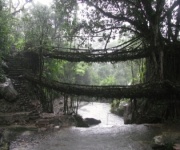
Living root bridges offer a contrasting expression of the relationship between people and landscape. These bridges are guided tree roots trained over many years to cross streams and ravines, becoming stronger as they grow. Travelers interested in how nature and community knowledge meet can read about the living root bridges before choosing a suitable route.
The wider region also includes villages, local markets, forest reserves and waterfalls that may be less crowded than the principal viewpoints. Some journeys involve steep steps, slippery ground or long walks, so a day of sightseeing should be planned around fitness, footwear and the season.
Respect for local communities matters throughout the journey. Ask before photographing residents, avoid entering restricted areas and carry waste back when bins are unavailable. The cliffs, forests and streams are not simply scenic backdrops; they support villages, wildlife and water systems that remain important beyond tourism.
Planning a comfortable sightseeing day
Sohra is best explored at a measured pace. A full day can combine the Seven Sisters viewpoint with Mawsmai Cave, a nearby park and one or two additional waterfalls. Trying to visit every attraction in a single circuit can leave little time for weather delays or the pauses that make the landscape memorable.
Transport is particularly important for first-time visitors. Public transport options may be limited between scattered attractions, while hiring a local vehicle provides greater control over timing. Drivers familiar with the area can often judge which viewpoints are open, how long a road section may take and when cloud conditions are likely to improve.
Pack light but prepare for changing conditions. Useful items include:
- A waterproof jacket, compact umbrella and protection for phones or cameras
- Shoes with firm grip for wet paths, cave floors and uneven steps
- Drinking water, simple snacks and any personal medication
- A light fleece or warm layer for windy viewpoints and cool evenings
- Small cash for local purchases, parking fees and places with limited connectivity
Accommodation ranges from hotels and resorts in and around Sohra to stays in nearby villages. Booking ahead is wise during monsoon weekends, holidays and peak travel periods. Guests should also confirm transport arrangements, check-in times and whether meals are included, especially when staying outside the main town.
Visitors arriving from outside India should review current visa requirements and travel permissions before departure. Rules can change, and international travelers may need to carry valid identification during excursions. Local weather, road and access information should be checked shortly before setting out rather than relying only on an old itinerary.
Seeing the legend with care
The seven streams are easy to photograph, but their meaning takes longer to appreciate. The popular connection with the seven sister states turns a natural formation into a regional symbol, while the Khasi setting reminds visitors that Meghalaya has its own living traditions and histories. The best experience leaves room for both the story and the physical landscape.
Stand at the viewpoint long enough to notice how the falls change. A gust can separate the streams into fine veils; a cloud shadow can darken one section of the cliff; a brief opening in the sky can illuminate the valley. These changes are why a short stop on a rushed route may not reveal the waterfall’s full character.
Travelers can support the area by using local guides, eating at village-run establishments where available and choosing accommodation that follows responsible waste and water practices. Avoid littering, loud behavior and off-route exploration near cliff edges. Leave flowers, plants, stones and other natural materials where they are found.
Build the visit into a broader Meghalaya journey rather than treating it as a single photograph. Walk through a root bridge area, listen to local accounts, explore a cave with proper guidance and allow time for the weather to shape the day. Then the legend of the Seven Sisters Waterfall becomes part of a larger understanding of Sohra: a place where rain, rock, forest and community are inseparable.
Plan your Sohra journey around the season, reserve suitable accommodation and include Nohsngithiang Falls in a route that gives the landscape time to unfold. Contact India Beacons Sojourn through Cherrapunjee.net to arrange a Meghalaya vacation package and turn this legendary waterfall into a meaningful part of your travels.