





Tough Hikes for Adventure Travellers Heading to Cherrapunjee
Cherrapunjee, called Sohra by locals, sits on the southern edge of Meghalaya's Khasi Hills and earns its reputation as one of the wettest places on the planet. Each year the village records rainfall that would make a Blue Mountains bushwalker pull out the Gore-Tex in awe. Travellers flying out from Sydney or Melbourne for a taste of the wild will find a landscape cut from a different cloth: living root bridges stitched across rivers, waterfalls that fall a thousand feet, and a network of muddy footpaths that climb, plunge and vanish into cloud forest.
Australian hikers tend to chase altitude on the Larapinta or push through scrub on Tasmania's Overland Track, but Cherrapunjee offers something these routes cannot. The challenge here is not sheer height or distance. It is the relentless damp, the knee-punishing stairs, the river crossings and the dense, slippery undergrowth that turns a simple trek into a proper adventure. A good pair of boots, a patient mindset and a tolerance for leeches will take you further than any fancy gadget.
Why Cherrapunjee Treks Feel Harder Than They Look
The first thing any seasoned bushwalker notices in Meghalaya is that the gradient changes constantly. Paths switch from soft pine forest to loose shale to slick limestone within minutes. The famous steps carved out of the hillside by Khasi villagers can stretch endlessly downhill, then turn around and punish you on the way back up. After a full day of climbing, calves and shins feel as if they have been through a session with a personal trainer who hates you.
The climate adds another layer of difficulty. Even outside the wettest months, humidity hovers between seventy and ninety percent, and the air feels thick the moment you step off the plane in Guwahati. Sweat does not evaporate, so every step costs more energy than the trail map suggests. Add leeches, sudden downpours and the occasional muddy scramble on all fours, and a "moderate" Cherrapunjee trek can feel closer to a hard day on the Bibbulmun Track with extra spice.
The Double Decker Living Root Bridge Trek
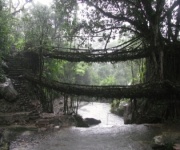
If you ask any guide which hike in Cherrapunjee rewards effort the most, the answer is almost always the double decker living root bridge at Nongriat. The trail begins near the small village of Tyrna and drops sharply through rubber and betel nut plantations. By the time you reach the bottom, your knees will have absorbed roughly three thousand five hundred steps. The two-tiered bio-engineered structure spans a river with mist rising off the plunge pool beneath it, and the bridge itself looks like something out of a fantasy film.
The return is where many travellers learn humility. Going up is slow, slippery and leg-burning, especially after the rain. Most groups take six to eight hours round trip from Tyrna, but anyone who walks regularly on weekends in places like Brisbane's Mount Coot-tha or the You Yangs should manage it with some training. Local guides are essential, both for safety and for explaining how the Khasi people coaxed the rubber fig roots into shape across generations.
Wei Sawdong and the Deep Gorges of Wahriarem
Tucked away from the busier circuits, Wei Sawdong has quietly become a favourite for travellers who crave solitude. The trek starts with a short drive from Sohra town and winds through bamboo groves and mossy riverbanks before opening up to three crystal-clear pools framed by vertical rock. The water has a turquoise shade that looks almost fake, and jumping in after a long hike feels like the best reward in the world.
The trail here is rougher than at Nongriat. There are sections where you have to hold onto wet roots and scramble over slick boulders, and the descent to the lower pools demands careful foot placement. A typical day walk takes around five to seven hours depending on how much time you spend in the water. Because the area is more remote, mobile signal drops in and out, and it is wise to carry a small first aid kit, a head torch and a decent waterproof dry bag.
Mawsmai Cave Combined with the Ridge Trail
The Mawsmai Cave walk is often dismissed as a quick stop for tour buses, but extending it into a longer ridge day makes it far more interesting. The limestone passages twist for around a hundred and fifty metres, dripping with stalactites and lit only by the occasional shaft of daylight. From the cave exit, you can continue along a forest path that climbs steadily toward nearby villages, with views back across the Bangladesh plains when the clouds lift.
Combine this with the short but steep climb up to a less-visited viewpoint above Mawsmai village, and you have a half day that still feels like a real adventure. Many Sydney-based trekkers pair this with a longer multi-day itinerary that includes Dawki and the crystal-clear Umngot river. The advantage of starting with Mawsmai is that it warms up the legs without committing to a full descent-and-return loop on day one.
David Scott Memorial Trail
For travellers who want a multi-day experience, the David Scott Memorial Trail is the classic choice. It runs roughly sixteen kilometres between Mawphlang and Lad Mawphlang, tracing an old horse path built in the early 1800s. The trail crosses streams, passes waterfalls and goes through rolling meadows that feel closer to the highlands of Papua New Guinea than to India. Two days is the comfortable pace, with a camp at the halfway point or a homestay in one of the villages along the way.
The trickiest sections are the river crossings, which swell during and after heavy rain. Stones that look stable in the morning can disappear by afternoon, and guides sometimes reroute the group along higher ground. Anyone who has done overnight hikes in the Australian Alps will know the rhythm: pack light, dry your socks at camp, and keep your food sealed away from curious wildlife.
Pacing, Humidity and Pre-Trip Prep
Travelling from Australia in the southern winter often means arriving during Meghalaya's heaviest rainfall. Between June and September, many trails become genuinely dangerous, with landslides cutting off villages and rivers turning brown overnight. October through to early May is generally a safer window, although mornings can still be cool and misty at altitude.
One of the biggest mistakes visitors make is underestimating how the weather affects the body. Even fit hikers from Perth or Adelaide, used to dry bush, find that their usual pace collapses under Cherrapunjee's persistent humidity. Drinking water regularly, eating salty snacks and giving yourself recovery time helps enormously. A useful primer on how to handle altitude and humidity in Cherrapunjee for better comfort covers acclimatisation, layering and the small habits that make a big difference on the trail.
The best way to enjoy the tough hikes in Cherrapunjee is to show up already conditioned. Three months of regular stair sessions, squats and lunges at the gym will turn those three-thousand-step descents into something manageable rather than miserable. Long weekend walks in places like the Gold Coast hinterland or the Mornington Peninsula build the endurance you need for eight-hour days on uneven ground. Gear matters as much as fitness: waterproof hiking boots with proper ankle support, quick-dry clothing, a reliable rain jacket and a pair of gaiters are not optional extras here.
Practical Pointers for the Trail
- Start every hike before eight in the morning so you finish before the afternoon storms roll in.
- Carry at least two litres of water per person and refill only at known safe sources.
- Hire a local guide through your guesthouse or tour operator; the cost is modest and the safety upside is huge.
- Keep small denomination Indian rupees for tea stalls and village donations along the way.
- Pack a thin pair of gloves to protect your hands during root scrambles and rope-assisted climbs.
- Photograph the bridges and waterfalls early; light softens fast once the clouds thicken.
- Tell your homestay host your expected return time so someone knows when to expect you back.
If a proper adventure is on your list, the time to act is now. Drop a quick email to the team at India Beacons Sojourn, share the dates you have in mind and how many of you are keen, and they will line up the permits, transport, guides and accommodation that match your fitness and appetite for mud. Cherrapunjee's hardest hikes do not wait around, and the best months fill quickly once the rain clears.