




Beyond the Double Decker: Meghalaya’s Most Photogenic Root Bridges
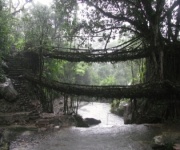
Meghalaya’s living root bridges are among the most remarkable walking routes in northeast India. Shaped over decades or centuries from the aerial roots of rubber fig trees, they look less like built structures than woven extensions of the forest. The famous double-decker bridge at Nongriat deserves its reputation, yet it is only one part of a much larger landscape of root bridges, village paths, limestone streams and rain-soaked valleys.
For Australian travellers, the quieter bridges offer a different kind of experience. Rather than treating the landmark as a quick photo stop, you can combine forest walks with local food, homestays and time in villages where the bridges remain useful crossings. Cherrapunjee, also known as Sohra or Cherrapunji, is an ideal base for exploring this living heritage at a pace that suits a longer Meghalaya holiday.
Why look beyond Nongriat
The double-decker bridge is the best-known living root bridge because of its extraordinary form and the dramatic trek required to reach it. The route from Tyrna includes thousands of steps, suspension bridges and steep forest sections, so the reward is physical as well as visual. It can become busy during peak holiday periods, particularly when domestic visitors arrive for long weekends or school breaks.
Other bridges provide more space to observe details: the braided roots gripping stone, the moss covering the railings and the way water moves beneath the crossing. A single bridge may appear modest from a distance, but its setting can be far more photogenic than its size suggests. Look for the relationship between the roots, the stream and the surrounding canopy rather than framing the structure as an isolated object.
The route also matters. Some bridges are reached through remote Khasi villages, while others are part of forest walks near better-known attractions. A guide can help with changing trail conditions, river levels and local etiquette. For an example of how demanding Meghalaya’s wet-weather walks can be, read this Wei Sawdong trek guide before adding several hikes to the same day.
Ummunoi’s layered forest setting
The Ummunoi living root bridge is often associated with the Nongriat area and is valued for its intimate forest atmosphere. The approach takes you away from the visual drama of the double-decker structure and towards a quieter scene of roots, boulders and clear water. In the wet season, every surface becomes richer in colour, from deep green leaves to dark, rain-polished stones.
This is a bridge for close observation and patient photography. A wide-angle lens can include the stream and tree canopy, while a short telephoto lens isolates the overlapping root fibres and small plants growing from the structure. Early morning is especially effective when mist hangs between the trees and the light reaches the valley in narrow shafts.
Allow extra time for the walk rather than calculating the visit solely by distance. Trails may be slick after rain, and river crossings can alter the pace. Good trekking shoes with firm grip are more useful than lightweight city trainers, while walking poles can provide confidence on steps and muddy slopes.
Rangthylliang and the art of patience
Rangthylliang is one of the more rewarding choices for travellers who want a root bridge experience with a strong sense of remoteness. Its forest surroundings create natural frames, with branches and vines forming irregular borders around the crossing. The bridge may be less immediately recognisable than the double-decker, but its organic shape rewards photographers who enjoy texture and atmosphere.
Try photographing it in several ways. A low viewpoint can emphasise the roots as a sturdy foreground, while a higher angle shows how the bridge grows out from the banks. Include a person at a respectful distance to convey scale, but avoid turning local residents into unplanned props. A guide can explain where visitors should stand and which sections are safe to walk across.
The best images may arrive after the first obvious shot. Watch for drops collecting on the roots, tiny ferns emerging from gaps and reflections breaking in the water below. In Cherrapunjee’s humid climate, lenses can fog when moved between a cool vehicle and warm air, so keep a cloth and allow camera equipment to adjust gradually.
Kudeng Rim and village pathways
Kudeng Rim is an appealing option for travellers who want to connect a root bridge with village life. The area is known for multiple living root crossings and walking routes through the forest, making it possible to experience the bridges as part of a wider cultural landscape. The journey itself brings the visual variety: betel nut palms, cultivated slopes, streams and Khasi homes appear between sections of woodland.
The atmosphere is often more personal than that of a major attraction. You may pass residents using narrow paths for everyday errands, so photographs should be taken with courtesy and permission when people are clearly identifiable. A friendly greeting and a little patience usually matter more than trying to capture a spontaneous portrait.
Pack food and water according to the day’s route, as facilities can be limited outside the main tourist centres. Small local stalls may sell snacks or tea, but they should not be treated like a café network in Sydney or Melbourne. Carry small Indian rupee notes, refillable water where possible and a bag for every item you bring into the forest.
Mawlynnong’s accessible root bridge country
Riwai near Mawlynnong is one of the most accessible living root bridge experiences in Meghalaya. The bridge is reached by a comparatively straightforward village walk, making it suitable for travellers who want to see a living root structure without committing to the full Nongriat descent. It can work well in an itinerary that also includes Mawlynnong village, viewpoints and nearby forest attractions.
Accessibility does not mean the setting lacks character. Riwai’s roots form an elegant natural span over a rocky stream, and the surrounding trees provide a softer, more open frame than the dense ravines around Cherrapunjee. Visit early or later in the afternoon if you want gentler light and fewer visitors in the composition.
Mawlynnong is sometimes promoted as a spotless village, but visitors should avoid reducing the community to a slogan. Follow local instructions, use bins where provided and do not leave food packaging behind. The bridge is a living structure that requires ongoing care, and responsible tourism helps ensure that its use remains compatible with village routines.
How to photograph roots responsibly
Living root bridges change with the seasons and with the work of the communities that maintain them. Their roots may be trained, supported or repaired over time, so the structure should never be treated as a decorative installation. Do not pull at aerial roots, climb on railings, carve initials or move stones to create a better foreground.
Composition improves when you work with the landscape instead of forcing a dramatic effect. Use a person only with consent, keep the bridge’s natural lines visible and include the stream to show how the crossing belongs to its valley. Overcast conditions can be excellent for preserving detail in wet roots, while a polarising filter may help control reflections on water and leaves.
Photography also affects the experience of others. Keep tripods off narrow sections when people need to cross, step aside on village paths and keep drone use subject to local rules and permission. A camera that is protected from rain is useful, but waterproof covers should not become an excuse to continue into unsafe weather or rising water.
Planning from Australia
For travellers flying from Australia, the practical route commonly involves connecting through a major Indian gateway before continuing towards Guwahati or another northeast access point. A visitor from Brisbane, Perth or Adelaide should build in generous connection time rather than assuming every leg will run with the predictability of a domestic flight between Sydney and Melbourne. From the gateway, the final journey to Sohra may include road travel on winding, sometimes rain-affected routes.
Australian passport holders should check current Indian visa and e-Visa requirements through official channels well before departure. Carry digital and printed copies of key bookings, passport details and travel insurance. Australian comprehensive travel insurance is particularly valuable for trekking holidays because medical evacuation, delays and changing road conditions can create expenses that are not covered by a basic policy.
The local market operates differently from a typical Australian tourist town. Card payments and mobile connectivity are more reliable in larger centres, while remote villages may rely on cash in Indian rupees. International cards may attract foreign transaction fees, and an Australian traveller accustomed to tapping a card at every café should keep smaller notes available for transport, guides and local purchases. A local SIM or suitable roaming plan is useful, although signal can disappear in valleys.
Weather should shape the itinerary. Meghalaya is famous for heavy rain, and wet-season beauty comes with slippery stairs, clouded viewpoints and delays. Australian summer does not correspond neatly with conditions in Meghalaya, so check the seasonal forecast rather than packing by the calendar alone. Lightweight quick-dry clothing, a breathable rain shell, a dry bag, insect repellent, sun protection and a spare pair of socks are more useful than bulky cold-weather gear.
Choose a package or local operator that explains what is included, from transport and accommodation to guide services and entry fees. The team behind the destination information and booking services is described on the Cherrapunjee website, which can help travellers understand the local focus of the business before making arrangements. A two- to seven-night stay gives you greater flexibility than trying to fit every bridge into a rushed weekend.
The most rewarding root bridge journey is built around time, care and curiosity. Book a Meghalaya stay that includes Cherrapunjee and the surrounding villages, allow space for weather changes, and arrange knowledgeable local guidance for the more remote trails. Contact India Beacons Sojourn through Cherrapunjee.net to plan a living root bridge holiday that goes beyond the double-decker and into the forests, streams and communities that keep these extraordinary crossings alive.