




Historic Places to Discover in and Around Cherrapunjee
Cherrapunjee, known locally as Sohra and widely written as Cherrapunji, offers far more than dramatic waterfalls and cloud-covered escarpments. Its history is written into Khasi villages, Presbyterian churches, living root bridges, colonial-era routes, sacred forests and stone monuments. For travellers who enjoy understanding how places developed, the region provides a rewarding mix of indigenous heritage, missionary history and living traditions.
The area also suits Australian visitors looking for a destination with a strong sense of place. A journey from Sydney, Melbourne, Brisbane or Perth usually involves flying to Guwahati before continuing by road into Meghalaya. The climate, food, transport and social customs differ greatly from Australia, so allowing time for a slower itinerary will make the historical sites more enjoyable.
Sohra’s Khasi Heritage and Traditional Villages
Sohra is the homeland of the Khasi people, whose language, social customs and connection with the surrounding hills remain central to local life. Khasi society is traditionally matrilineal, meaning family inheritance and clan identity are commonly traced through the mother. This is a significant cultural difference for many Australian visitors and helps explain the importance of women, family homes and clan relationships in village life.
A walking visit through villages around Cherrapunjee can reveal details that are easy to miss from a car window. Houses, churches, small shops, betel nut stalls and food markets reflect layers of change, while older residents may share stories about village routes, monsoon seasons and ancestral land. A local guide can explain which places are suitable for visitors and how to behave around homes, shrines and community spaces.
Sohra was also an important centre before British administration expanded into the Khasi Hills. The surrounding plateau supported trade and communication between communities, while steep paths connected settlements across the escarpment. Historical travel here is therefore less about a single monument and more about seeing how geography shaped settlement, trade and everyday life.
Nongsawlia and the Missionary Era
Nongsawlia is closely associated with the arrival of Welsh Presbyterian missionaries in the nineteenth century. The mission established schools, churches and printing activities, creating major changes in education and written communication across the Khasi Hills. The Nongsawlia Presbyterian Church is one of the most meaningful places to visit for travellers interested in this period.
The church and its surrounding settlement represent a complex chapter in local history. Missionary work introduced Christianity to many Khasi communities, yet it operated within a wider colonial environment that altered local politics, education and social structures. A respectful visit should focus on the building, its continuing religious role and the broader historical context rather than treating the church as a preserved museum.
Visitors should dress modestly and check whether a service or community event is taking place before entering. Sunday is particularly important in this strongly Christian part of Meghalaya, and quiet observation is appreciated. Australians accustomed to entering historic churches as tourist attractions should remember that these are active places of worship.
The missionary story can also be explored in Shillong, where museums and heritage buildings provide additional context about Meghalaya’s ethnic groups, colonial administration and religious history. A longer Cherrapunjee holiday can combine Sohra’s local sites with a Shillong stay, giving the journey a useful regional perspective.
Living Root Bridges as Cultural Engineering
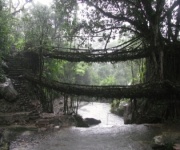
The living root bridges near Cherrapunjee are among the most remarkable examples of traditional environmental knowledge in South Asia. Khasi and Jaintia communities trained the aerial roots of rubber fig trees across streams and ravines, gradually creating strong crossings. Some bridges take many years or decades to become fully established, and they can continue growing and strengthening with care.
The best-known example is the double-decker root bridge at Nongriat. Reaching it requires a demanding descent and ascent involving thousands of steps, so sturdy shoes, drinking water and reasonable fitness are essential. The bridge is not an abandoned relic; it is part of a living landscape maintained through local knowledge and community use.
For history enthusiasts, the importance of these bridges lies in the relationship between technology and ecology. They demonstrate how communities adapted to intense rainfall, steep terrain and seasonal waterways without relying on concrete or steel. Their history is passed through practice and memory rather than displayed through formal plaques.
Visitors should avoid climbing on delicate side roots, leaving rubbish or treating homes along the trail as photo props. Guides, village fees and locally purchased food support the communities that maintain access. Travellers wanting more background can read this eco-tourism guide before planning a bridge excursion.
Sacred Forests, Monoliths and Ancient Beliefs
Mawphlang Sacred Forest, within reach of Cherrapunjee and Shillong, offers a different perspective on Khasi history. The forest is protected through traditional religious beliefs associated with the local community. Visitors are generally asked not to remove leaves, stones, flowers or fallen wood, because every part of the forest is considered spiritually significant.
A Khasi guide is especially valuable here. The forest’s history is conveyed through stories about guardian spirits, medicinal plants, clan responsibilities and rituals. It is easy to approach the site as a botanical attraction, but its deeper meaning comes from the community rules that have protected it over generations.
Stone monoliths found in parts of Meghalaya are another important feature of the region’s cultural landscape. These upright stones and memorial arrangements are linked with Khasi traditions of remembrance, social status and ancestral identity. Their exact interpretation varies by location, so a local explanation is preferable to assuming that every stone has the same purpose.
Mawphlang also connects with the David Scott Trail, an old route associated with British-era movement through the Khasi Hills. Parts of the trail pass through forests, ridges and villages, giving walkers a sense of how colonial officials, traders and local communities travelled before modern roads. Conditions can become slippery during the monsoon, and a guide is strongly recommended.
Caves, Waterfalls and Stories of Place
Mawsmai Cave is primarily a geological attraction, yet it also belongs in a cultural history itinerary because natural landmarks often carry local stories. The limestone passages, narrow chambers and sculpted formations show how water has shaped the plateau over immense periods. The cave is relatively accessible compared with longer adventure routes, though uneven surfaces and low ceilings require care.
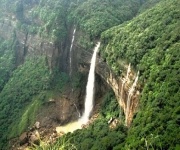
Nohkalikai Falls, one of Meghalaya’s most famous viewpoints, is associated with a tragic Khasi legend about a woman named Ka Likai. As with many oral traditions, versions of the story may differ, and it should be treated as living cultural knowledge rather than a fixed historical record. Hearing the story from a local guide adds meaning to the dramatic landscape.
Dainthlen Falls also carries a powerful legend involving the defeat of a giant serpent. These stories connect morality, courage and the natural environment, showing how waterfalls and rock formations became part of community memory. They are especially valuable for visitors who want to understand how history can be preserved through storytelling rather than written documents.
The monsoon changes both access and atmosphere. Waterfalls are most spectacular during the wet season, but roads can be slow and viewpoints may become slippery. Australian travellers visiting during July or August should allow generous travel time, carry waterproof bags for cameras and avoid assuming that a short map distance means a quick journey.
Wider Historical Excursions from Cherrapunjee
A day trip towards Shillong can include the Don Bosco Museum, which presents the cultures, textiles, tools and traditions of Indigenous communities across Northeast India. It is a useful complement to village visits because it places Khasi heritage within the wider history of Meghalaya and neighbouring states. The museum is particularly helpful when weather interrupts outdoor plans.
The region also has connections with the Khasi resistance to British expansion. Figures such as U Tirot Sing are remembered for opposing colonial control in the nineteenth century. Learning about this resistance helps balance the missionary and administrative narratives often associated with hill-station history. A specialist guide or museum visit can provide more reliable detail than isolated roadside stories.
Mairang and other towns farther from Sohra can be considered by travellers with additional time, although road conditions and distances make them unsuitable for a rushed schedule. Most visitors will gain more from selecting a few sites and spending time with local guides than from collecting distant viewpoints.
A two- to seven-night package can be shaped around different interests. Short stays may focus on Nongsawlia, Mawsmai Cave, Nohkalikai Falls and one root bridge. Longer trips can add Mawphlang, Shillong museums, village walks and time for weather-related changes. Guwahati connections should include a buffer, especially during heavy rain or when joining a group itinerary. Practical advice on handling disrupted air travel is available in this flight-delay guide, with many of the same principles applying to a Meghalaya journey.
| Place | Historical or cultural value | Typical experience | Best suited to |
|---|---|---|---|
| Nongsawlia Presbyterian Church | Welsh missionary and Khasi Christian history | Quiet heritage visit | Travellers interested in religion and colonial-era change |
| Nongriat Root Bridges | Indigenous environmental engineering and community knowledge | Challenging guided hike | Active visitors and cultural-history enthusiasts |
| Mawphlang Sacred Forest | Traditional Khasi beliefs and conservation customs | Guided forest walk | Visitors interested in spirituality and ecology |
| David Scott Trail | British-era route and regional movement | Scenic trek through hills and villages | Walkers with extra time |
| Mawsmai Cave | Limestone geology and local landscape stories | Short cave exploration | Families and first-time visitors |
| Nohkalikai and Dainthlen Falls | Khasi legends connected with natural landmarks | Viewpoints and storytelling | Travellers combining scenery with folklore |
| Don Bosco Museum, Shillong | Broader Indigenous history of Northeast India | Indoor museum visit | Rainy-day and research-focused itineraries |
Pack a light rain jacket even in drier months, quick-drying clothing, waterproof footwear and a small daypack. An Australian-style summer raincoat may be useful in Sydney or Brisbane, but Meghalaya’s prolonged monsoon often calls for better coverage and sealed bags. Carry Indian rupees for small purchases, as rural card facilities and mobile coverage can be inconsistent.
Food markets are part of the historical experience too. Try local Khasi dishes through reputable eateries, and remember that market customs may differ from those at Queen Victoria Market in Melbourne, Paddy’s Markets in Sydney or South Bank markets in Brisbane. Ask before photographing vendors, accept that service may be slower, and use a guide when purchasing unfamiliar local products.
Cherrapunjee.net provides information about accommodation, attractions, permits, travel logistics and multi-day packages operated by India Beacons Sojourn. Arrange transport and guides in advance for remote walks, sacred sites and longer historical circuits. A thoughtfully planned visit lets you explore the places, stories and communities that make Sohra one of Meghalaya’s most distinctive destinations.
Book a Cherrapunjee itinerary that gives history the time it deserves, with local guidance, suitable transport and room for the weather to change your route. Contact India Beacons Sojourn through Cherrapunjee.net to organise a heritage-focused holiday across Sohra, Shillong and the surrounding Khasi Hills.