




Best viewpoints for evening fog drift across Cherrapunjee's plains
Cherrapunjee sits on a high plateau in the East Khasi Hills, where the air feels heavier than what you might know from the coastal breezes of Sydney or the dry inland stretches around Mildura. By late afternoon, the warm daytime heat pulls moisture up from the Sylhet plains far below, and once the sun starts to dip behind the cliffs, that moisture condenses into a soft white blanket. The result is the kind of rolling mist that photographers chase for years and that most travellers only ever see in calendars.
The phenomenon has nothing to do with rain falling at the viewpoint itself. Locals explain it as a meeting of two climates: the cool, forested ridges of Meghalaya and the warmer, humid air sitting over Bangladesh. As the temperature drops, the lower layers of the sky fill with a slow tide of cloud. From the right perch, you can watch fields, rivers and distant hamlets vanish one after another, then reappear as the fog lifts and settles again.
Australians tend to arrive well prepared for unpredictable weather, since many are used to carrying layers for the Blue Mountains in winter or for hikes around kunanyi/Mount Wellington behind Hobart. The same mindset works here. A light shell jacket, a beanie and decent grip on your footwear turn a foggy evening into a comfortable one rather than a chilly ordeal.
For visitors comparing options, a dedicated overview of the leading sunrise and sunset viewpoints in Cherrapunjee gives a useful starting map. The sections below focus specifically on what happens when the light fades and the evening fog begins its quiet descent.
The science behind the rolling mist
Cherrapunjee holds the reputation of being one of the wettest places on earth, but the rain rarely interferes with an evening fog session. The annual downpour is concentrated during the southwest monsoon, when weather systems dump water on the plateau in dramatic curtains. By late afternoon in the post-monsoon months, however, the sky clears, the temperature shifts, and the moisture trapped in the valleys starts to rise.
The plain visible from most ridges is roughly 1,000 metres below the viewing points. That elevation difference is what makes the fog behave the way it does. Warm, humid air from the lowlands rises and meets the cooler air mass above the plateau, and the boundary between the two becomes visible as fog. When the sun sets, the cooling accelerates, and the cloud mass creeps up the slopes in slow, deliberate layers.
Travellers familiar with the fog rolling over the Yarra Valley near Melbourne or the mists clinging to the hills around Hobart will recognise a similar pattern. What sets Cherrapunjee apart is the sheer scale of the basin. From a single vantage point you can watch fog swallow entire valleys, then drift sideways as the wind shifts, sometimes revealing a single village rooftop before closing again.
The window for this spectacle is short, usually between half an hour before sunset and twenty minutes after. Photographers set up early, mark their spot, and wait. The reward is a moving canvas of cream and grey, lit from below by the last amber rays of the day.
Mawsmai and the limestone ridges close to Sohra
Mawsmai Cave sits about six kilometres from the town of Sohra, and the limestone ridge behind it carries one of the most accessible evening fog viewpoints in the region. The walk from the parking area to the ridge edge takes roughly fifteen minutes on a well-marked path, and there is a natural stone platform that fits a small group comfortably.
From this platform, the plain opens up like a vast green-grey amphitheatre. Fog gathers first in the deeper folds of the valley, then climbs steadily towards the viewpoint. By the time the sun reaches the ridgeline, the entire basin is often filled with cloud, with only the highest peaks breaking through as dark green islands.
This spot works particularly well for travellers based in one of the Sohra hotels, because the drive back after dusk is short and the road is in good condition. Many visitors combine it with a late lunch at a nearby café and walk up in time for the golden hour. Because of its proximity to town, the area can get busy during peak season, but the fog itself tends to silence the crowd quickly.
Locals recommend looking east rather than west for the most dramatic effect. The last direct sunlight hits the western cliffs and reflects softly off the upper edge of the fog, creating the kind of pastel glow that Australians photographing the Twelve Apostles at dusk would recognise immediately.
Nohkalikai Falls and the canyon edges
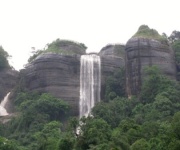
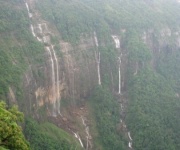
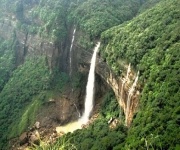
Nohkalikai is the tallest plunge waterfall in India, and the viewing platform beside it doubles as one of the more powerful fog vantage points. The falls themselves generate a permanent spray, and when evening fog drifts in from the plains, the spray and the mist merge into a single silver curtain that seems to dissolve the canyon walls.
The path down to the main viewing deck is steep but manageable for anyone with a moderate level of fitness, similar to the stepped tracks you find around Wentworth Falls in the Blue Mountains. Handrails have been improved in recent years, and benches near the edge allow you to sit rather than stand for the full duration of the show.
What makes Nohkalikai special is the combination of sound and motion. The roar of the water becomes muffled as the fog thickens, then returns in waves as the cloud thins. The canyon below disappears entirely during the densest moments, replaced by a slow swirl of grey and white. Anyone with a camera and a tripod will find hours of material in just a few minutes of real-time observation.
Many tour packages include Nohkalikai as a sunset stop, but the real reward comes after the sun has dropped. Plan to stay at least forty-five minutes past sunset for the full transition from glowing mist to deep blue twilight.
The living root bridge region around Nongriat
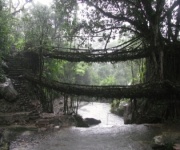
Nongriat is famous for its double-decker living root bridge, and the climb down and back up is part of the ritual for travellers who reach the village. What fewer people realise is that the same hike offers some of the most striking evening fog viewpoints in Meghalaya, particularly when you look back towards the east from the upper ladders.
The trick is to time the descent in the early afternoon and the climb back up for the hour before sunset. As you gain elevation, the fog begins to fill the valley you just left, and the village lights start to appear in scattered clusters below the cloud line. The effect resembles the way fog settles into the folds of the Adelaide Hills on a cold morning, but seen from the opposite perspective.
This is a longer commitment than other viewpoints, with around 3,500 steps each way depending on the route. Travellers coming from Adelaide or Brisbane usually find the pace manageable if they have spent a few days acclimatising to the altitude. Hydration matters more than expected, and the small stalls near the top of the staircase sell water and tea in case you have not packed enough.
The vantage point near the upper ladders is especially rewarding because it captures both the canopy and the sky. The living roots twist through the foreground, while the fog moves through the middle distance and the distant peaks rise above it, creating a layered composition that few other sites in the country can match.
Off-the-beaten ridges for repeat travellers
Once you have seen the main viewpoints, several quieter ridges reward visitors willing to walk a little further. The areas around Laitkynsew, Wei Sawdong and the back trails near Mawlynnong offer their own evening fog perspectives with smaller crowds and often more dramatic foregrounds.
Laitkynsew is best approached with a local guide, since several access paths cross private farmland and a few have been rerouted after monsoon damage. The reward is a wide, uninterrupted view of the Bangladesh plains and a horizon that seems to stretch for hundreds of kilometres. Fog behaves differently here because the air is warmer and the drop is sharper, creating a more aggressive tide of cloud that races up the slope.
Wei Sawdong sits closer to the Bangladesh border and offers three separate viewpoints within a short walk of each other. The western platform frames a bend in the river, the central one looks straight down into the gorge, and the eastern platform opens onto a broad plain that fills with fog almost the moment the sun drops. Travellers who enjoy the kind of self-sufficient camping common around the Grampians or along the Kimberley coast tend to appreciate the simplicity of these stops.
It is worth noting that some of these areas sit close to international borders, and Australian travellers should carry their passport and any required Indian visa documentation at all times. Indian regulations also require valid permits for specific border-zone routes, and tour operators usually arrange these in advance. Biosecurity rules apply when crossing back into Australia, so keeping shoes, clothing and camera gear clean of soil and plant material is essential before flying home from Guwahati or Kolkata.
Practical tips for a smooth evening fog session
Arriving early is the single most useful habit for any viewpoint in Cherrapunjee. Light shifts quickly, paths get slippery once the fog settles, and parking areas near the popular sites fill up well before the golden hour. Aim to be on site at least ninety minutes before the planned sunset time.
Layers matter more than waterproofs. Mornings and afternoons in the Khasi Hills are usually mild, but the temperature drops noticeably as soon as the fog thickens. A soft shell jacket over a long-sleeved top is a sensible combination, and a beanie or scarf helps once the wind picks up.
Cameras benefit from a small tripod, a wide-angle lens and patience. The fog rarely behaves the way you expect, and the best images often come in the final minutes when the light has nearly gone. Smartphones work fine for casual shots, but the slow shutter speeds needed for the mist really demand a stable platform.
Respect the local rules. Some viewpoints sit on community land, and a small entry fee is common. The fees fund trail maintenance and village projects, so paying cheerfully is part of the experience. Litter is a real issue in the area, so pack out anything you bring in, including fruit peels and tissue.
A few sensible essentials for the trip:
- A light, packable rain jacket for unexpected showers
- Sturdy walking shoes with good grip on wet rock
- A reusable water bottle with at least one litre of capacity
- A small torch or headlamp for the walk back after dusk
- Sunscreen and a hat for the daytime portions of the day
- A valid Indian visa and any border-zone permits if visiting restricted areas
- A microfibre cloth for cleaning camera lenses in damp conditions
Photographs gathered across a few evenings can be viewed later in the Cherrapunjee photo gallery, which also helps when planning the next visit or sharing the experience with friends back home.
To plan a trip around the evening fog, reach out to India Beacons Sojourn through the booking contacts on the website, share the dates you have in mind, and ask for a tailored package that includes transport, accommodation in Sohra and guided evening viewpoints. The fog waits for no one, so the earlier you lock in the itinerary, the better your chances of catching Cherrapunjee at its most atmospheric.