





Wildlife encounters in the Sohra hills
The Sohra Hills, widely known as Cherrapunji or Cherrapunjee, are shaped by extraordinary rainfall, deep gorges, subtropical forests and cool, misty uplands. This changing landscape supports far more wildlife than visitors may notice at first. A movement in the canopy, a call from dense foliage or a set of tracks beside a forest path can reveal the presence of an animal without offering a clear view.
Sohra is best experienced as a habitat rather than a conventional wildlife-viewing destination. The rewards come from patient walks around forest edges, waterfalls, caves, village trails and living root bridges, accompanied by a local guide who understands seasonal behaviour. Sightings are never guaranteed, but the variety of birds, insects, reptiles, amphibians and mammals makes even a quiet outing memorable.
Forest mammals around Sohra
The forests and ravines surrounding Sohra provide habitat for several small and medium-sized mammals. Barking deer may move through less disturbed woodland, while wild boar can leave signs such as turned soil, hoof marks and broken vegetation. Assamese macaques and rhesus macaques are more adaptable and may be seen near forest margins, although visitors should keep food packed away and avoid encouraging them to approach.
The western hoolock gibbon is one of Meghalaya’s most distinctive primates. Its strong calls can travel across forested valleys, particularly during the quieter hours of morning. Seeing one requires luck, good hearing and a little patience because gibbons remain high in the canopy. Capped langurs may also occur in suitable forest areas, with their pale faces and long tails sometimes visible between branches.
The elusive Bengal slow loris is more active after dark and is not an animal visitors should try to search for independently. Its nocturnal habits, camouflage and protected status make responsible observation essential. Clouded leopards are even less likely to be encountered; they inhabit large forest territories and avoid people. Any claim of an easy sighting should be treated cautiously, as responsible guides will never guarantee rare wildlife.
Birds in the canopy and valleys
Birdwatching is often the most rewarding way to experience Sohra’s wildlife. The region’s mixture of evergreen forest, open grassland, cultivated slopes and wet ravines attracts sunbirds, barbets, drongos, bulbuls, minivets and laughingthrushes. Their colours and calls become especially noticeable when rain eases and the forest begins to dry.
Hornbills are among the most impressive birds associated with Meghalaya’s forests. Their large wings, heavy bills and distinctive flight make them unforgettable, although dense foliage can make them difficult to spot. You may also see black eagles soaring above cliffs, emerald doves crossing shaded paths and kingfishers near streams and pools.
Early morning is usually the best period for bird activity. Carry compact binoculars, use a quiet approach and wear muted clothing rather than bright colours. A phone camera can be useful for recording calls or distant movement, but playing bird sounds to attract a response is disruptive and should be avoided.
Visitors arriving from Brisbane, Sydney or Melbourne may be accustomed to well-marked birding reserves and predictable access hours. Sohra’s trails can be more informal, with slippery stone, sudden rain and changing local conditions. A guide familiar with village paths can identify calls and choose safer routes while respecting community access and forest boundaries.
Reptiles, frogs and smaller creatures
Warm, wet conditions create ideal habitat for frogs, geckos, skinks, snakes and a remarkable range of insects. After rainfall, frogs may be heard from roadside vegetation, stream margins and pools beneath waterfalls. Their calls can seem to come from several directions at once, making the forest feel alive even when no animal is visible.
The king cobra, spectacled cobra, kraits and several python species occur in the wider northeastern Indian region, although encounters are uncommon for ordinary visitors. Snakes generally want to avoid people. Stay on established paths, do not place hands into rock crevices or hollow logs, and use a torch after dusk. If a snake appears, give it plenty of space and allow it to move away.
Butterflies are especially noticeable beside flowering plants and damp paths. Swallowtails, danainae and smaller forest species may gather where minerals and moisture collect. Dragonflies often patrol streams, while stick insects, beetles and unusual moths appear around vegetation and accommodation lights. These small animals are easy to overlook, so slowing down often reveals more than walking quickly between major viewpoints.
Australian travellers should remember that wildlife encounters here do not follow the same expectations as a visit to a Queensland national park. Do not handle frogs, collect insects or bring animals back as souvenirs. Australia’s strict biosecurity rules also mean that shoes, camping equipment and clothing should be cleaned before returning home, particularly if they carry mud, seeds or organic material.
Wildlife beside waterfalls and bridges
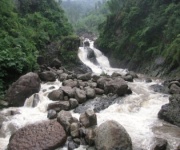
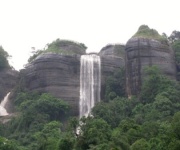
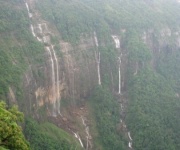
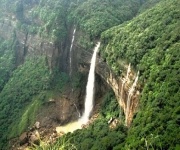
Waterfalls, streams and shaded gorges are among the most atmospheric places to notice wildlife. Insects gather around spray, birds feed on fruiting trees and small amphibians shelter beneath wet leaves. The routes to places such as Nohkalikai Falls, Mawsmai Falls and the Nongriat area can pass through several habitat types, so the wildlife changes as the trail descends.
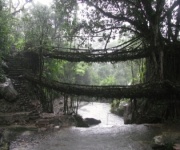
The journey to a living root bridge is a cultural and ecological experience as much as a walk. The bridges are shaped from the aerial roots of rubber fig trees over many years, creating structures that remain connected to the forest. A useful comparison of living-root bridges explains why these remarkable crossings are different from ordinary engineered bridges and why their surrounding vegetation deserves care.
Look for butterflies along sunny sections, tree-dwelling birds in the canopy and freshwater life near calmer pools. Avoid stepping into small streams unless the route requires it, because rocks may be unstable and aquatic habitats can be easily disturbed. Do not leave food scraps beside a bridge or waterfall; discarded packaging attracts macaques, dogs and other animals to places where they may later become dependent on visitors.
The landscape can be physically demanding. The descent towards Nongriat includes many steps, and wet rock remains slippery even when the rain has stopped. Australian walking habits such as carrying a refillable bottle, applying sunscreen before setting out and packing a lightweight rain shell are useful, but sturdy shoes with good grip are more important than speed.
Responsible encounters and local rules
Wild animals in Meghalaya are protected under India’s wildlife legislation, and national parks, reserve forests and other conservation areas may have specific restrictions. Never buy feathers, skins, claws, shells or other animal products. Do not feed monkeys, attempt to touch reptiles, enter closed forest areas or use flash photography close to nocturnal animals.
Drones, loud speakers and powerful lights can disturb birds and mammals, especially around nesting sites and caves. Ask local operators about current permissions before flying any drone. Some routes and attractions are managed through village or local authorities, and access can change during heavy rain, maintenance or community events.
Choose a guide or tour provider that treats sightings as a privilege rather than a performance. A good guide will explain where to walk, how to behave near homes and farms, and why certain animals should remain undisturbed. They should also be willing to say that a species is unlikely to appear instead of making exaggerated promises.
The local market shapes how visitors prepare for the hills. Indian rupees are useful for village stalls, small cafés, guides and transport, while card payments may be less dependable outside larger hotels. UPI payments are common in India, but Australian visitors may not be able to use them without a compatible Indian banking setup. Carry small notes, buy snacks from legitimate shops and avoid single-use packaging where possible.
Planning a wildlife-focused stay
A two-night visit can introduce you to the principal viewpoints, caves and waterfalls, but three to five nights allow a slower rhythm for wildlife observation. Longer packages provide time for an early forest walk, a village trail, a living root bridge excursion and a second attempt at birdwatching after weather changes. Mist and rain are part of the landscape, not signs that the whole day is lost.
Pack quick-drying clothes, a waterproof day bag, a headlamp, insect repellent, binoculars and a basic first-aid kit. Long trousers and closed shoes offer protection on forest paths, while a reusable water bottle helps reduce plastic waste. Bring enough prescription medication for the trip, as specialist supplies may not be readily available in smaller settlements.
Australian passport holders should arrange the appropriate Indian visa or e-Visa before travel and check the current requirements through official Indian government sources. Your passport should meet the required validity and blank-page conditions, and you should keep digital and printed copies of important documents. Routes commonly involve travel from an Indian gateway such as Guwahati or Kolkata before continuing into Meghalaya.
Weather can affect road travel, walking conditions and attraction access. The wet season produces spectacular waterfalls and lush vegetation but may also bring landslips, swollen streams and delayed journeys. The drier months can make trails more comfortable, although forest wildlife remains seasonal and sightings are still unpredictable. Build flexibility into transfers rather than scheduling a tight connection immediately after a long hill journey.
Book a Sohra stay or multi-day tour through Cherrapunjee.net with enough time for local guidance, forest walks and weather-aware planning. Contact India Beacons Sojourn for an itinerary that combines the region’s waterfalls, caves, villages and living root bridges with respectful wildlife observation. Pack lightly, travel patiently and allow the hills to reveal their wildlife at its own pace.