





What To Expect From A 3-Night Cherrapunjee Tour Package
A three-night stay in Cherrapunjee, also known as Sohra or Cherrapunji, offers a compact but rewarding introduction to Meghalaya. The journey usually combines dramatic waterfalls, mist-covered hills, limestone caves, village landscapes and living root bridges, with time to experience the distinctive Khasi culture of northeast India.
Most visitors arrive through Guwahati or Shillong before continuing by road to Sohra. From Sydney, Melbourne, Brisbane or Perth, the journey generally involves an international connection followed by a domestic flight to Guwahati. A private transfer then takes several hours, depending on traffic, weather and road conditions. The changing scenery is part of the experience, as busy city roads gradually give way to forested hills.
A three-night itinerary is best understood as an active short break rather than a slow resort holiday. Days can begin early, particularly if you want to see waterfalls before the clouds gather or reach popular viewpoints ahead of other travellers. Walking surfaces may be slippery, mobile coverage can be inconsistent and the weather can change quickly, especially during the wet season.
For Australians accustomed to organised national parks, clearly marked tracks and easy access to supplies, Meghalaya may feel more spontaneous. That difference is part of its appeal. A well-arranged package provides transport, accommodation and local coordination, allowing you to focus on the scenery while avoiding the uncertainty of managing unfamiliar mountain roads yourself.
How The Three Nights Usually Flow
The first day commonly begins with arrival in Guwahati or Shillong and a transfer towards Sohra. Depending on flight times, you may stop at Shillong for lunch, visit a viewpoint or continue directly to your accommodation. Shillong is a useful staging point, but the road to Cherrapunjee is an attraction in its own right, passing through pine forests, open plateaux and settlements perched along winding routes.
After check-in, the evening is usually unhurried. You may have time to enjoy a resort view, walk around the property or visit a nearby lookout. Rooms range from comfortable hotels to hillside resorts and homestays, so the atmosphere can vary from practical and family-oriented to quiet and scenic. A package provider should clarify whether meals, transfers and sightseeing are included before you travel.
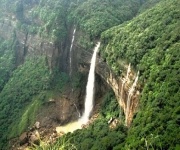
The second day is often devoted to the major natural attractions around Sohra. Nohkalikai Falls is a memorable highlight, with water dropping into a vivid blue-green pool beneath a high cliff. Seven Sisters Falls, also called Nohsngithiang Falls, spreads over a broad rock face and is particularly impressive during the monsoon, although cloud and rain may partly obscure the view.
Your third day may focus on caves, forest trails and living root bridges. Mawsmai Cave is relatively accessible and gives visitors an introduction to Meghalaya’s limestone landscape, while deeper cave systems require more preparation and should be visited with experienced local guides. A package with an early start can also include a root bridge excursion, though the number of steps and uneven ground makes it more demanding than a simple sightseeing stop.
The final morning is generally reserved for breakfast and the return journey. If your departure flight is from Guwahati, leave plenty of time for traffic and weather delays. A short package works best when flights are planned with a buffer rather than booked too close to the expected transfer time.
Waterfalls, Caves And Living Root Bridges
Cherrapunjee is famous for rainfall, but the experience depends heavily on the season. During the monsoon, usually from June to September, waterfalls become powerful and the landscape turns intensely green. Rain can arrive suddenly and visibility may disappear into mist. Outside the wettest months, trails are often easier to manage and viewpoints may offer clearer panoramas, though some waterfalls will have less volume.
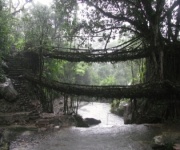
A visit to a living root bridge is among the most distinctive experiences in Meghalaya. Khasi communities have trained the roots of rubber fig trees across streams for generations, creating natural crossings that strengthen over time. The bridges are living structures rather than reconstructed monuments, and many require a long descent and climb through humid forest. Comfortable shoes with reliable grip are essential.
Travellers should also expect variation in access. A viewpoint may be close to the car park, while another attraction may involve stairs, slippery paths or a walk through a village. Guides and drivers can explain local conditions and help adjust the order of visits. Families travelling with children can find useful planning ideas in this family planning guide, particularly when balancing sightseeing with rest.
Caves deserve a little caution. Some passages are narrow, low and wet, and there may be limited lighting. Leave large backpacks at the accommodation, carry a small torch if recommended and follow guide instructions. Anyone with mobility concerns should discuss the planned route before booking, since “sightseeing” in the hills can include substantially more walking than the description suggests.
Food, Accommodation And Local Rhythms
Meals on a tour are likely to include rice, dal, vegetables, chicken, eggs and regional Khasi specialities. Pork is common in Meghalaya, while vegetarian options are widely available when requested. Travellers used to Australian café culture may notice that coffee choices are more limited outside Shillong, and breakfast can be simpler than the smashed avocado, fresh juice and barista coffee familiar in Melbourne or Brisbane.
Dining times may also follow local routines. Breakfast is often early, lunch can be timed around driving and sightseeing, and dinner may be served relatively early at smaller properties. Carry a few familiar snacks for the road, especially if you have dietary restrictions. Sealed food is generally convenient during the trip, but remember Australia’s strict biosecurity rules when returning: declare food, plant material and animal products rather than placing them in checked luggage without checking the requirements.
Accommodation in Sohra is usually chosen for location and atmosphere rather than extensive resort facilities. Some properties have generators or backup power, but brief interruptions can occur. Hot water may be available at set times, and heating or air conditioning is not guaranteed in every room. Confirm the room arrangement, bathroom facilities, Wi-Fi availability and meal plan if these details matter to your group.
Local shopping is modest but interesting. Small markets and roadside stalls may sell oranges, pineapples, spices, honey, woven products and locally made snacks, with availability changing by season. Carry Indian rupees in smaller denominations because card machines and international payment systems are not dependable everywhere. UPI is common in urban India, but visitors may not be able to use it without an Indian bank account. Bargaining should be polite and moderate, particularly with small producers.
Weather, Packing And Practical Preparation
Pack for wet ground and changing temperatures rather than relying on a single climate assumption. A lightweight waterproof jacket, quick-drying clothing, a small umbrella, breathable layers, a daypack and shoes with good traction are more useful than heavy luggage. Bring a reusable water bottle, sunscreen, insect repellent, personal medication and a basic first-aid kit.
Australian travellers may be used to strong sun in cities such as Adelaide, Perth or Brisbane, but cloud in Meghalaya can make the conditions feel cooler while ultraviolet exposure remains significant. A hat and sunscreen are still worthwhile. At the same time, cotton clothing that stays wet can become uncomfortable, so synthetic or quick-drying fabrics are practical for walks and waterfall visits.
Before departure, check passport validity, Indian visa requirements and any current entry rules. Australian passport holders generally need an Indian visa or approved e-Visa before travel, and the passport should meet the validity and blank-page conditions specified by Indian authorities. Requirements can change, so use official government sources and your tour operator’s current guidance rather than relying on an old travel forum.
Travel insurance should cover medical treatment, delays, lost baggage and activities involving trekking or caves if those activities are included in your plans. Australian Medicare does not generally cover treatment in India. Keep digital and printed copies of your passport, visa, insurance policy, emergency contacts and booking details. It is also sensible to tell your bank that you will be travelling, carry a second payment method and avoid relying entirely on Australian dollars.
Making The Most Of A Short Stay
The best three-night packages use time carefully without cramming every possible attraction into each day. A strong itinerary groups nearby sights together, allows for rain-related changes and leaves enough time to enjoy the landscape rather than spending the entire holiday in a vehicle. Ask whether the schedule is private or shared, how many hours of driving are expected and whether entrance fees, guide charges and meals are included.
Road travel is an important part of the local reality. Traffic can be slow around Shillong and Guwahati, while mountain roads may be affected by rain, roadworks or temporary restrictions. Drivers familiar with the region can make safer decisions about timing and stops. Avoid assuming that a short distance on a map will translate into a quick transfer, particularly during peak holiday periods.
Respect for local communities will make the trip more comfortable for everyone. Ask before photographing people, homes or religious places, dress modestly away from resort areas and follow instructions at sacred groves and village sites. Keep rubbish with you until you find a bin, avoid touching living root bridges unnecessarily and do not remove plants, stones or cave formations.
A three-night Cherrapunjee tour is also a good length for travellers testing whether they would enjoy a longer Meghalaya holiday. It gives you a taste of the region’s waterfalls, forests and culture while keeping the commitment manageable for a first visit. Those who prefer a gentler pace can spend more time at the resort, while active travellers can prioritise cave visits and root bridge walks.
With the right expectations, the journey becomes more than a checklist of viewpoints. Contact Cherrapunjee.net to discuss a package that matches your flight schedule, walking ability, accommodation preferences and travel dates. A carefully planned stay in Sohra can turn a short break from Australia into a vivid encounter with one of India’s most extraordinary hill regions.