





Cherrapunjee Weather Guide for December and January
Australian travellers planning a winter escape to Northeast India during their own summer holidays often find the cooler, drier months surprisingly pleasant. Cherrapunjee, perched on the southern edge of Meghalaya's Khasi Hills, carries an outsized reputation for rain, but December and January sit firmly outside the monsoon belt and deliver something quite different from the soggy stereotype. Mornings are crisp, afternoons are mild, and skies open up to reveal vast stretches of blue that photographers wait all year to see.
For visitors used to the December rush of a Christmas lunch at Bondi, a Boxing Day crowd at the MCG, or a New Year's Eve ferry ride on Sydney Harbour, swapping the southern summer for a Himalayan foothill chill can feel like entering another world. The shift in seasons is dramatic enough to keep travellers on their toes, but conditions are far more forgiving than the monsoon-fuelled tales of old travel guides suggest. Knowing what the weather actually does during these two months makes the difference between lugging the wrong wardrobe and packing like someone who has done this before.
Temperature ranges and how they feel on the ground
December and January bring Cherrapunjee's lowest temperatures of the year, with daytime highs typically settling between 11 and 17 degrees Celsius and overnight lows dipping to around 4 to 8 degrees. Compared with the steamy build-up that hits Brisbane or Darwin at the same calendar date, the readings feel bracing but not harsh. The air carries a pleasant, almost alpine sharpness that arrives around an hour after sunrise and lingers until mid-morning, before the sun reaches the garden courtyards of the valley-side resorts.
What surprises many first-time visitors from Perth or Adelaide is that the cold here behaves differently to a coastal chill. Humidity drops noticeably during these months, often hovering between 50 and 70 percent, which means the same 10-degree reading on a Melbourne morning and a Cherrapunjee morning can feel like two different climates. The dryness keeps the cold from sinking into the bones the way damp southerly bushers do back home. Pack a light puffer, a woollen mid-layer, and a beanie for early starts, and you will rarely feel uncomfortable.
Sunshine hours extend to roughly seven or eight per day in the second half of December and throughout January, a sharp contrast to the grey skies of June and July. Even so, mountain shadows fall quickly once the sun dips behind the ridge above the Sohra market, and temperatures slide back down within a single hour. Travellers planning to return from a viewpoint walk after four in the afternoon should keep a windcheater tied around the waist rather than stowed in a backpack.
Rainfall patterns and the dry winter window
Annual rainfall figures for Cherrapunjee, once recorded by Guinness as among the wettest places on Earth, dominate most tourism marketing copy, but December and January contribute almost nothing to that total. Monthly rainfall rarely exceeds 20 millimetres, and multi-day dry stretches are the norm rather than the exception. This makes the season a genuine outlier in the rainfall calendar and a strategic choice for visitors who have only a handful of leave days to spend.
The wider Meghalaya plateau does see a thin seasonal pattern that locals refer to as winter drizzles, short showers that drift through between mid-December and early February. These are nothing like a proper monsoon burst, closer to a Melbourne four-seasons-in-a-day shower than a North Queensland downpour, and they tend to clear within minutes. Trails around the root bridges remain usable, and even the Nohkalikai Falls viewing experience is rarely interrupted for long.
Heavier weather systems, when they do pass through, usually arrive between late January and February as the pre-monsoon builds up. Travellers flying home via Guwahati or Kolkata should check forecast updates a few days before departure and consider building in a buffer night in town if a system is tracking in from the Bay of Bengal. Australian travel insurance policies generally cover weather-related delays, but reading the fine print before leaving Sydney or Melbourne saves awkward phone calls later.
Fog, mist and visibility on the cliff edges
The one weather feature that defines December mornings more than temperature or rain is fog. Cherrapunjee sits in a bowl surrounded by forested ridges, and the cool air pooling overnight creates valley fog that burns off only after nine or ten in the morning. Visitors heading out from resorts before breakfast regularly encounter visibility down to a few metres on the road from Sohra to Mawsmai.
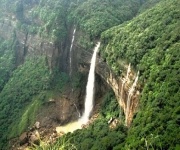
For photographers this is a mixed blessing. Mist drifting between limestone cliffs produces shots that no other season offers, with rays of sun breaking through gaps like something from a fantasy film set. The flip side is that several of the marquee waterfalls lose their visual punch when the cloud base drops low, and the plunging column at Nohkalikai disappears into a white veil until the air warms. Plan headline attractions for late morning and reserve photography sessions for the dramatic two-hour window just before fog lift.
Australians used to driving in winter fog along the Calder Highway between Melbourne and Bendigo will find the Cherrapunjee version slightly more aggressive but manageable. Drive on low beam, keep a safe following distance, and accept that local taxi drivers know the blind corners far better than any GPS app suggests. By lunchtime the worst has usually cleared, and the afternoon view across the plains below is worth waiting for.
Packing, layering and clothing strategy
Packing for Meghalaya in December is closer to packing for a Hobart winter than a Bali beach holiday. The trick is layering rather than bulk, since temperature swings of eight to ten degrees between morning and mid-afternoon are common. A compact down jacket, a fleece mid-layer, a long-sleeve thermal, and a couple of breathable outer layers will cover almost every situation, from cool sunrise breakfasts to a comfortable evening by the resort bonfire.
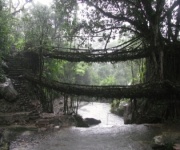
Footwear matters more than most travellers expect. Trails around the double-decker root bridge at Nongriat and the rock-strewn path down to Rainbow Falls stay slippery even in dry weather, thanks to moss and constant overnight condensation. Sturdy hiking shoes with proper grip are non-negotiable, since the runners that work for a morning jog along Sydney's coastal walk simply will not cut it. Pack a pair of light sandals or slip-ons for the hotel and a dry pair of socks in your daypack, since crossing small streams on some trails is unavoidable.
Australians should also think about charging adapters, medication storage, and sunscreen. UV exposure at this altitude remains high even in the cool season, and the sun reflecting off polished limestone near the Arwah Cave approach can catch out anyone who skipped the morning application. A wide-brimmed hat or a buff works well, and lip balm is easily forgotten until cracked lips start complaining halfway down a trail.
Activities and attractions suited to the dry season
December and January open up most of the outdoor highlights that close during the heavier rains. The trek down to the living root bridge at Nongriat is far more pleasant without the leeches and slippery boardwalks that plague July and August visitors. Expect three to four hours down and slightly longer back up, with enough resting points at village huts to refuel with tea and biscuits before the final climb.
The shorter walks to Mawsmai Cave, Arwah Cave, and the Seven Sisters viewpoint cluster around the main Cherrapunjee township and work well as half-day explorations. Driving distances are short by Australian standards, similar to a leisurely morning run from Adelaide to the Barossa, which means travellers can mix two or three sites into one comfortable day. Local guides are inexpensive by Indian standards and add context that no signboard can match, particularly about the Khasi matrilineal customs still practised across the villages.
For those with extra time, the drive to Dawki on the Bangladesh border offers a glassy boat ride on the Umngot River, and clear December skies make the reflections startling. Evening entertainment back in Sohra tends towards the simple: a bonfire, a rice-beer tasting at a community-run homestay, and a star field that city dwellers from Brisbane or Perth may not have seen in years. Carry a light blanket for sitting outside, since temperatures drop quickly once the fire dies down.
Booking, permits and travel logistics in winter
Indian visa requirements for Australian passport holders remain straightforward, with the e-visa covering tourist arrivals of up to 60 days. Apply at least a week before departure, and double-check the printed copy before leaving Melbourne, Sydney, or whichever capital you are flying from, since airport check-in staff occasionally query colour printouts. Inner Line Permits are not required for Meghalaya at present, but carrying passport photos and photocopies of your visa page saves time at the few checkpoints still operating around the East Khasi Hills border.
The most common winter routing flies into Guwahati via Singapore or Kuala Lumpur on carriers like Malaysia Airlines, Singapore Airlines, or Scoot, with onward road transfer of roughly three and a half hours to Cherrapunjee. Self-drive is technically possible but rarely recommended. The climbs around Umiam Lake are dramatic, but the hairpins take adjustment, particularly for visitors used to the wider lanes of the M1 between Sydney and Newcastle. Most tour packages include the transfer as part of the deal, which removes a layer of hassle.
Booking ahead for the December-January window is essential because regional resorts fill quickly with Indian domestic holidaymakers, particularly around Christmas, New Year, and the long Republic Day weekend in late January. Travellers from Australia who want to lock in a specific resort should email or call the operators at India Beacons Sojourn four to six weeks in advance. Last-minute bookings tend to mean trading down to smaller guesthouses rather than the better-appointed properties with valley-view rooms, so planning pays off.
Browse the package options, check December and January availability, and reach out with any questions about the itinerary. The team responds quickly across email, WhatsApp, and phone, and can tailor a trip to match the number of nights you have spare, the type of activities you enjoy, and any accessibility considerations. Cherrapunjee in winter rewards travellers who plan with care, and the booking process is the easiest place to start.