




Sohra Monsoon Festival: Cherrapunjee's living heritage in the rains
The rain arrives in Cherrapunjee with a sound that locals describe as the sky unrolling. Each year, between June and September, when the clouds settle over the Khasi Hills and waterfalls multiply across the cliffs, the town holds its most spirited celebration. The Sohra Monsoon Festival, paired with cultural events across the surrounding villages, turns the wettest place on earth into a stage for music, dance, food and centuries-old ritual. For travellers, the festival offers a rare chance to see a landscape at its loudest, brightest and most alive.
Visitors from Sydney or Melbourne who arrive in these months step out of a winter of grey skies into a world where water is the headline act. The contrast is striking: back home the Bureau of Meteorology might be issuing fire bans or drought maps, while here every valley turns into a torrent and every market stall sells umbrellas woven from bamboo. It is a sensory jolt that Australians in particular seem to appreciate, partly because the southern hemisphere is so accustomed to measuring weather in extremes of heat and dryness.
The story behind the Sohra Monsoon Festival
The Khasi people of Meghalaya have long structured their agricultural calendar around the southwest monsoon, and the festival reflects that relationship. Sohra, the local name for the town written as Cherrapunjee in colonial-era records, sits on a plateau where rice cultivation, betel leaf farming and the careful maintenance of living root bridges all depend on seasonal rainfall. The annual celebration was formalised in the early 2000s to mark the arrival of the rains and to honour the rituals that communities had performed for generations.
The festival is not a single concert or parade. It is a distributed gathering spread across several days, with smaller ceremonies in villages outside the main town and a central programme held near the famous Sohra market. Local schoolchildren, village elders, professional troupes and visiting artists from across the northeast all take part. The aim, organisers often say, is to remind younger generations that the rain is not just a tourist attraction but the foundation of life in these hills.
Dances, costumes and music of the monsoon
Dance sits at the heart of the festival. Ka Shad Suk Mynsiem, a thanksgiving dance performed by both men and women in slow deliberate movements, opens many of the evenings. Female dancers wear the jain kynphieh, a silk wrap tied at the shoulder and decorated with silver and gold thread, while men carry the curved khasi sword as a symbol of protection. The music is built around the ksing padiah, a small hand drum whose steady pulse mirrors the rhythm of falling rain.
The Pomblang, a drum ceremony in which a tall wooden drum is suspended from a frame and struck with curved sticks, takes place in larger squares and on terraced clearings. It is unmissable for first-time visitors, both for the volume and for the way the crowd sways in time. Travellers who arrive expecting a quiet cultural afternoon quickly learn that Khasi music is physical, communal and meant to be felt as much as heard. Many visitors find themselves pulled in to join the circle by the second day.
Festival cuisine and market traditions
Food during the festival is hearty, smoky and built for the rain. Jadoh, a one-pot rice dish cooked with pork, turmeric and local aromatics, appears at nearly every stall, alongside doh khlieh, a pork salad dressed with raw onion, chilli and a sharp splash of lime. Smoked bamboo shoot pickles, fermented soybean pastes and bowls of warm pukhlein rice fritters keep festival-goers fuelled between dance performances.
The market square expands during the festival, with women from surrounding villages selling millet cakes, wild honey and pineapples grown on the slopes below Sohra. Travellers with dietary restrictions should note that vegetarian options are widely available but often feature fish or dried meat as flavouring, so asking directly is essential. For anyone flying home through Sydney or Perth, Australian biosecurity rules are strict, and bringing back fresh fruit, bamboo shoot pickles or any unsealed food products is prohibited. Declare everything, even the honey you bought from a smiling vendor, and toss the perishables before you reach the airport.
Festival calendar and the days you should not miss
The main programme typically runs over a long weekend in early to mid-July, though the cultural events that surround it can stretch across the full monsoon season. Day one usually opens with an invocation at the main ground, followed by youth performances and the lighting of a ceremonial lamp. Day two brings the Pomblang and inter-village dance competitions, while day three traditionally features a procession through the market area and the closing of the festival at sunset.
Outside the main programme, visitors are encouraged to attend the smaller village functions. A short ride from Sohra brings you to communities where the festival is observed at family and clan level, with feasts, music and storytelling that you will not find in any printed schedule. The regional tourism department publishes a loose programme each year, but the best experiences are often the ones that appear only on handwritten boards at the village entrance. Plan a buffer day or two on either side of the official dates so you can follow your curiosity without rushing. For travellers curious about how heritage destinations manage large seasonal crowds, the visitor operations approach at NOC Mauritius offers a useful point of reference.
Beyond the festival: Cherrapunjee's rain-soaked attractions
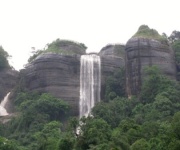
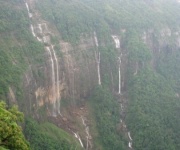
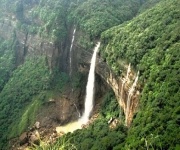
Even the most devoted festival-goer will want to spend time on the cliffs and gorges that make Sohra famous. Nohkalikai Falls, the tallest plunge in India, is at its most dramatic during the rains, and the short walk to the viewpoint is rewarded with a view of mist rising from the pool below. Mawsmai Cave, just a few kilometres from the town centre, is open through the monsoon and lets visitors walk through chambers lit by small electric lamps while water drips through the limestone above.
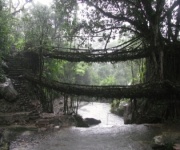
The living root bridges of the Khasi Hills are best reached on a guided walk from villages such as Nongriat, where centuries-old bioengineered structures span fast-flowing rivers. Photographers in particular travel here for the soft monsoon light, which visitors from Melbourne and Brisbane often compare to a permanent overcast. For a fuller sense of the visual range this landscape offers, a curated look at the top 10 viewpoints in Cherrapunjee for sunrise and sunset is a useful starting point before you arrive.
Practical pointers and a short packing checklist for visitors from Australia
Getting to Sohra usually means flying into Guwahati, the gateway city in neighbouring Assam, with connections through Singapore, Kuala Lumpur or Bangkok from Australian hubs. There are no direct flights from Australia to northeastern India, so most itineraries include a one-night stop in Guwahati before the drive up into Meghalaya. The road climbs quickly, and the weather shifts within an hour from humid plains to cool hill mist.
Before you travel, register your trip with smartraveller.gov.au and review the current advisory level for India. Australia's biosecurity rules apply on the way home, so read the incoming passenger card carefully and declare any food, plant material or wooden souvenirs on the form. The Goods and Services Tax threshold of AUD 1000 for personal imports means most festival purchases will not attract duty, but keeping receipts is wise if you are claiming work-related travel. Families in particular benefit from a structured plan, and a detailed walkthrough of how to plan a family friendly 4 day Cherrapunjee tour can save hours of map-juggling once you arrive.
A few simple habits tend to make the difference between a memorable trip and a soggy one. Pack quick-dry layers rather than a single heavy raincoat, and bring a dry bag for your phone, wallet and camera. Footwear with grip matters more than fashion here; the stone paths around viewpoints turn slick within minutes of a heavy shower. Carry small notes, because connectivity is patchy in the villages and card machines are rare.
- Book accommodation in advance for the festival week, as Sohra's small inventory fills quickly.
- Hire a local guide for any root bridge trek, since the trails are beautiful but easy to misread in fog.
- Start each day with a slow breakfast and a long chat, as Khasi hospitality rewards patience.
- Keep one full day unscheduled so you can attend a village-level event if the opportunity arises.
- Carry a refillable bottle, because hill water is fresh but bottled water is widely available.
- Learn a few Khasi greetings and use them, because smiles here open more doors than money.
- Respect the no-photography rules during the more sacred ceremonies, even if you are not shooting the dance itself.
Your bags should be packed, your visa checked and your curiosity ready for the kind of weather that Sohra turns into music. Reach out to the team at India Beacons Sojourn through the contact details on the cherrapunjee.net homepage to confirm festival dates, reserve a package and start sketching the route that will take you from the dry southern winter into the green heart of the Khasi Hills.