





How to Spot the Indigenous Bird Species of the Region
Cherrapunjee, also known as Sohra or Cherrapunji, is best known for dramatic rainfall, misty escarpments, waterfalls and living root bridges. It is also an excellent base for finding native birds of Meghalaya, particularly where subtropical forest meets open grassland, village gardens and steep valley edges.
For Australian travellers, birdwatching here feels quite different from a morning walk in the Blue Mountains or a visit to Queensland’s wet tropics. The terrain is more humid, the forest can be denser, and a short trail may include slippery stone steps, sharp climbs and sudden cloud. That variety creates a rich setting for observing hill birds, forest specialists and colourful species that are rarely seen outside north-eastern India.
The most rewarding sightings usually come from slowing down. Birds may reveal themselves through a call before they appear in the canopy, while a flash of blue, red or metallic green can disappear within seconds. A local guide who knows the calls, feeding trees and quiet trails can make a major difference, especially during a first visit.
Planning also matters. Australian visitors should allow time for road journeys, check India’s current e-visa requirements before departure, and pack for wet weather even during a planned dry-season trip. A lightweight rain jacket, binoculars, muted clothing and a sealed day pack are more useful than bulky equipment.
Habitats Around Sohra
The plateau around Cherrapunjee contains a mosaic of habitats rather than one continuous forest. Open slopes and roadside vegetation attract bulbuls, drongos and mynas, while patches of broadleaf forest hold flycatchers, barbets, laughingthrushes and smaller babblers. Wet ravines can be especially productive because birds gather near streams, fruiting plants and sheltered vegetation.
Thangkharang Park is a practical starting point for visitors staying in Sohra. Its elevated viewpoints look towards the plains of Bangladesh, but the woodland edges and quieter paths are just as valuable for birding. The park’s combination of forest, exposed viewpoints and flowering plants creates opportunities to see birds moving between cover and open ground. This guide to Thangkharang Park helps place its scenery and trails in the wider Cherrapunjee itinerary.
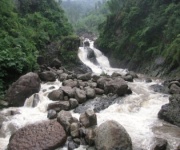
Watercourses and waterfalls offer another distinct environment. White-capped water redstarts may be found beside fast-moving streams, where they perch on rocks and repeatedly dip into the current. Around forest margins, listen for the harsh notes of a drongo, the chatter of bulbuls or the whistles of a flycatcher before scanning the branches.
Village gardens can be surprisingly productive. Fruit trees, bamboo, flowering shrubs and compost areas attract birds that are difficult to find in dense forest. Ask permission before entering private land, and remain on public paths near homes, churches and community-managed areas.
Birds To Look For
The common hill myna is one of the region’s most recognisable birds. Its glossy black body, bright orange-yellow facial wattles and clear, varied calls make it easier to identify than many canopy species. It often travels in pairs or small groups and may feed in fruiting trees near settlements.
Bulbuls are also likely to appear during a stay. Red-vented and black-crested bulbuls move actively through shrubs and lower branches, often calling as they feed. Their quick movements can be frustrating at first, so watch a fruiting tree for several minutes rather than following every individual flight.
The lesser racket-tailed drongo is a striking possibility in forested areas. Its forked tail has extended outer feathers, and it may copy or imitate calls from other birds. Drongos often sit on exposed perches before dropping into the foliage to catch insects. The black body can blend into shade, but the tail shape and bold, watchful posture are useful clues.
Colourful forest species may include verditer flycatchers, grey-headed canary-flycatchers, emerald doves and Indian blue robins. Some are easier to spot after rain, when insects become active and birds feed close to the track. In quiet woodland, listen for thin whistles and short contact calls rather than expecting constant movement.
With luck, visitors may encounter hornbills, green magpies, laughingthrushes or specialised babblers in less disturbed forest. These are not guaranteed sightings, and they may require travel beyond the busiest viewpoints. A seven-day itinerary gives a better chance to combine Cherrapunjee with other Meghalaya habitats; this seven-day Meghalaya tour can help Australian visitors understand how birding stops fit alongside waterfalls, caves and village experiences.
Field Clues And Best Times
Early morning is generally the most reliable period for birdwatching. From first light until roughly 9 am, birds are feeding and calling before the day becomes hotter, noisier and busier. In Cherrapunjee, low cloud may linger, so do not assume that a grey morning will be unproductive. Mist can soften movement and bring birds closer to forest edges.
Late afternoon can also work well, particularly around gardens, streams and woodland borders. Avoid relying on exact sunrise times from an Australian phone setting; check local time after arriving in Meghalaya and allow enough time to reach the trail safely. Australian travellers used to broad national-park roads should also allow extra time for narrow, winding hill roads.
| Species or group | Where to search | Field clue | Useful approach |
|---|---|---|---|
| Hill myna | Fruit trees, villages and forest edges | Clear, varied whistles and black glossy plumage | Scan high branches and listen before moving |
| Red-vented bulbul | Shrubs, gardens and open woodland | Red undertail, lively calls and quick hops | Watch flowering or fruiting plants |
| Lesser racket-tailed drongo | Forest canopy and edges | Deep black body and forked tail streamers | Look for an exposed insect-catching perch |
| White-capped water redstart | Rocky streams and waterfall channels | Repeated tail movement beside rushing water | Stand quietly downstream and avoid the bank edge |
| Verditer flycatcher | Shaded forest and broadleaf trees | Blue-green body and sudden sallies after insects | Focus on mid-level branches |
| Emerald dove | Leafy ground cover and quiet forest paths | Rich green wings with a low, cautious flight | Walk slowly and keep voices low |
| Hornbills | Mature forest and fruiting trees | Heavy wingbeats, large silhouette and distinctive bill | Use a guide and scan distant treetops |
A useful field habit is to record three details for every sighting: size, shape and behaviour. Colour can change in fog or shade, but a bird’s silhouette, tail profile and feeding method remain helpful. Note whether it is hopping on the ground, clinging to a trunk, hovering near flowers or launching from a high perch.
Sound recordings can support identification, but keep playback volume low and use it sparingly. Repeatedly playing a territorial call may stress a bird, interrupt feeding or draw it into exposed ground. A local birder can often identify a species from one phrase of its call, saving time and reducing disturbance.
Gear And Responsible Birding
Compact binoculars between 8x and 10x magnification are suitable for most visitors. A phone camera can document a sighting, but avoid chasing a bird for a close image. A small notebook, offline maps, spare batteries and a waterproof cover are more practical than a large telephoto lens for a wet hill destination.
Wear breathable layers that dry reasonably quickly, with shoes offering firm grip on mud and stone. An Australian-style bushwalking outfit may work well, but sandals are risky on wet steps and mossy paths. Carry drinking water, simple snacks and a small first-aid kit, and use insect repellent where conditions call for it. A broad-brimmed hat is useful during clear spells, while a rain shell is essential even when the forecast looks favourable.
Keep a respectful distance from nests, roosting birds and feeding groups. Never handle chicks, remove feathers or bait birds with food. Drones may be restricted around parks, settlements or sensitive areas, so check locally before carrying one. Avoid loud conversations, music and sudden movements, especially in narrow forest corridors where sound travels.
Meghalaya’s landscapes are closely connected to local communities. Stay on marked routes, leave gates as you find them, dispose of rubbish carefully and ask before photographing people or private property. Paying a local guide supports regional knowledge and can lead to more meaningful encounters than searching alone.
Building A Birdwatching Day
A simple day can begin before breakfast with a quiet walk near the accommodation, followed by a longer visit to a park, forest edge or waterfall trail. Return during the middle of the day for rest, then head out again in the late afternoon. This rhythm suits both serious birders and companions who want time for viewpoints, caves and local food.
Do not pack every day with distant attractions. Meghalaya’s road conditions, weather and hill traffic can make transfers slower than an Australian itinerary planner might expect. A relaxed schedule creates room for an unexpected stop when a flock appears beside the road or a guide hears a rare call from the trees.
The best season depends on priorities. The monsoon months bring spectacular waterfalls and lush vegetation, but heavy rain can limit visibility and make trails difficult. The cooler, generally drier months are often more comfortable for walking and scanning forest edges. Even then, showers can arrive quickly, so keep optics and phones protected.
A two- or three-night stay can produce pleasant sightings around Sohra, while longer packages allow travel towards other habitats in Meghalaya. Combine birdwatching with living root bridges, caves, viewpoints and waterfalls rather than treating it as a separate activity. This approach is especially suitable for Australian couples, families and small groups who want wildlife without committing to a specialist expedition.
For Australian visitors, practical booking details matter. Compare package costs in Australian dollars, allow for card or cash arrangements in smaller towns, and factor in internal transfers from Guwahati or another arrival point. Travellers departing from Sydney, Melbourne, Brisbane or Perth will usually need international connections before the final overland journey, so building in a buffer day can make the experience more comfortable.
A birding trip to Cherrapunjee is shaped by attention rather than a checklist. Pause when the forest goes quiet, learn the difference between a bulbul’s chatter and a drongo’s call, and give every sighting enough time to become clear. When you are ready to arrange the journey, contact Cherrapunjee.net for accommodation, route planning and a package suited to your travel dates, with birdwatching balanced alongside the region’s waterfalls, caves and living root bridges.