





How to Trek to Rainbow Falls from Nongriat
Rainbow Falls is one of Meghalaya’s most rewarding waterfall hikes, but reaching it requires more than a short walk from the road. The journey begins at Tyrna, descends through forest to Nongriat, and then continues along a rugged trail beside streams, rock pools, and living root bridges. The waterfall is reached on foot, with no road access for the final section.
The route is usually completed as a demanding day trek, although staying overnight in Nongriat makes the experience more relaxed. Fitness, weather, and trail conditions can significantly affect walking time. During the monsoon, the landscape is spectacularly green, while slippery steps, swollen streams, and reduced visibility make the hike more difficult.
A careful plan helps you enjoy the trail without rushing. Carry enough water and food, begin early, use proper footwear, and allow time for the climb back to Tyrna. The route passes through an inhabited village and ecologically sensitive forest, so respectful travel is essential.
Reaching Tyrna from Cherrapunjee
Tyrna is the usual starting point for the Nongriat and Rainbow Falls trek. It lies roughly 20–25 kilometres from Cherrapunjee, also known as Sohra or Cherrapunji, depending on the route and starting point. A private taxi is the most convenient option because public transport to the trailhead can be limited and infrequent.
Arrange your return transport before beginning the hike. Mobile reception may be weak or unavailable along parts of the trail, and drivers may not be immediately available when you return in the evening. Leaving Cherrapunjee early gives you more daylight for the walk and reduces the pressure to hurry back.
The drive to Tyrna passes through the dramatic plateau landscape of Meghalaya. If you are planning a broader itinerary around the region, the area’s border road drives can be included on another day, since combining a long scenic drive with this trek may leave too little time for the trail.
At Tyrna, confirm the current route with local residents or a village guide. Conditions can change after heavy rain, and a local guide can help with stream crossings, confusing junctions, and timing. A guide is especially useful for first-time hikers or anyone travelling alone.
Descending from Tyrna to Nongriat
The first part of the trek is a long descent on a mixture of concrete steps, stone stairs, earth, and forest paths. Local descriptions often refer to approximately 3,000 steps between Tyrna and Nongriat, though the exact count varies. The descent may take two to three hours, depending on fitness, stops, trail conditions, and the weight of your backpack.
Do not treat the downhill section as an easy warm-up. Continuous steps place considerable strain on the knees, and the return journey reverses the same elevation loss. Walk at a steady pace, keep your balance on damp surfaces, and pause in shaded areas instead of waiting until you are exhausted.
The forest becomes denser as you descend, with betel nut palms, broad-leaved vegetation, moss-covered rocks, and rushing water during the wet season. Small settlements and resting points appear along the route. Keep noise low, do not leave food packaging behind, and ask before photographing residents or homes.
Nongriat is the main overnight base and an important point on the route. Once you reach the village, take time to rest, refill water where appropriate, and check your energy before continuing. The Rainbow Falls section is much more enjoyable when approached with fresh legs rather than as an afterthought.
Following the trail from Nongriat
From Nongriat, the trail continues through forest and across narrow footbridges toward Rainbow Falls. The path is uneven and can include exposed roots, steep stone sections, muddy slopes, and stream crossings. In wet conditions, the distance may feel longer than expected because each step requires care.
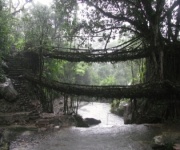
The famous Nongriat living root bridges are among the highlights of the journey. These bridges are formed by guiding the aerial roots of rubber fig trees across streams over many years. They are living structures that continue to strengthen and develop, but they can become slick after rain. Cross slowly, use available handrails, and avoid crowding other walkers.
The route from Nongriat to Rainbow Falls is commonly estimated at around three to four kilometres one way, although the walking time varies. Many hikers need roughly one and a half to two and a half hours for this stretch. The final approach can be tiring, with repeated ups and downs rather than one continuous descent.
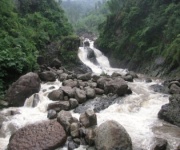
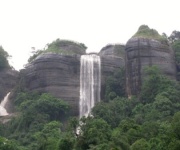
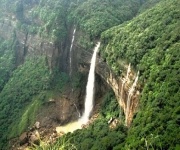
Rainbow Falls appears beyond a series of forested sections and rocky stream areas. The waterfall drops into a clear pool when conditions allow, and sunlight can create a rainbow in the spray, especially during brighter parts of the day. The effect is not guaranteed, so the beauty of the forest and river should remain part of the experience.
Timing, distance, and route effort
The full outing from Tyrna to Rainbow Falls and back can take approximately eight to ten hours for many visitors, including breaks and time at the waterfall. Strong and experienced hikers may move faster, while families, photographers, and travellers visiting during rain should allow longer. Starting late can make the return climb stressful.
| Route section | Approximate distance or effort | Typical time | Key consideration |
|---|---|---|---|
| Tyrna to Nongriat | About 3,000 steps downhill | 2–3 hours | Hard on knees; surfaces may be slippery |
| Rest in Nongriat | Village stop | 20–45 minutes | Refill water and assess energy |
| Nongriat to Rainbow Falls | Roughly 3–4 km each way | 1.5–2.5 hours each way | Uneven forest trail and stream crossings |
| Rainbow Falls visit | Pool and viewpoint area | 30–60 minutes | Swimming may be unsafe after rain |
| Return to Tyrna | Same route in reverse | 3–4 hours or more | The long uphill climb requires daylight |
These figures are planning estimates, not fixed timings. Rainfall, trail repairs, crowding, age, fitness, and footwear can all affect progress. Build in a generous buffer and turn back if conditions become unsafe or if daylight is running short.
Overnighting in Nongriat is a practical alternative for travellers who want a slower experience. Basic homestays and guesthouses may be available, but facilities are simple and should be arranged ahead of time when possible. A two-day plan allows you to explore the bridges and waterfall without treating the hike as a race.
Staying safe on the forest trail
Rain changes the character of the route quickly. Rocks become slick, streams rise, and visibility can fall beneath dense cloud. Check the forecast before leaving Cherrapunjee, but remember that local conditions can differ from the forecast. If heavy rain is already falling, ask locals whether the waterfall route and crossings are currently suitable.
The pool beneath Rainbow Falls may look inviting, but swimming is not automatically safe. Strong currents, submerged rocks, sudden water-level changes, and slippery edges create serious risks. Stay away from the lip of the waterfall and avoid entering the water after heavy rain. Never rely on photographs or other visitors’ behaviour as proof that conditions are safe.
Solo hikers should share their route and expected return time with someone at their accommodation or taxi contact. The advice in this solo trekking guidance is useful before setting out, particularly for communication planning, route awareness, and handling unexpected delays.
A local guide can improve both safety and the quality of the experience. Guides know the village paths, seasonal water levels, and places where hikers commonly lose the route. If you hire one, agree on the price, itinerary, and expected duration before starting, and treat their knowledge as part of the journey rather than simply a navigation service.
What to carry for the hike
Pack lightly, but make sure the essentials are protected from rain. A waterproof dry bag or lined backpack is more useful than a large suitcase-style pack. Wear shoes with firm grip and secure ankle support; smooth trainers and casual sandals are poor choices for wet stone, mud, and uneven steps.
Carry enough drinking water for the complete route, along with food that can withstand heat and moisture. Shops are limited beyond the main village areas, and you should not assume that every stop will be open. Cash is helpful for local purchases, guide fees, accommodation, and transport.
Useful items include:
- A lightweight rain jacket or poncho and a waterproof phone cover
- Grippy trekking shoes, spare socks, and a small first-aid kit
- Reusable water bottles, snacks, and oral rehydration supplies
- A headlamp, power bank, and offline map or downloaded route details
- Sun protection, insect repellent, and a small towel
Avoid carrying disposable plastic wherever possible. Take every wrapper back with you, use established paths, and do not remove plants, stones, or pieces of living root bridges. The forest and village depend on visitors behaving carefully, particularly as the trail becomes busier during favourable travel seasons.
Making the return journey manageable
Many hikers focus on reaching Rainbow Falls and underestimate the return to Tyrna. The final climb from Nongriat is the most physically demanding part for a large number of visitors. Begin the return while there is ample daylight, even if that means leaving the waterfall earlier than planned.
Use the uphill sections to settle into a sustainable rhythm. Short, regular pauses are better than long breaks that make the legs stiff. Keep some water and food for the final ascent, and do not spend all your energy at the waterfall before the hardest section of the day.
If your group includes children, older travellers, or people unused to steep terrain, consider staying overnight in Nongriat rather than attempting the entire route in one day. A slower itinerary also creates more time for the living root bridges, village scenery, and forest sounds that make this trek distinctive.
After returning to Tyrna, allow time to change into dry clothes and recover before taking a long taxi ride. Cherrapunjee offers a convenient base for adding waterfalls, caves, viewpoints, parks, and local food to the rest of your Meghalaya holiday.
A well-timed walk to Rainbow Falls combines physical challenge with one of the region’s most memorable natural settings. Arrange transport, check local conditions, pack for rain, and respect the trail from Tyrna through Nongriat. For help planning accommodation, transport, and a wider Cherrapunjee itinerary, contact India Beacons Sojourn through Cherrapunjee.net and include the trek in a tailored Meghalaya vacation package.