




The best sunset viewpoints over the Bangladesh plains
Cherrapunjee, also known as Sohra or Cherrapunji, is famous for rain, waterfalls, caves, and living root bridges. Yet when the clouds break in the late afternoon, the plateau reveals another remarkable side: a broad, layered view stretching south toward the Bangladesh plains. From high escarpments and quiet village roads, sunset turns the distant lowlands gold, copper, and violet.
The finest viewpoints are rarely formal observation decks. Some sit beside major attractions, while others are small roadside clearings where a valley opens suddenly beyond grass, forest, or rock. The character of each location changes with the season, cloud cover, and the hour of your visit, so allowing flexibility is part of the experience.
A sunset excursion also needs practical planning. Roads can become slippery after rain, mist may conceal the horizon, and the temperature can fall quickly after dusk. A local driver or guided Cherrapunjee tour makes it easier to combine a viewpoint with nearby waterfalls, caves, or village walks without rushing back through unfamiliar roads.
Why the southern horizon looks so remarkable
Sohra stands on the Meghalaya Plateau, high above the plains of Bangladesh. The southern edge of the plateau drops through steep cliffs, forested ridges, and deep river-cut valleys. On a clear evening, the landscape below appears almost endless, with fields and settlements fading into a hazy horizontal band.
The view is especially atmospheric because the horizon is often softened by moisture. Rather than a sharply defined skyline, visitors may see layers of blue hills, silver haze, and warm sunlight scattered across the lowlands. During the dry season, the air can be clearer; after a rainy day, broken clouds may create dramatic shafts of light.
Sunset timing changes throughout the year, generally arriving earlier in winter and later during the summer months. Plan to reach a viewpoint at least 30 minutes before the expected sunset. This gives you time to find a safe position, photograph the changing light, and enjoy the landscape before darkness makes the return journey more difficult.
Nohkalikai Falls and the western escarpment
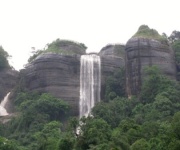
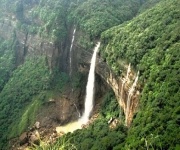
Nohkalikai Falls is one of the most recognizable places near Cherrapunjee, and its main attraction is the spectacular waterfall plunging into a blue-green pool. The surrounding escarpment also offers expansive southern views, especially from areas near the viewing complex and approaches to the falls. On clear evenings, the horizon beyond the gorge becomes a beautiful setting for the final light of the day.
The waterfall itself may be partly shaded by the time sunset arrives, but this can improve the scene. Soft side light catches the cliff walls, forest canopy, and mist rising around the falls. During periods of heavy rain, clouds can obscure the plains, while a clearing at the right moment may produce a memorable contrast between dark storm clouds and illuminated valleys.
Water volume changes significantly through the year, so it is useful to check seasonal conditions before planning a dedicated visit. The guide to the best time for Nohkalikai explains how rainfall affects the waterfall and helps travelers match their itinerary to the scenery they hope to see.
Mawsmai and the roads around Sohra
Mawsmai is best known for its limestone cave, but the wider area contains several open stretches where the land falls away toward the southern plains. These roadside viewpoints are convenient additions to a day exploring Mawsmai Cave, Seven Sisters Falls, and nearby forest areas. They may lack railings or formal facilities, so visitors should remain well back from cliff edges.
The roads around Mawsmai can be busy during peak hours, particularly near major attractions. For a quieter sunset, move away from the busiest entrances and look for a permitted viewpoint with a clear western or southwestern aspect. A local driver will usually know which stopping places are suitable and whether temporary road conditions affect access.
The landscape here is a mix of grassland, scrub, exposed rock, and deep green forest. In the golden hour, these textures create strong foreground layers for photography. A wide-angle lens captures the scale of the escarpment, while a telephoto lens can compress distant ridges and make the Bangladesh lowlands appear closer.
Mawkdok Dympep Valley and dramatic depth
Mawkdok Dympep Valley is one of the most striking roadside viewpoints in the Sohra region. Its deep, V-shaped valley and overlapping ridges create a sense of depth that works beautifully in late afternoon light. The viewpoint is often visited during the day, but the changing colours after four o’clock can be especially rewarding when clouds leave gaps over the horizon.
The site is located along the route between Shillong and Cherrapunjee, making it practical for travelers arriving from Shillong or returning after a day of sightseeing. However, its orientation and surrounding ridges mean the sun may disappear behind a nearby slope before the wider sky loses its colour. Arrive early enough to enjoy both direct sunlight and the afterglow.
Wind can be strong along exposed sections of the viewpoint, particularly during the monsoon and shoulder seasons. Keep phones, cameras, and loose belongings secure. Visitors should use designated areas, avoid leaning over barriers, and leave plenty of room for other travelers, especially when the viewpoint becomes crowded.
Viewpoints worth comparing
Several places around Sohra can deliver a memorable sunset, but they differ in access, scenery, and comfort. The right choice depends on whether you want a dramatic cliff, a waterfall setting, a quiet village road, or an easy stop during a wider sightseeing circuit.
| Viewpoint | Best feature | Access and comfort | Ideal for |
|---|---|---|---|
| Nohkalikai Falls area | Escarpment, gorge, and waterfall surroundings | Easy to include in a standard sightseeing day; visitor facilities nearby | First-time visitors and landscape photography |
| Mawkdok Dympep Valley | Deep valley and layered ridges | Convenient roadside stop; exposed and sometimes windy | Dramatic wide views and golden-hour scenery |
| Mawsmai area | Forest, limestone terrain, and open southern views | Simple to combine with caves and waterfalls; choose stopping points carefully | Travelers building a full-day route |
| Shillong–Sohra road clearings | Quiet horizons and changing rural scenery | Variable; requires local knowledge and safe parking | Couples, small groups, and unhurried travelers |
| Laitkynsew or nearby village viewpoints | Rural atmosphere and broad escarpment vistas | Longer detour, with fewer formal facilities | Slow travel and peaceful photography |
The table provides a starting point, but weather should influence the final decision. If the western sky is heavily covered, a viewpoint with an open southern horizon may still offer colourful reflected light. If rain is moving across the plateau, a sheltered stop near a village may be more comfortable than an exposed cliff.
Choosing the right season and time
The monsoon brings Sohra its legendary rainfall and produces powerful waterfalls, saturated greenery, and fast-moving clouds. Sunset views are less predictable during this period, but the atmosphere can be extraordinary when the weather opens briefly. Travelers who accept changing conditions may witness shafts of sunlight, rain curtains over the plains, and vivid colours that rarely appear on a completely dry evening.
October to April generally offers more comfortable conditions for viewpoint-hopping, with many clearer days and easier road travel. Winter sunsets often have crisp golden light, although haze can still form over the lowlands. Spring brings fresh vegetation and occasional cloud drama, while the months after the monsoon may combine impressive waterfalls with improving visibility.
Carry a light rain jacket even during a dry-season visit. Comfortable shoes with good grip are valuable on wet stone and uneven ground, and a small flashlight helps with the walk back to a vehicle. A scarf or warm layer can make a major difference once the wind rises after sunset.
Making a sunset outing part of a Sohra holiday
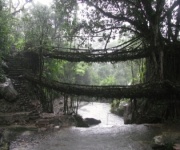
A sunset viewpoint works best as the final stop on a carefully paced day. A route might begin with Nohkalikai Falls, continue to Mawsmai Cave and nearby falls, and finish at a southern escarpment before returning to a resort. Another option is to spend the afternoon exploring a living root bridge or village trail, then choose a closer viewpoint based on the evening weather.
Avoid packing too many attractions into one day. Traffic, photography stops, rain, and walking times can easily add delays. Leaving the last major attraction by mid-afternoon creates a margin for scenic stops and allows the driver to choose a safer viewpoint if the original location is crowded or hidden by fog.
Sohra’s dramatic weather is closely tied to its character and history. The area’s climate has shaped farming, settlement patterns, tourism, and local stories for generations. Travelers interested in the destination’s remarkable rainfall can explore Sohra’s rain record before visiting, adding context to the clouds and landscapes seen from the escarpment.
Practical choices for a memorable evening
Use these guidelines when planning your sunset excursion:
- Check the day’s cloud movement and rain forecast, but treat forecasts as flexible in the hills.
- Reach the chosen viewpoint 30–45 minutes before sunset to find safe parking and a clear position.
- Wear shoes with firm traction and carry a rain layer, warm clothing, water, and a small flashlight.
- Stay behind barriers and away from unstable cliff edges, particularly when wind, fog, or wet rock reduces visibility.
- Arrange a local driver or guided package if you plan to visit several viewpoints after a full day of sightseeing.
A respectful approach also protects the atmosphere that makes these places special. Keep music low, take all litter with you, avoid climbing barriers for photographs, and ask permission before photographing residents or village activities. Quiet observation is often rewarded: as the sun fades, birds cross the valleys, distant lights appear on the plateau, and the immense landscape becomes easier to appreciate.
Cherrapunjee offers sunset experiences for different kinds of travelers. Photographers may prefer the layered ridges of Mawkdok Dympep Valley, families may value the convenience of Nohkalikai, and visitors seeking solitude may enjoy a village route away from the main tourist circuit. With two- to seven-night holiday packages available, there is enough time to combine evening viewpoints with waterfalls, caves, parks, resorts, and living root bridges.
Plan your Sohra journey with India Beacons Sojourn through Cherrapunjee.net, and build a flexible itinerary around the best available weather. A well-timed sunset over the Bangladesh plains can become the defining memory of a Meghalaya holiday—especially when it follows a day filled with rainforests, cliffs, and the living landscapes of Cherrapunjee.