




Khasi monoliths and the living history of Cherrapunji
At first light, the Khasi monoliths around Cherrapunji rise from a green ridge like a line of weathered sentinels. Some stand alone; others gather beside paths, caves and waterfall country. The history of the Khasi monoliths is not simply a story of very old rocks. It is a record of how the Khasi people have used stone, landscape and memory to make their home in Meghalaya’s Khasi Hills.
These stones remain part of a living sacred landscape rather than a silent museum set. Their meanings can combine remembrance of ancestors, community identity, territorial continuity and ritual use. Visitors sometimes encounter neat explanations that classify every monolith as a grave marker, idol or astronomical device. Khasi traditions are broader and local, so it is worth asking who is interpreting a particular site and what remains uncertain.
From Australia, the journey usually begins in Sydney, Melbourne or Brisbane, with a connection to Guwahati or another Indian gateway. Tour prices may be displayed in Australian dollars while operators quote costs in rupees and bundle transport, guiding, accommodation and entry arrangements. Australian travellers also use familiar terms such as “arvo” and “no worries” when plans shift, though learning to say “Sohra,” the local administrative name for Cherrapunji, is a useful sign of attention.
Timing matters because Meghalaya’s monsoon can turn paths slick, streams forceful and viewpoints inaccessible. The result is more than a geology holiday: a visit can connect stone monuments with Khasi forest stewardship, cave traditions and living root bridges. Understanding what the monoliths represent makes the landscape easier to read and helps visitors distinguish heritage from backdrop.
Origins in stone and oral memory
Archaeologists and historians generally place the monuments within the megalithic traditions of northeast India, often associating such sites with Bronze and Iron Age contexts. Exact dates are difficult to establish because many stones were not excavated from sealed archaeological layers, making confident dates for an individual monolith difficult to justify. The broad pattern is clearer than a precise timeline: communities arranged durable markers across a landscape they inhabited and valued.
Khasi oral histories provide another kind of knowledge, connecting prominent stones and places with ancestors, migration, agreements and memorable events. No single story applies to every monolith. Some traditions concern an individual being or family, while others explain why a place matters to a clan. A guide raised in Khasi communities may know several layers of such knowledge and should not reduce the entire site to one definitive legend.
Construction also carries meaning. Moving a substantial block demanded organised labour, tools, knowledge of local stone and decisions about where it should stand. Upright stones often occupy visible high ground, paths, burial areas or boundaries between inhabited and forested zones. Their placement can express presence and relationship to land: a monument does not merely depict history but organises memory in physical space.
What the monoliths represent
For many Khasi families, some stones are understood as memorials or embodiments of ancestors. They connect the present community with people whose lives are remembered in oral histories, clan traditions and local geography. A monolith can therefore function as more than a marker of a past event. It may embody a continuing relationship between a family, an ancestor and a particular place.
Khasi social organisation is matrilineal, with clan identity and customary inheritance commonly traced through the maternal line. The monuments fit into that social world as reminders that identity is sustained through relationships, obligations and collective memory. Their representation is not limited to individual fame or power. The ability of a community to gather, remember and care for a place can be just as significant as the person commemorated.
Their meanings can also overlap. A stone might be an ancestral presence, a landmark, a point of reference in local stories, a marker connected with burial practices or a site connected with community gatherings. Ritual and seasonal use can add another layer. This plurality is important: a monolith should not be treated as a single symbol with one universal translation. Its significance depends on the place, the people connected with it and the tradition being shared.
Monoliths within a sacred landscape
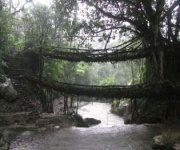
The stones belong to a wider Khasi relationship with forests, caves, springs, waterfalls and living root bridges. The bridges are created by training the roots of living plants across streams and then strengthening them with trained growth. Monoliths are not living structures in the same sense; they are worked stone. Yet both forms reveal a landscape shaped through close observation, ecological knowledge and long-term community care. Each major geographical feature may carry a particular Khasi name, story or customary relationship.
Weather adds another dimension. When the monsoon arrives, conditions can change quickly, and the monsoon packing guide offers useful preparation advice for visitors. Grippy footwear, waterproof layers and a dry bag for phones and documents are more valuable than an umbrella alone. Stone surfaces become slippery, vegetation drips continuously and exposed viewpoints may be best avoided until conditions improve.
Colonial labels and living heritage
During British colonial rule, European observers catalogued the monoliths as “megaliths” and sometimes separated the stones from the Khasi explanations attached to them. Missionary and administrative records remain important historical sources, but they reflect the categories and priorities of their period. Their value is greatest when read alongside Khasi oral histories and present community knowledge rather than used to replace them.
UNESCO’s 2017 inscription of the Sacred Ensembles of the Khasi Hills recognised an interconnected cultural landscape that includes elements such as monoliths, sacred groves, caves and waterfalls. The listing brought international attention, although heritage protection has also created new pressures involving access, conservation and tourism. Local custodians and residents must remain central to decisions about these places. A monument’s presence does not automatically mean that visitors may climb, carve, move objects or enter every associated area.
Viewing the monoliths with cultural care
The best encounters begin with curiosity rather than assumptions. Some monoliths are easily reached from roads and paths; others require walking across wet, uneven ground. A locally informed guide can explain relationships that a map cannot, including why a monolith faces a particular direction, how a story changes between communities or why a nearby forest is protected. Visitors should also allow time for quiet observation instead of treating every stop as a quick photograph.
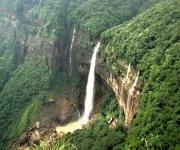
Cherrapunji is often combined with Arwah Cave, Mawsmai Cave, Nohkalikai, the Seven Sisters waterfalls and living root bridges. These nearby places reveal why the monoliths cannot be understood in isolation. Australian families planning a wider South and Southeast Asian journey might compare family resort options for another phase of the holiday, balancing a child-focused stay with Meghalaya’s more demanding terrain and weather.
Australian school holidays do not always coincide with Meghalaya’s best walking conditions. The region’s heaviest rain generally falls from May to September, while many Australian families travel during the southern summer or winter break. Shorter drives, flexible bookings and unstructured days can reduce pressure during a monsoon visit. Local guides may also use Khasi names and pronunciation conventions that differ from the signs encountered in Guwahati or Shillong.
Practical planning for an Australian visitor
Cherrapunji lies roughly 70 kilometres from Guwahati, although mountain roads, traffic and rain can turn the transfer into a journey of several hours. It can also be approached from Shillong. Travellers should keep buffers between road segments rather than scheduling a remote attraction immediately before a flight. Before relying on connectivity for maps or messaging, the mobile network guide explains local coverage and practical ways to stay connected.
These practical choices help make a visit respectful and manageable:
- Choose a locally guided visit that explains Khasi perspectives rather than only naming stones.
- Give the monuments time to be experienced as places rather than treated solely as photo props.
- Ask before entering sacred or restricted areas, and never climb, carve or move stones.
- Combine the monoliths with caves, waterfalls, groves and living root bridges to understand the wider cultural landscape.
- Allow extra time for road transfers because monsoon rain can delay journeys.
- Keep some unstructured time in the itinerary, especially for families adjusting to the terrain and pace.
- Use a locally connected operator that can clarify package inclusions, entry arrangements and guiding.
Support Cherrapunji’s living heritage
Cherrapunjee.net offers packages ranging from two to seven nights, with information about resorts, hotels, waterfalls, caves, parks and living root bridges. Travellers can choose a journey centred on the monoliths or combine them with the wider Sohra landscape. The operator, India Beacons Sojourn, provides booking contacts for individual enquiries and group plans.
When making an inquiry, specify whether you want a Khasi-led heritage guide, private road transport and particular attractions included. The most rewarding journeys pair the major sites with enough time to understand the relationships between them. Reserve your Cherrapunji journey through India Beacons Sojourn and use the contact details published on Cherrapunjee.net to begin planning your route into the Khasi Hills.