




The Story Behind The Killion Rock Viewpoint
Killion Rock Viewpoint is one of those places in Meghalaya where a short stop can reveal a much larger story. The rock, the surrounding hills and the distant plains are part of a landscape shaped by ancient geology, Khasi traditions and the practical rhythms of village life. For travellers staying in Sohra, also known as Cherrapunji, it offers a quieter experience than the region’s famous waterfalls.
The name can be confusing. Some travel references and local conversations use “Killion Rock”, while similar listings may use “Kyllang Rock” or another local spelling. These names should be checked against current signs, maps and advice from a local guide before setting out, particularly because viewpoints and access roads may be described differently online.
The attraction is not simply a lookout built for photographs. Its appeal comes from the meeting of natural and cultural history: exposed rock, forested ridgelines, monsoon weather, Khasi place names and stories passed between generations. The view changes quickly as cloud moves across the hills, so the experience is often atmospheric rather than predictable.
For Australian visitors, reaching the viewpoint is part of the adventure. A journey from Sydney, Melbourne, Brisbane or Perth will usually involve an international connection and an onward route through northeast India. The reward is a landscape that feels distinctly different from the dry inland ranges, eucalyptus forests and developed coastal lookouts familiar at home.
A Name Shaped By Local Geography
Place names in Meghalaya are closely connected with the Khasi language and the history of the communities who have lived among these hills. When names are transliterated into English, spelling can change between maps, tourism websites and handwritten directions. “Killion” may therefore appear as a variant or informal English rendering rather than a universally standard spelling.
This is common across the region. Sohra itself is widely known internationally as Cherrapunji, while villages, streams and rock formations can carry several versions of the same name. A responsible itinerary treats the name as a starting point and confirms the exact location with the accommodation provider, tour operator or village guide.
The story behind the viewpoint is consequently bigger than one signboard. It reflects how local geography has been recorded by administrators, travellers and modern mapping services, while oral knowledge remains important for finding paths, understanding restricted areas and interpreting the landscape.
The Rock And The Ancient Plateau
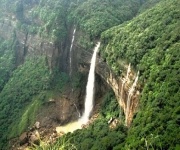
The rock is best understood as part of Meghalaya’s elevated plateau, a region formed from very old geological materials and deeply cut by rainfall and rivers. Around Sohra, immense seasonal precipitation has carved valleys, cliffs and gorges. Bare rock surfaces stand out against dense vegetation because water has gradually removed soil and widened natural drainage lines.
This geological setting explains why a viewpoint can offer such dramatic contrasts. A visitor may see rounded hills close by, steep green escarpments beyond them and lower plains fading into haze. During the wet season, streams and waterfalls appear across the slopes; in the drier months, the outlines of ridges are often easier to read.
Killion Rock is valuable as a viewpoint because it allows travellers to pause and read those layers. The rock is not an isolated scenic object detached from its surroundings. It belongs to a living plateau where rain, forest, farming, roads and settlements continue to shape the view.
Khasi Memory And Sacred Landscapes
Khasi communities have long maintained a strong relationship with hills, forests, water and prominent natural features. In many parts of Meghalaya, a rock or grove may carry a story, a warning or a spiritual association that is not recorded in a standard tourist brochure. These accounts should be approached with respect rather than treated as decorative folklore.
The meaning of a place can also vary between nearby communities. One group may emphasise an origin story, while another remembers the site through a practical use, a route between settlements or a local event. A guide from the area can provide context that a short online description cannot, including which areas should not be climbed or entered.
Visitors should avoid carving names, moving stones, playing loud music or treating the viewpoint as a private photo set. If a local custom, ceremony or religious observance is taking place, give people space. The best way to engage with the story is through careful listening and by supporting guides, drivers and small businesses based in the surrounding communities.
Weather Writes Part Of The Story
Sohra is famous for intense rainfall, and the weather is central to the character of the viewpoint. Mist can arrive within minutes, reducing a broad panorama to a few metres of visible rock and vegetation. Then the cloud may lift, revealing a valley that was hidden moments earlier.
The monsoon months can make paths slippery and roads slower, while heavy rain may affect access to smaller attractions along the route. Comfortable footwear with firm grip is more useful than fashionable trainers. A lightweight waterproof layer, dry bags for phones and a spare pair of socks can make a full day much more pleasant.
Australian travellers often underestimate how different tropical rain can feel from a short shower in Brisbane or Darwin. It may continue for hours, soak clothing quickly and make exposed steps hazardous. Check the forecast locally, listen to the driver or guide and allow extra time rather than planning a tightly packed schedule.
Reaching The Viewpoint From Sohra
The viewpoint is usually visited as part of a wider Cherrapunji circuit rather than as a stand-alone destination. Depending on the confirmed location, a day may combine scenic roads, village stops, waterfalls, caves or forest walks. Private vehicles and local drivers are generally more practical than relying on a sequence of public connections in rural areas.
Road conditions can change with rainfall, maintenance and traffic. Distances that appear short on a map may take much longer because of bends, steep sections and stops for passing vehicles. A flexible itinerary is especially important for visitors arriving from Australia, where long-distance routes and road signage may feel more predictable than in the Khasi Hills.
A local tour package can simplify logistics, particularly for first-time visitors. Cherrapunjee.net offers multi-day stays and regional excursions that can be arranged around the season, accommodation and other attractions. For travellers adding a strenuous walk to the day, the practical advice in this waterfall trek guide is useful when judging footwear, timing and fitness requirements.
Confirm the precise meeting point before leaving the hotel. Mobile coverage can be uneven, and a pin dropped on a map may lead to a nearby road rather than the actual viewing area. Carry the accommodation’s phone number, some cash and a charged power bank, while keeping valuables secure during short walks.
Seeing The Landscape Through A Camera
Killion Rock Viewpoint is suited to photographs that show scale. Instead of filling the frame only with the rock, include a person at a safe distance, a line of trees or a road winding across the slope. These elements help communicate how the viewpoint sits within the broader terrain.
Light changes rapidly in Meghalaya. Early morning can bring soft haze, while late afternoon may create stronger contrast across ridges. In wet weather, water on the rock can produce reflections, but it also increases the risk of slipping. Never step close to an edge for a wider composition, and do not ask a driver or local resident to stand in an unsafe position for a photograph.
The same principle applies at more famous nearby attractions. Travellers planning to photograph one of the region’s signature waterfalls can learn from this guide to Nohkalikai at sunrise, particularly its advice about changing light and viewpoint selection. A modest camera, phone lens cloth and waterproof pouch are usually enough; heavy equipment can become a burden on wet paths.
Ask before photographing people, homes, religious objects or private land. Portraits should be offered with courtesy, and images of children require particular care. Slow travel produces better visual records than rushing from one lookout to the next.
Travel Details For Australian Visitors
Australian passport holders should review India’s current visa rules through official government channels before booking. An Indian e-Visa may be available for eligible travellers, but requirements, permitted entry points and processing conditions can change. Passport validity, blank pages, travel dates and previous travel history should be checked carefully rather than relying on an old blog post.
Australian law also matters when returning home. The Biosecurity Act 2015 gives authorities strong powers to inspect luggage and restrict soil, plant material, food and animal products. Clean mud from walking shoes, dry hiking gear thoroughly and declare anything required on the Incoming Passenger Card. A small souvenir made from untreated plant or animal material may create difficulty at the border.
Everyday spending in Meghalaya is a blend of cash and digital payments. Larger hotels, established tour operators and some restaurants may accept cards or mobile payments, but small stalls, village shops and roadside vendors may prefer Indian rupees. Australian travellers accustomed to using EFTPOS almost everywhere should keep modest cash in secure places and avoid displaying large amounts.
Local markets are part of the pleasure of travelling through the region. You may find seasonal fruit, spices, bamboo goods, woven products and simple snacks rather than the uniform retail mix of a Sydney shopping centre or a Melbourne weekend market. Buy thoughtfully, ask about prices without being confrontational and avoid wildlife products or items made from protected materials.
Visiting With Care And Context
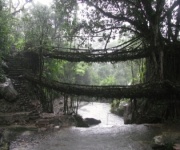
The viewpoint is most rewarding when included in a measured itinerary. Two or three nights in Sohra can allow time for a scenic stop, a waterfall, a cave or a living root bridge without turning every day into a race. Longer packages provide greater flexibility when rain delays roads or when a particular valley deserves extra time.
Accommodation ranges from local guesthouses to resorts and hotels, with comfort and location varying considerably. Confirm whether the property has reliable hot water, backup power, transport assistance and meals suitable for your needs. Australians used to late-night cafés, self-service fuel stations and 24-hour conveniences may find rural Meghalaya quieter after dark.
Leave the area as you found it. Carry reusable water, take rubbish back to a suitable bin and avoid disposable packaging where possible. Stay on established paths, follow barriers and listen when a guide says that a section is unsafe. The scenery is shared with residents, working farmers and future visitors, not staged solely for tourism.
The viewpoint’s story becomes clearer when the rock is considered alongside its people, weather and routes. It is a place where geology provides the foundation, Khasi knowledge gives the landscape meaning and responsible travel helps preserve the experience.
Plan a Cherrapunjee journey around Killion Rock Viewpoint with time for weather, local stories and unhurried scenery. Explore the region’s stays and tour packages through Cherrapunjee.net, operated by India Beacons Sojourn, and contact the team for current route details, accommodation options and booking assistance before travelling.