





Cherrapunjee in Five Days: A Nature Lover's Meghalaya Journey
Tucked into the southern edge of Meghalaya's Khasi Hills, Cherrapunjee (also called Sohra) draws travellers with cliffs draped in cloud forest, plunging waterfalls, and living root bridges grown over centuries. The town once held the record for the highest annual rainfall on the planet, and that steady drenching has carved out one of the greenest landscapes in South Asia. For visitors who prefer forests, rivers, and footpaths to museums, a five day itinerary is the right rhythm: long enough to reach the deep valleys, short enough to keep the trip focused.
Travelling from Australia, the journey starts with a flight into Guwahati in neighbouring Assam, followed by a scenic drive of around four hours into the Meghalayan plateau. Australians arrive with strong hiking instincts, an easy appreciation for tea culture, and a habit of planning around long weekends and shoulder seasons. Because the Australian winter (June to August) lines up with the Cherrapunjee monsoon, the timing favours lush greenery and roaring waterfalls, even if it does mean packing a reliable rain jacket. The Indian e-Visa welcomes Australian passport holders, and the rupee exchange rate has made Meghalaya a reasonable destination for those used to watching the Australian dollar against major currencies.
This itinerary keeps daily transfers short, mixes gentle acclimatising walks with a couple of demanding treks, and leaves room for misty mornings. Each day focuses on a different theme, so you can rearrange activities around weather windows. The suggestions are designed for travellers who want to spend more time on trails than in vehicles, and who are comfortable booking village homestays alongside a few nights in resort-style accommodation.
Planning the journey before leaving Australia
A little preparation in Sydney, Melbourne, or Brisbane saves time and money on arrival. Australian citizens need an Indian e-Visa, applied for online and usually processed within a few working days. Flights from Australia's east coast hubs typically route through Singapore, Kuala Lumpur, or Bangkok before reaching Guwahati, so allow at least a day for the connection. The time difference between Sydney and Meghalaya is four and a half hours, so an evening arrival feels almost like late evening back home.
Pack as you would for a tropical hike in the Daintree or a winter expedition along the Overland Track: quick drying layers, broken in boots, and a dry bag for electronics. Australians returning home with muddy boots or soil on gear should remember that Australia's biosecurity rules are strict, so clean and dry every item before the flight back. May through September is the heaviest monsoon, when waterfalls are loudest and trails are slippery, while October to April brings clearer skies and easier trekking, though the landscape is less dramatically green.
Day one: gentle viewpoints and acclimatisation
Touch down in Guwahati, transfer to Cherrapunjee, and ease into the highland air with a quiet afternoon. The drive itself is part of the experience, climbing from the Brahmaputra valley into forested ridges and roadside markets. By the time you reach the plateau, the temperature has dropped and the light has softened, and the first real view of the valley below arrives as a quiet surprise.
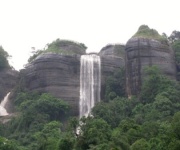
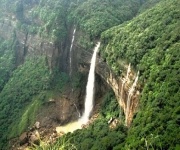
Spend the late afternoon at Nohkalikai Falls, which drops more than 300 metres from a cliff edge into a forested gorge. The walk to the viewpoint is short and well maintained, so it works perfectly as a first taste of the region. The falls are especially dramatic during and after heavy rain, when the plume of spray hangs in the air like mist.
| Day | Main focus | Activity level | Most useful item |
|---|---|---|---|
| 1 | Viewpoints and acclimatisation | Light | Camera with weather sealing |
| 2 | Living root bridges | Strenuous | Trekking poles and electrolyte mix |
| 3 | Caves, waterfalls, riverside camp | Moderate | Head torch and quick dry towel |
| 4 | Sacred grove and Khasi culture | Light to moderate | Modest layer for village homes |
| 5 | Slow morning and onward travel | Light | Refillable water bottle with filter |
In the evening, settle into a hilltop resort or a family run homestay and try a Khasi dinner. Local meals tend to centre on rice, smoked pork, fermented soy, and seasonal greens, and many guesthouses will prepare a milder plate for visitors used to Australian palates. Spend the evening reading up on Khasi customs, especially matrilineal inheritance practices, which differ from the patrilineal traditions common across much of South Asia. This context will enrich every village conversation over the coming days.
Day two: walking the living root bridges
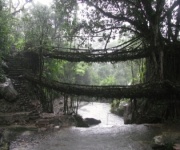
Day two is the most physically demanding of the trip and also the most rewarding. A morning transfer to Tyrna village leads to the start of the trail into the Nongriat valley, where generations of Khasi villagers have guided fig tree roots across streams using bamboo scaffolds. The descent includes roughly 3,500 steep steps down to the valley floor, and the same count back up at the end of the day. Anyone familiar with Federation Walk or the trails of the Blue Mountains will find the gradient steeper than expected, so poles and electrolyte sachets are worth carrying.
At the bottom, the double decker root bridges span the river, the older of them grown over more than a century ago. A shorter side trail leads to a natural swimming pool at the base of a smaller fall, and locals often jump in during the warmer months. Travellers who want a deeper look at the community can read more in this Nongriat village guide, which explains how the bridges are grown, maintained, and protected. The climb out feels longer than the way down, especially in monsoon humidity, so a slow pace and frequent water stops matter more than speed. Most guided groups aim to be back in Cherrapunjee by late afternoon, with time for a relaxed dinner and an early night.
Day three: caves, waterfalls, and a riverside camp
Day three trades footpower for shorter, varied stops and adds a touch of adventure. Start at Mawsmai Cave, a few kilometres from the town, where a short walk through limestone passages reveals stalactites, stalagmites, and shafts of greenish daylight. The path is lit and partly paved, making it accessible without ropes, though a local guide will point out formations you might otherwise miss. From there, drive to Arwah Cave, which is longer and less visited, and where ancient fossils are embedded in the limestone walls.
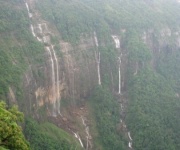
Continue to Seven Sisters viewpoint, a chain of segmented falls pouring off the plateau edge, then visit Kynrem Falls, reached through a small park that Australian families used to long drives will appreciate. The Kynrem falls are memorable because the surrounding forest feels untouched, and the sound of falling water carries across the meadow. By late afternoon, head to a quieter site: a mossy glade near the edge of the rainforest where a riverside camp has been set up. Travellers interested in that experience can read about a night at the edge camping near cherrapunjee to plan timing, gear, and meals.
The campfire evening, with steaming rice, smoked fish, and the constant rush of the river nearby, ends the day on a different note from the resort nights. Sleep comes easily under canvas, and the lack of light pollution means the stars can be surprisingly bright between clouds.
Day four: highland panoramas and Khasi culture
Day four begins gently with sunrise from a clifftop, ideally at the Wei Sawdong viewpoint or a similar overlook reached by a short drive and a brief walk. The morning light turns the valleys below into a soft palette of mist and emerald, and the only sounds are usually birdsong and the distant rush of water. Many travellers describe this hour as the visual highlight of the whole trip, and it pairs well with a thermos of tea and a slow breakfast.
Spend the rest of the day in cultural rather than natural pursuits. The Mawphlang sacred grove, a protected forest a couple of hours from Cherrapunjee, is led by a local guide who explains the spiritual importance of every tree. A short stop at a Khasi bakery in the village of Smit offers freshly baked rice biscuits, and a visit to a weaving household shows how the region's eri silk is spun and dyed. End the day with a Khasi meal in a village home, often served on a low table with multiple small dishes. Returning to a familiar guesthouse for the final night ties the trip together.
What to bring and how to behave on the trail
Packing for Cherrapunjee follows the same logic as packing for a Tasmanian winter hike: assume the weather will change and plan for layers. Most villages have small shops, but stock is limited, so anything specific should travel with you.
Essentials to pack from Australia for the trails and stays:
- Broken in waterproof hiking boots with good grip
- A packable rain jacket and a separate pair of dry hiking trousers
- Microfiber towel and a universal sink plug
- Power adapter for Indian round pin sockets
- Refillable water bottle with built in filter
- High energy snacks such as nut bars, which are harder to source in remote villages
Everyday habits worth adapting during the trip are simple but make a real difference once you settle into village life.
- Tip drivers and guides in cash, in small denominations
- Remove footwear before entering home stays, mosques, and certain temple areas
- Carry toilet paper or tissues, as public restrooms rarely stock them
- Drink only filtered or bottled water, including for brushing teeth
- Save heavier meals for lunch, since Khasi dinners tend to be lighter and earlier
Reach out to India Beacons Sojourn through the contact page on cherrapunjee.net to lock in transport, accommodation, and guided entries to the living root bridges, which require local permissions. The team can adapt the five day template to a six or seven night version, swap camping for extra resort time, or extend the journey into Dawki, Mawlynnong, or Shillong. Early bookings during the Australian spring and winter help secure the most experienced local guides, who double as cultural interpreters and naturalists.
A longer Cherrapunjee itinerary gives breathing room for weather changes, which is part of life in one of the wettest inhabited places on the planet. Whether you spend every evening listening to rain on a tin roof, watching clouds race across the Khasi Hills, or sharing a campfire meal with travellers from across the world, the trip leaves a long lasting impression. Reserve the dates, confirm the visa, and let the Meghalayan calendar guide the rest.