





Cherrapunjee weather month by month for Australian travellers
Cherrapunjee, also called Sohra or Cherrapunji, has one of the world’s most dramatic rainfall climates. The famous wet season brings cloud, mist, swollen waterfalls and slippery forest paths, while the cooler months can feel surprisingly fresh for visitors arriving from Australia. Weather changes quickly, so a forecast for the morning may look very different by the afternoon.
The town sits in Meghalaya’s Khasi Hills at roughly 1,400–1,500 metres above sea level. Its elevation keeps temperatures moderate, but the terrain creates sharp local differences. Sohra may be wet and misty while nearby Shillong has better visibility, or a sunny start may become a heavy shower before you reach a waterfall.
For Australians, the easiest comparison is to think of a tropical wet season with cooler mountain air. It is not quite like a Brisbane summer storm or Darwin’s humid build-up. Rain can continue for hours, roads may be covered in runoff, and cloud can hide viewpoints for much of the day. The shoulder months often provide a practical compromise between scenery and easier sightseeing.
Travel style matters as much as the calendar. An Australian family using school holidays, a couple planning a relaxed “arvo” at a resort, or a group fitting Meghalaya into a wider India itinerary will each need a different approach to the weather. Flexible driving times, quick-drying clothing and sensible footwear are useful in every season.
| Month | Typical weather pattern | What visitors can expect | Useful packing focus |
|---|---|---|---|
| January | Cool, mostly dry and clear | Excellent views, crisp mornings, low rain | Warm layers, comfortable walking shoes |
| February | Dry with gradually warmer afternoons | Good conditions for caves, bridges and viewpoints | Light layers, sun protection |
| March | Mild, increasingly humid and unsettled | Greenery returns, occasional showers | Light rain jacket, breathable clothing |
| April | Pre-monsoon showers and storms | Fresh landscapes, changing visibility | Waterproof outer layer, dry bag |
| May | Rain becomes frequent and heavy | Waterfalls strengthen, trails get slick | Waterproof shoes, spare clothing |
| June | Peak monsoon begins | Powerful falls, cloud and intense rain | Full rain protection, travel flexibility |
| July | Very wet, misty and dramatic | Maximum rainfall atmosphere, difficult tracks | Grip footwear, waterproof bags |
| August | Still exceptionally wet | Waterfalls remain spectacular, frequent delays | Quick-dry clothing, warm layer |
| September | Rain eases gradually | Lush scenery with improving access | Rain shell, adaptable itinerary |
| October | Generally clearer and comfortable | Strong all-round sightseeing conditions | Light layers, modest rain protection |
| November | Cool, mostly dry and bright | Great visibility and walking weather | Fleece or jumper, sun protection |
| December | Dry, cool and occasionally misty | Festive travel period and clear viewpoints | Warm layer, sturdy shoes |
January and February bring crisp mountain days
January is usually among the driest and coolest times in Sohra. Mornings can feel cold by local standards, particularly before sunrise or after rain has left the air damp. Daytime conditions are often comfortable for exploring viewpoints, caves, villages and short forest walks, with clearer skies giving better chances of seeing the escarpment and distant Bangladesh plains.
February follows a similar pattern, although afternoons slowly become milder. Rain is generally limited, and roads are easier to manage than during the monsoon. This makes the period attractive for travellers who want to combine Cherrapunjee with Shillong without building every day around weather delays.
Pack a fleece, jumper or light insulated jacket rather than relying only on tropical clothing. Australians accustomed to winter in Melbourne or Canberra will recognise the need for layers, while visitors from Perth or northern Queensland may find the early mornings noticeably chilly. Comfortable closed shoes are more useful than sandals around rocky viewpoints and cave entrances.
March and April mark the seasonal change
March often begins pleasantly, but the atmosphere becomes warmer and more humid as the pre-monsoon season develops. Short showers and thunderstorms can arrive with little warning. They may pass quickly, leaving clean air and bright greenery, but they can also make exposed viewpoints windy and muddy.
April is a transitional month. Rainfall increases, and the first substantial downpours begin to feed streams and waterfalls. Visibility can alternate between clear and mist-covered within the same day. This is a rewarding time for photographers because the landscape looks fresh, yet itineraries still have a reasonable chance of staying on schedule.
Visitors should carry a compact rain jacket even when the morning forecast looks dry. A waterproof phone pouch, a small towel and a bag for damp clothing are practical additions. Australians familiar with sudden storms in the Blue Mountains or the hinterland behind the Gold Coast will understand the value of keeping rain protection accessible rather than buried in luggage.
May and June turn water into the main attraction
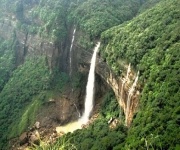
By May, the monsoon influence is obvious. Rain can be heavy, persistent and accompanied by low cloud. Waterfalls around Sohra begin to look far more powerful, and streams that were quiet during the dry season become active. The trade-off is reduced visibility and a greater likelihood that wet rock will slow down walking routes.
June is usually the start of the most intense rainfall period. Sohra’s reputation for extraordinary precipitation is most apparent now, although rainfall varies from year to year. A day can include several hours of rain, brief bright intervals and thick mist moving across the hills. Roads generally remain usable on major routes, but journey times can increase because of runoff, potholes, traffic and cautious driving.
This period suits travellers who value atmosphere over guaranteed views. Those planning a family trip should read the practical guidance on travelling with children, especially when choosing walks and outdoor stops. Waterproof trousers, shoes with reliable grip and a dry bag for electronics are especially worthwhile from May onwards.
July and August are the heart of the monsoon
July is commonly among the wettest months. The sound of rain, thick cloud and overflowing waterfalls define the experience. Paths to living root bridges and forest attractions may be muddy, slippery or temporarily unsuitable, and some outdoor plans may need to be shortened. Even when a trail is open, the distance may take much longer than a dry-weather estimate.
August remains very wet, although the exact pattern can shift. Some days are continuously grey; others provide a short window of visibility between heavy showers. The landscape is exceptionally green, and waterfalls can be at their most impressive. For travellers who enjoy wild scenery and do not mind getting damp, this can be memorable, but it is not the simplest season for a tightly timed itinerary.
Build spare time into transfers and avoid scheduling a flight connection immediately after a long road journey. An Australian traveller booking through the school-holiday market should also check whether a seven-night package offers better flexibility than a shorter break. Local drivers understand the roads and conditions, but no operator can control a sudden cloudburst or a waterlogged track.
September and October offer a useful shoulder season
September often begins with monsoon conditions and gradually becomes more manageable. Rain may still be heavy, but longer dry intervals develop as the month progresses. Waterfalls usually retain strong flow, while forests remain richly green. This balance can appeal to visitors who want the visual drama of the wet season without choosing its most difficult weeks.
October is often one of the strongest months for general sightseeing. Skies tend to be clearer, roads more predictable and walking conditions more comfortable. Mist can still appear, particularly in the mornings or after rain, but viewpoints have a better chance of opening up. Temperatures remain mild rather than hot.
This shoulder period works well for Australians planning a broader Northeast India holiday. It can suit couples combining Meghalaya with Assam, families arranging activities during a Queensland or New South Wales holiday break, and independent travellers who prefer a less crowded feel than peak domestic travel periods. A light waterproof layer is still sensible because showers have not completely disappeared.
November and December favour clear views
November is generally cool, dry and bright in Sohra. The air often feels clean after the monsoon, and distant views can be excellent. Walking routes are usually easier, although mud may remain in shaded forest areas. The lower rainfall also makes it simpler to visit several attractions in one day without constantly rearranging the driving plan.
December continues the dry-season pattern. Morning temperatures are comfortable for active sightseeing but can feel cold when cloud settles over the plateau. Evenings at a resort or hotel may call for a jumper, particularly for visitors used to summer conditions in Sydney, Adelaide or Perth.
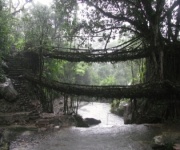
These months are suitable for travellers who prioritise caves, viewpoints, villages and living root bridges over maximum waterfall volume. To understand why the region’s forests and communities are so closely linked, it is worth reading about the Khasi Hills history before visiting. The cultural landscape gives the weather context: rain is part of how forests, bridges, streams and local livelihoods function.
Planning around forecasts, roads and activities
A month-by-month guide describes the broad pattern, not a promise for a particular day. Meghalaya’s rainfall can be highly localised, and forecasts may change quickly. Check conditions shortly before departure, then ask your accommodation or local driver about road access and trail conditions. A clear forecast for Shillong does not guarantee clear skies in Sohra.
Choose clothing that can handle repeated dampness. Quick-drying trousers, moisture-wicking shirts, a waterproof jacket, spare socks and shoes with good tread are useful in the wet months. An umbrella can help around town, but it is less practical on exposed paths, near waterfalls or in strong wind. Keep passports, medication, cameras and chargers inside waterproof pouches.
Plan outdoor highlights earlier in the day when possible, while leaving room to swap activities. If rain closes a forest walk, a cave, cultural stop or scenic drive may still be possible. Avoid assuming that every waterfall viewpoint is safe in intense weather; swollen streams, slick stones and poor visibility deserve more respect than a fixed sightseeing schedule.
For Australian visitors, the best season depends on the experience being sought. November to February generally favours clearer views and easier movement. March, April, September and October provide a changing landscape with moderate flexibility. May to August delivers the full monsoon spectacle, but it requires patience, durable gear and a willingness to let local conditions set the pace.
A well-timed Cherrapunjee holiday turns weather into part of the journey rather than an inconvenience. Explore the available two- to seven-night packages, select accommodation that suits your preferred pace, and contact India Beacons Sojourn through Cherrapunjee.net for booking guidance. With the right season, clothing and flexibility, Sohra’s rain can become one of the most memorable features of your Meghalaya trip.